





 Portuguese
  English
  Spanish
  5 min of reading
  0 comments


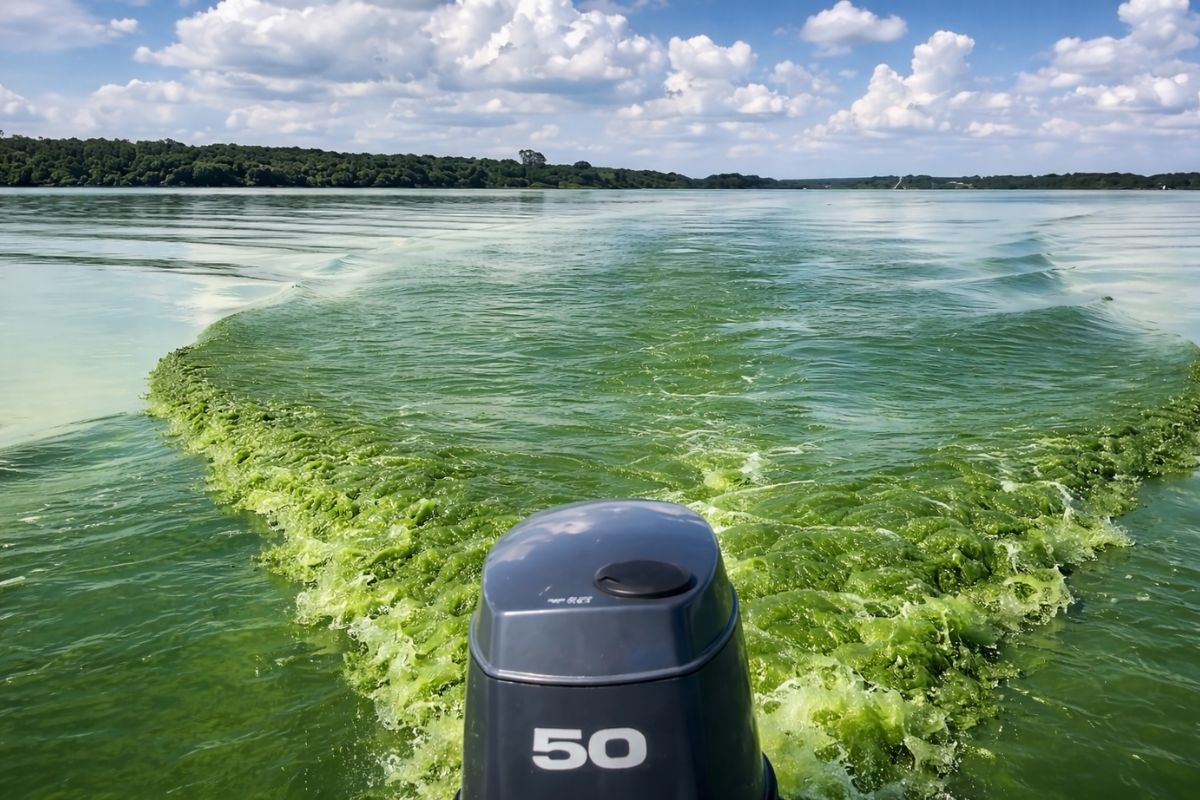
In Adolfo, Eutrophication Takes Over the Tietê River, Fish Appear Dead on the Surface, Tourism on the Tietê River Enters Into Crisis and Sugarcane Mills Are Pointed Out as Responsible for the Degradation of the River.
The water of the Tietê River has once again turned green, thick, and with a strong odor in Adolfo, in the interior of São Paulo, while fish appear dead on the surface and the population watches, helpless, another chapter in the degradation of one of the most important rivers in the state. Among residents’ complaints, warnings from biologists, and promised meetings by authorities, the scenario is of a river suffocated by excess nutrients, algae, and neglect.
In the arms of the Tietê, like the River of Catfish, the green and sticky color and the fact that fish appear dead with increasing frequency undermine tourism, drive away fishermen, and jeopardize the survival of marinas and businesses that directly depend on the river. Meanwhile, sewage, fertilizers, and sugarcane mills are pointed out as silent villains, and the Tietê continues in environmental ICU for years.
Tietê River Turns Green and Sticky, and Fish Appear Dead in Adolfo

In Adolfo, the scene repeats itself: those navigating through the arm of the River of Catfish find greenish, dense, and pasty water, different from the clear water layer expected from a healthy river.
-
The government requests the Federal Revenue Service for a new system to automate the income tax declaration, reducing errors, time, and bureaucracy for millions of Brazilians.

-
Pix in installments, international Pix, and contactless payment without internet: the Central Bank revealed the new features coming to the tool that is already used by almost every adult in Brazil.

-
Mercado Livre has just started selling medications with delivery in up to three hours to your door, and this move could completely change the way Brazilians buy medicines on a daily basis.

-
In Dubai, rising tensions from the war in the Middle East are causing super-rich individuals to leave the Gulf and direct their fortunes to a new financial refuge in Asia.


Near the bank, the green coloration already catches attention, but as the boat moves a few kilometers, the situation worsens even more.
The waves left by the vessel no longer form white foam, as would be common. On top, everything is green, homogeneous, as if the river had been covered by a thick layer of paint, with algae flakes accumulating on the surface.
Amid this carpet of microorganisms, fish appear dead, floating, confirming what residents have feared for months: the river is losing oxygen and the capacity to sustain life.
Residents report that last year, the fish die-off was even more intense, with entire schools appearing dead in a few days.
Now, the sense is that the problem is returning with force, although there are fewer live fish to die than before.
Eutrophication: When the River Stops Breathing
The phenomenon observed in Adolfo has a technical name: eutrophication, which is the enrichment of water by nutrients such as phosphorus and nitrogen.
These nutrients come, largely, from sewage network waste and fertilizers used in crops such as sugarcane, which rain washes from the soil into watercourses.
With this excess of nutrients, algae and cyanobacteria multiply explosively, forming the green layer that covers the surface.
This “carpet” prevents light from penetrating the water, reduces the photosynthesis of aquatic plants, and, together with the organic matter decomposition process, consumes the little oxygen available.
In practice, what happens is simple and brutal: the river stops breathing. The dark or intense green color, combined with the strong odor described by residents as “pigsty smell,” is the visible symptom of a collapsing aquatic environment.
And the most evident consequence, sooner or later, is always the same: fish appear dead in series, along with shrimp and other organisms that cannot survive the lack of oxygen.
When Fish Appear Dead, Tourism Collapses
In Adolfo, the Tietê is not just a landscape: it is the economic base. Marinas, inns, sport fishermen, and local businesses directly depend on the river for survival. When the water turns green, thick, and foul-smelling, the economic impact is immediate.
Marina managers report a drop of up to 90% in the movement of fishermen. No one wants to enter the water with the river like this, no one wants to fish where fish appear dead floating, and the sonar does not detect schools, because there simply are no more fish.
For those who have lived for years on the banks of the Tietê, seeing the water mirror turn into green sludge is a reason for sadness and revolt.
The tourism that could be a sustainable pillar for the region gives way to a scenario of environmental abandonment.
What was natural wealth becomes ecological liability, frightening visitors and slowly demolishing the economic potential of riverside towns.
Sugarcane Mills, Sewage, and the Environmental Cost Pushed to the River

In the words of residents and local leaders, sugarcane mills emerge as one of the main targets of criticism, alongside the precarious basic sanitation.
Fertilizers and waste from agro-industrial activities, combined with the lack of proper sewage treatment in several municipalities, form an explosive combination of nutrients that the river simply cannot process.
During the rainy season, the water that runs off the soil carries fertilizers, organic matter, and everything above the ground directly to the bed of the Tietê. The result is this artificial enrichment of the water, feeding algae that suffocate the river.
Meanwhile, municipalities and environmental authorities are accused of turning a blind eye to the problem, preferring to see only the million-dollar figures of revenue associated with the sugarcane sector.
However, the math doesn’t add up. No revenue covers the ecological, economic, and social damage of a river in collapse, where fish appear dead, tourism collapses, and communities lose, day by day, their main natural heritage.
A River in ICU and Authorities in Silence
For those living in Adolfo, the diagnosis is clear: the Tietê River has been in ICU for years, merely “being kept alive” while waiting for help that does not arrive.
With each rainy summer, the fear of seeing the water turn green, the foul odor spreading, and then the fish appearing dead in sequence returns.
Parliamentary fronts, meetings with dozens of councilors, participation of secretaries and agencies such as CETESB are announced, but in practice, the feeling is that time passes and effective measures do not materialize.
While discussions focus on who the villains are and how to divide responsibility, the river continues to agonize before those who depend on it to eat, work, and live.
Residents call for stricter oversight, real inclusion of sugarcane mills in environmental recovery plans, improvements in sewage treatment, and concrete actions that address the cause, not just the symptom.
Without clean water, there is no tourism, no fishing, no income, and no future for the towns along the Tietê.
And you, do you think the priority to save the Tietê River in places like Adolfo should be to punish those who pollute, invest first in basic sanitation, or limit economic activities where fish appear dead every year?








-

Uma pessoa reagiu a isso.