





 Portuguese
  English
  Spanish
 3 min of reading
  0 comments


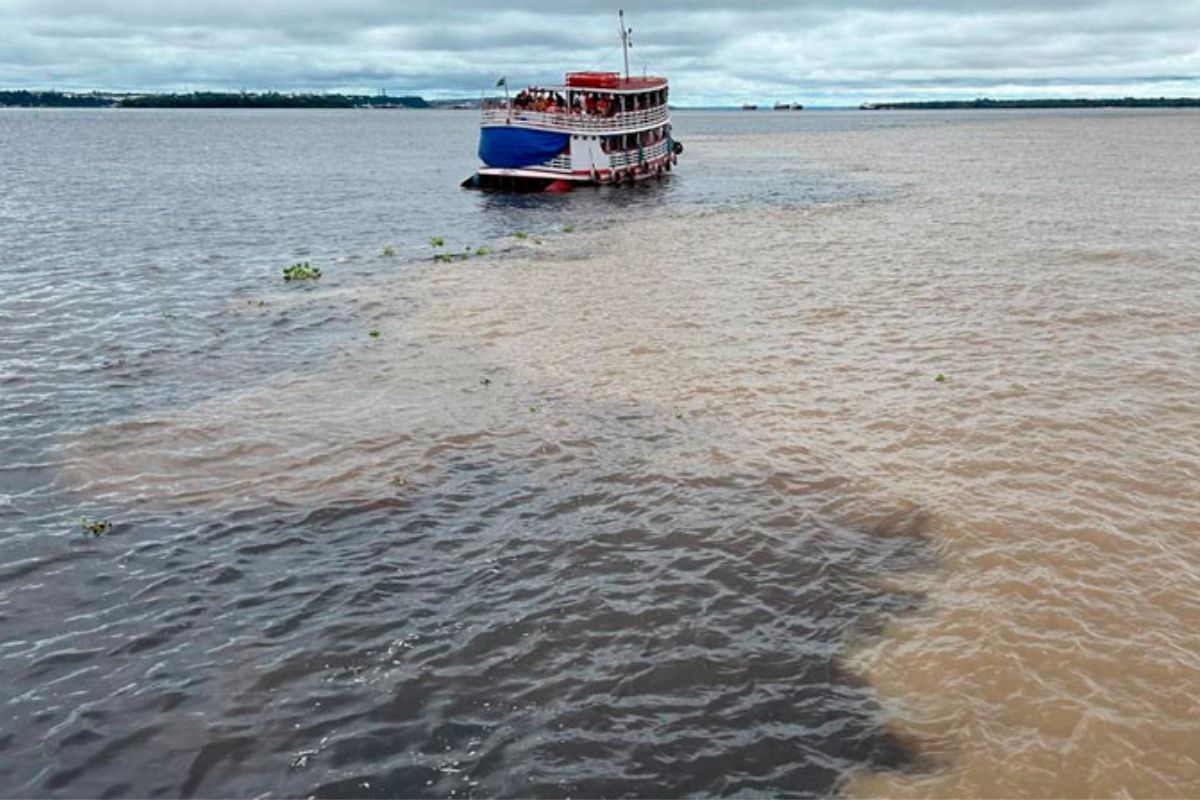
After Two Years Of Extreme Drought, Amazon Rivers Registered Stability And Levels Close To Historical Average, According To The Geological Service Of Brazil, Which Foresees Consolidation Of The La Niña Phenomenon
The Amazon rivers have returned to levels close to normalcy after two years marked by severe drought that impacted communities, river transport, and entire ecosystems, according to a report published.
According to the 42nd Hydrological Monitoring Bulletin, released on October 21 by the Geological Service of Brazil (SGB), most of the sub-basins in the region are at levels considered normal for the period.
This situation represents a significant recovery compared to 2023 and 2024, years when water volume reached historical lows in Amazon rivers such as Negro, Solimões, Purus, Acre, Madeira, and Amazonas.
-
Ocean Giant Could Change Everything: Nuclear Container Ship Project Promises to Transport 16,000 Containers Without Using Fossil Fuels

-
Hormuz Strait: Hundreds of Ships and Oil Tankers Stranded After Attacks in the Middle East
-
World’s Largest Electric Ship, China Zorrilla, Will Connect Argentina and Uruguay Across the Río de la Plata with a $200 Million Investment and Operations Planned for 2026
-
How A 20-Ton Anchor Holds 200,000-Ton Ships Even Under Extreme Winds And Why It Fails In The Deep Ocean


The return to stability is related to climatic neutrality and the reduction of oceanic anomalies that worsened the previous drought.
Hydrological Stability And Influence Of Tropical Ocean Temperatures
The SGB’s analysis shows that, after the strong impacts of El Niño and temperature anomalies in the North and South Tropical Atlantic, the Amazon rivers now benefit from a scenario of atmospheric balance.
According to geosciences researcher André Martinelli, manager of Hydrology and Territorial Management at the Regional Superintendence of Manaus (SUREG-MA), current levels are within the range considered normal in almost all sub-basins.
Exceptions occur in the south of Amazonas, where the Juruá and Purus rivers still show slightly below-expected levels for this time.
Between 2023 and 2024, the rainfall deficit was aggravated by the combination of elevated temperatures and the persistence of drought between the flooding and the new dry period, which hindered the natural replenishment of watercourses.
In Manaus, for example, the minimum level of the Negro River reached 12.11 meters in 2024, a negative record.
Today, the same point is marked at about 7 meters above the value recorded in the same period last year, indicating a remarkable recovery for the region.
Prospects Of The La Niña Phenomenon And Impacts On Flood Forecasts
International climate models indicate that the La Niña phenomenon in the Amazon is expected to consolidate in the next quarter.
Historically, this atmospheric pattern tends to increase precipitation over the basin, although it is still early to say how much this will influence the intensity of the 2026 floods.
SGB specialists emphasize that constant monitoring is essential to assess whether the predicted rains will materialize uniformly, as the precipitation episodes recorded in October were isolated and do not characterize the effective start of the rainy season.
Currently, most of the Amazon basin remains in recession, while the upper reaches of the Solimões river are already showing signs of flooding.
The agency predicts that the peak of the dry season will occur between October and November, with levels of 18 to 19 meters in Manaus and an average duration of 60 to 85 days, indicating a low-intensity drought.
Hydrological Monitoring And Regional Data From The Geological Service Of Brazil
The results presented by the SGB reinforce the role of monitoring as a strategic tool to understand the dynamics of the Amazon rivers.
In the Tapajós river, for example, the forecast indicates moderate drought, with a minimum estimated level of 2.20 meters and a duration of up to 45 days, while in 2024 the level had plummeted to 83 centimeters, the lowest in the historical series.
At the Itacoatiara (AM) station, the Amazonas river is expected to fluctuate between 4.10 and 5.15 meters, indicating a situation within normalcy, far from the -11 centimeters recorded the previous year.
These numbers highlight that, even with isolated variations, the Amazon basin is moving towards a phase of hydrological stability.
The exchange of data between the SGB, the National Water and Basic Sanitation Agency (ANA), and other institutions has enabled real-time monitoring of climatic trends and planning preventive actions in critical periods.
This integration proves essential to avoid the socioeconomic effects observed in past droughts in the Amazon rivers, especially in river transport and the supply of riverside communities.








Seja o primeiro a reagir!