





 English
  Francês
  Alemão
  Italiano
  Japonês
  Norueguês
  Portuguese
  Spanish
  3 min of reading
  0 comments


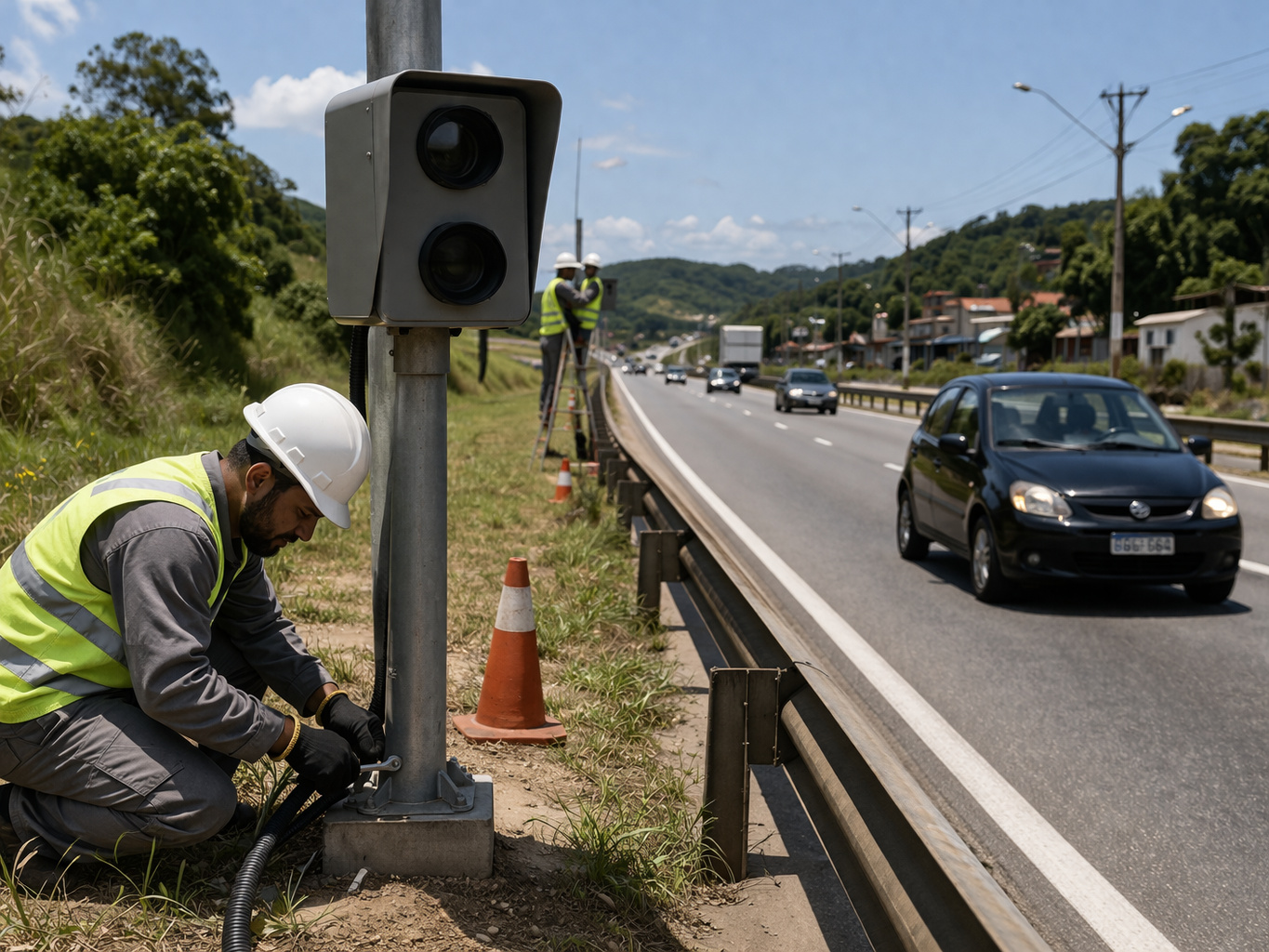
New devices begin to be implemented this semester and promise to strengthen speed control on strategic roads in the Metropolitan Region and Lakes
A new phase of reinforcement in road inspection has begun in the state of Rio de Janeiro, drawing the attention of drivers and authorities. In this scenario, the Department of Highways of Rio de Janeiro started, on Tuesday, March 24, 2026, the installation of new radars on the RJ-104 and RJ-106 highways, two of the busiest in the state.
Thus, the official forecast indicates that the entire system will be fully operational by June 2026, expanding monitoring and traffic organization. At the same time, this movement is part of a broader plan by the state government, which foresees the implementation of 390 new devices throughout the road network.

Expansion of inspection on state highways
Initially, in this first phase, at least 144 new devices will be installed, including speed reducers and signal advance controllers, which enhance control at strategic points. Furthermore, the implementation was structured based on technical criteria defined by DER-RJ, ensuring greater efficiency in the distribution of devices.
-
After launching the new GS3 with a 1.5 turbo engine producing 170 hp, GAC partners with Flamengo, enters the field with the largest fan base in Brazil, and accelerates an ambitious offensive to gain scale and confidence in the national market.

-
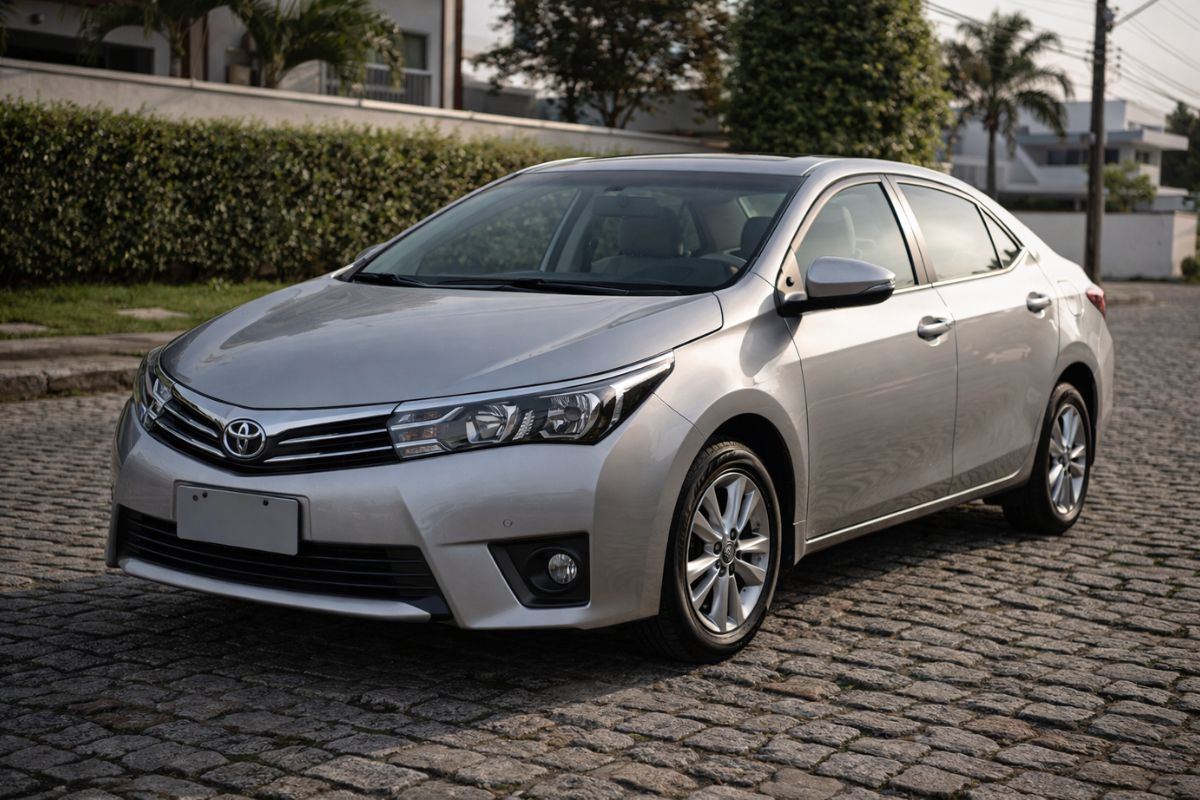
The Corolla from 2015 to 2019 depreciates so little that a 10-year-old model is still worth over 76 thousand reais, and owners treat this sedan as a safe investment thanks to its reputation for durability that no competitor has been able to match.
-
Is it worth considering a financed 2025 HB20 Comfort? A simulation with R$ 50,000 in the bank shows installments ranging from R$ 5,687 to R$ 2,365.

-
With an ‘unbreakable’ engine that runs over 200,000 KM, the most sought-after used car in Brazil remains a great choice; also check out the top 10.

Therefore, the installation will occur gradually, allowing for an organized transition between the old and new equipment. In this way, the process aims to maintain the continuity of inspection without compromising traffic flow.
RJ-106 receives the largest volume of radars
The RJ-106 highway, known as Amaral Peixoto Highway, will concentrate most of the new devices, with the installation of 133 devices along approximately 200 kilometers. In this context, the road connects important cities such as Niterói and Macaé, reinforcing its relevance in the state road system.
Thus, the increase in inspection accompanies the intense flow of vehicles and the economic importance of the highway, enhancing control at different points along the route. Additionally, the distribution of the devices was planned to cover strategic areas along the road.
RJ-104 will also be equipped with new devices
On the other hand, the RJ-104 will also undergo significant changes, as a stretch of 21 kilometers will receive 11 new speed reducers, covering both directions of the highway. In this sense, the stretch crosses municipalities such as Niterói, São Gonçalo, and Itaboraí, amplifying the direct impact of the measure.
Thus, speed control will be reinforced in areas with high urban circulation, contributing to the organization of traffic along the road. At the same time, the distribution of devices considers points with a greater need for inspection.
Gradual implementation and information updates
The replacement of old devices will be done gradually, following technical criteria for inspection, while the new radars will be activated as each point is prepared for operation. According to DER-RJ, the list with the location of the devices will be continuously updated, ensuring greater transparency in the process.
Thus, this information will be made available on the official website of the agency, allowing drivers to monitor active inspection points. This process aims to ensure organization and clarity during the implementation of the new system.
In light of this advancement in the inspection of state highways, how will drivers adapt to this new reality on the roads of Rio de Janeiro?









Seja o primeiro a reagir!