





 Português
  Inglês
  Espanhol
  3 min de leitura
  0 comentários


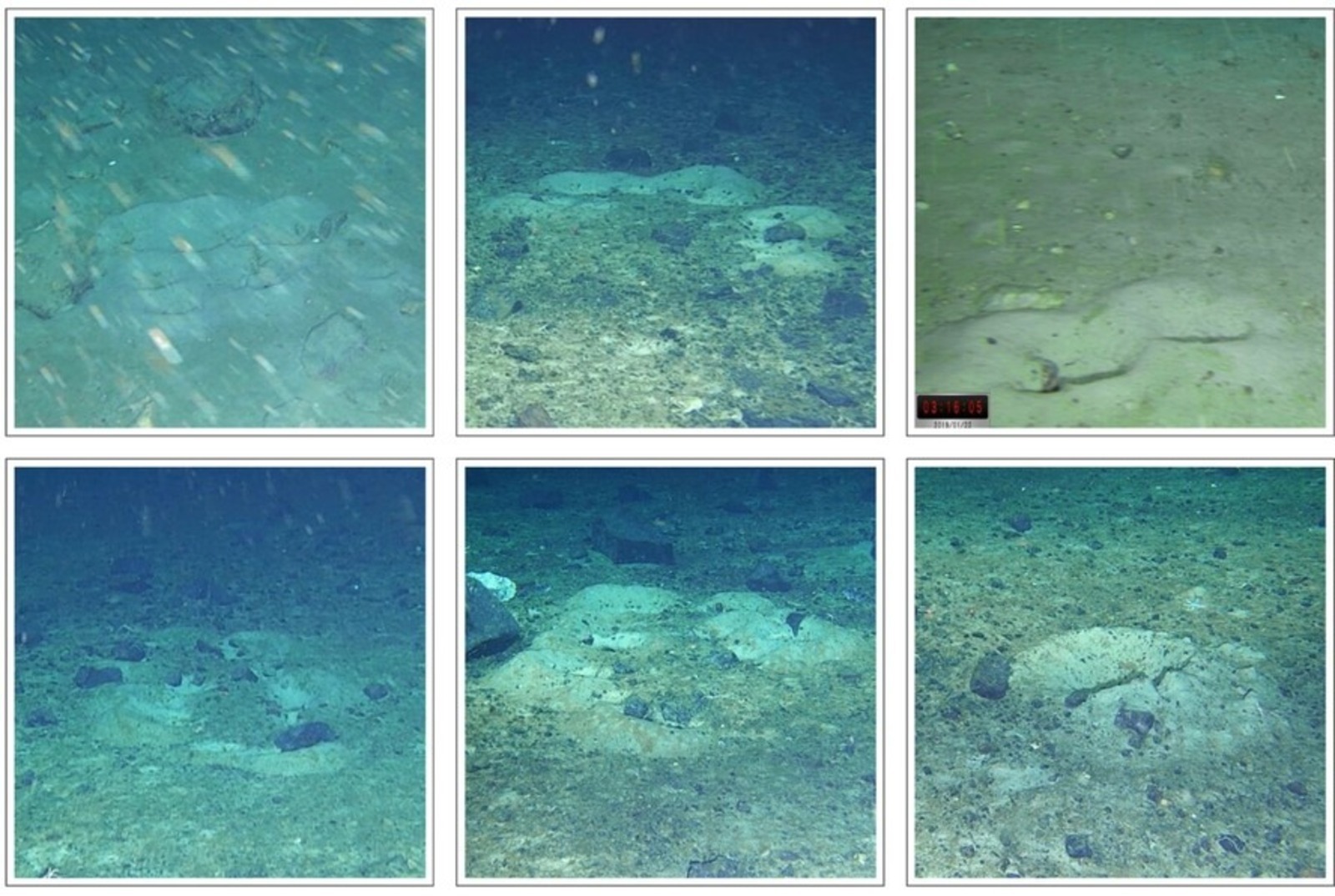
Discovery Of Giant Rockfish Nests Surprises Scientists In The Weddell Sea And Reveals Organized Colony Under Antarctic Ice
In the remote Weddell Sea, in the Antarctica, scientists found a massive colony of fish nests hidden beneath a 200-meter thick ice shelf. The discovery occurred during a 2019 expedition and revealed an unusual phenomenon in the Antarctic ecosystem.
Fish Nests Revealed Beneath 200 Meters Of Ice By Aquatic Robot
The discovery took place in the far western Weddell Sea, one of the most isolated and hostile regions of Antarctica.
Researchers were investigating the area in search of traces of the Endurance ship, belonging to explorer Ernest Shackleton, which sank in 1915.
-
A bright yellow mushroom imported from Asia escaped from a cultivation farm in the United States in 2010 and is now aggressively spreading across 25 states, destroying entire communities of native fungi in American forests.

-
Buried under China, a colossal machine weighing 20,000 tons began operating as the largest neutrino detector on the planet and, in just 59 days, surpassed results that science took half a century to achieve.

-
Iran enters the center of a climate alert after the war emitted 5.6 million tons of CO2 in two weeks, surpassing the annual pollution of entire countries.

-
Lunar exploration may change after a Chinese probe finds a “cavity” of radiation that reduces the impact on astronauts by up to 20% at certain times on the Moon.

Under an ancient ice shelf measuring about 200 meters thick, scientists found thousands of fish nests arranged in surprising geometric patterns.
The circular structures formed clusters that resembled organized neighborhoods on the ocean floor.
The discovery was confirmed using an aquatic robot. The equipment captured detailed images showing a vast colony of fish living and reproducing in the area.
The details of the find were described in a study published in the scientific journal Frontiers in Marine Science.
Expedition Paved The Way After Iceberg A68
The discovery occurred during the 2019 Weddell Sea Expedition. The scientific mission was organized following the calving of iceberg A68, which happened in 2017.
The iceberg measured about 5,800 km² and broke away from the Larsen C ice shelf. The event opened a natural corridor that allowed research in previously inaccessible areas of Antarctica.
The scientific team operated aboard the polar research vessel SA Agulhas II. During the expedition, autonomous underwater vehicles, known as AUVs, and also a remotely operated robot were used.
While the equipment mapped the seabed in search of the Endurance, high-definition images revealed over a thousand circular fish nests on the ocean floor.
Each nest had been carefully cleaned of a thick layer of plankton debris.
Organization Of The Colony Caught The Scientists’ Attention
The fish nests were not distributed randomly. The structures followed patterns with curves, clusters, and densely populated areas.
The responsible builders of these nests were fish of the yellowfin notie species, scientifically called Lindbergichthys nudifrons. The animal is also known as rockfish.
Each nest seemed to be guarded by one of the parents. The fish stayed over the eggs, warding off potential predators and keeping the area clean.
Scientists believe this organizational pattern may represent a collective survival strategy within the Antarctic environment.
Group Strategy May Explain The Pattern
Researchers associate the observed behavior with the so-called “selfish herd” theory. In this model, individuals positioned at the center of a group tend to gain greater protection from predators.
Meanwhile, animals located at the edges are often larger and stronger, defending their positions more intensely.
The distribution of the fish nests may reflect precisely this type of collective protection strategy, balancing cooperation and self-preservation.
Robot Discovery Reinforces The Importance Of Protecting The Weddell Sea
Although the 2019 mission did not find the Endurance, the ship was located only in 2022, at a depth of 3,008 meters. Nonetheless, the expedition generated one of the most fascinating ecological records in Antarctica.
The calving of iceberg A68 exposed areas that had been covered by ice for millennia. This allowed the observation of an ecosystem that had previously remained completely hidden.
The region where the fish nests were found is classified as a Vulnerable Marine Ecosystem. This type of environment is considered delicate and essential for local biodiversity.
According to scientists, the new evidence reinforces the need to transform the area into a Marine Protected Area in the Weddell Sea.
The proposal had already been discussed by international bodies. For researchers, protecting the region means preserving not only penguins and seals but also these underwater nurseries that sustain the entire Antarctic food chain.
The study emphasizes that this environment still holds many mysteries, and new research may reveal more secrets about life under the Antarctic ice.
With information from Galileu Magazine.






-

Uma pessoa reagiu a isso.