





 Portuguese
  English
  Spanish
  4 min of reading
  0 comments


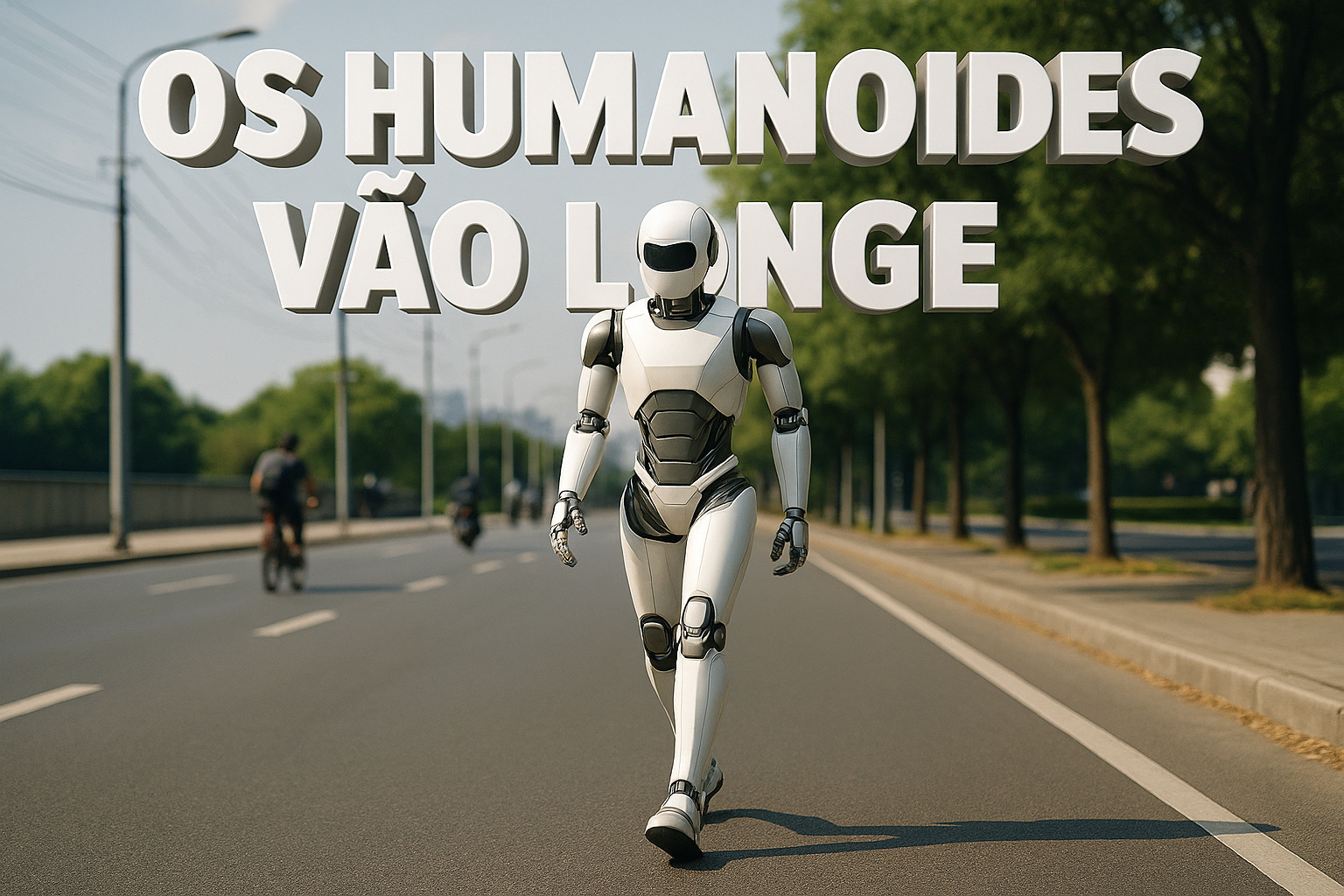
AgiBot A2 Travels 106 Km Between Suzhou and Shanghai and Symbolizes a Strategic Turn in the Race for Advanced Humanoid Robots
A major technological achievement with significant international impact was recorded in China in November 2024, drawing global attention to the evolution of advanced humanoids. On November 10, 2024, the robot AgiBot A2, developed by the company AgiBot, began its journey in Suzhou, traveling on highways and busy streets. According to the Guinness World Records, the robot covered 106.286 kilometers to reach the historic promenade of the Bund in Shanghai on November 13, 2024. This record confirms China’s leadership in the global race for physical artificial intelligence.
Technical Investigation Reveals Unique Potential of the New Generation of Humanoids
The performance of the A2 is the result of a technical design based on advancements in navigation, balance, and environmental reading. According to AgiBot, the robot stands 169 centimeters tall and utilizes sensors capable of adapting to different surfaces, maintaining stability even in complex urban areas. According to videos released by the company, the A2 walked alongside cyclists and scooters with ease and then accelerated as it approached the Bund. This behavior demonstrates the maturity of locomotion algorithms and the integration between hardware and embedded AI.
Furthermore, AgiBot states that the A2 was designed for customer service, including features for integrated chat and lip reading, which expands its use in public services, commerce, and technical support operations. These features enhance the potential of physical AI as a strategic sector for the next decade.
-
Scientists detect a rare and frightening phenomenon in the Pacific Ocean that could trigger a devastating Super El Niño as early as 2026, and American experts say it is one of the strongest ever recorded in history.

-
Researchers from Embrapa have discovered how to transform the saline water found in 140,000 wells in the Brazilian Semi-Arid region into a tool for producing food in an area where agriculture has always relied solely on rainfall.

-
China inaugurates a ghost factory that operates in the dark 24 hours a day without any human workers and produces 10 million smartphones a year using 97% of equipment developed by the company itself.
-
A thousand-year-old caliphate city may be hidden beneath a pasture in Spain where anyone could walk by without noticing anything, but LiDAR technology has revealed terraces, walls, and a planned urban grid beneath the surface.


Economic and Social Impacts of the Technological Achievement
The A2’s record highlights a global movement that is already transforming economies and industrial sectors. According to projections from Morgan Stanley, the world could surpass one billion humanoids by 2050, driving automation, logistics, urban services, and manufacturing. This growth represents a billion-dollar contest for technological leadership, especially among Chinese, European, and North American companies.
.@AgiBot_zhiyuan's A2 humanoid has earned a Guinness World Records title for the longest distance walked by a humanoid robot.
The A2 humanoid completed a 106.286 km cross-provincial walk.
Learn more here: https://t.co/bkVfD0uZwB
Source: AgiBot#humanoid #humanoids pic.twitter.com/tYtkC730W1
— Humanoid Robotics Technology (@HumanoidRTech) November 24, 2025
Experts assert that the A2’s achievement could accelerate private investments and broaden the search for humanoids capable of operating in real environments. This advancement may create new jobs, stimulate production chains, and enhance the international competitiveness of the robotic industry. At the same time, Chinese authorities emphasize that development should follow strict technical criteria, ensuring safety, efficiency, and sustainability.
The Race for Humanoids Exposes International Challenges and Pressures
Despite the advancements, the A2’s record underscores the growing pressure on companies and countries involved in the sector. China’s ability to transform research into accelerated production poses geopolitical and economic challenges. According to international analysts, technological dominance in advanced robotics could influence global supply chains, labor standards, and industrial policies.
In August 2024, China hosted the first Robotic Games, gathering over 500 competitors in basketball and cleaning events. Chinese authorities point out that initiatives like this strengthen the innovation ecosystem and place the country at the center of the competition for the next generation of physical AI. This scenario highlights that the expansion of humanoids is just beginning.
Planning and Challenges for Sustainable Adoption
Currently, Chinese laboratories and companies are working together to define technical standards that allow for the safe entry of humanoids into the global market. According to experts, regulation will be crucial to avoid operational risks and ensure that technology advances sustainably. Although there is still no date for large-scale adoption, authorities emphasize that all stages must be monitored and carefully regulated.
This stance aims to prevent technical failures and ensure that humanoids operate safely, avoiding issues already seen in other emerging technologies that advanced too quickly.
The Achievement in a Global Context
The A2’s feat follows the global trend of testing technologies capable of transforming local economies and strategic sectors. According to international data, large countries are already intensifying research in physical AI, advanced robotics, and autonomous systems. These projects reinforce the importance of responsible development that combines innovation, safety, and positive social impact.
What Does the Future Hold for Physical Artificial Intelligence?
Economic and technological experts evaluate that the A2’s record may be a fundamental milestone for the humanoid industry. The ability to translate this advancement into real benefits will depend on efficient governance, transparency, and technical standardization.
Meanwhile, the success of the A2 illustrates the size of the challenge: technology is advancing rapidly, but the world still needs to decide what the limit will be between progress, safety, and social responsibility.
In light of this scenario, an essential question arises: should the advancement of humanoids prioritize speed to meet global demand or require a more careful evolution, ensuring safety and complete control of the technology? What do you believe should guide the next steps of physical artificial intelligence?









Seja o primeiro a reagir!