





 Portuguese
  English
  Spanish
 4 min of reading
  9 comments


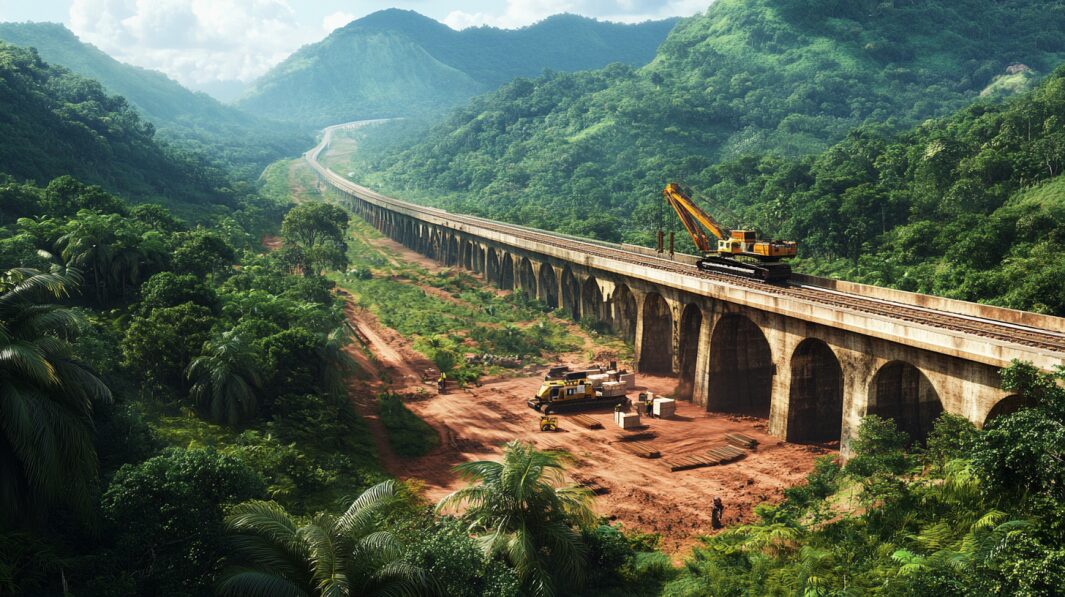

With an investment projected at R$ 12 billion, the new railways aim to improve state logistics, connecting production areas to ports and facilitating export.
When thinking about large infrastructure projects in Brazil, the exorbitant cost and the socioeconomic impacts immediately come to mind.
But in Santa Catarina, a R$ 9 billion project for a new highway is already starting to divide attention with an even bolder proposal: the construction of two new railways, estimated to be worth significantly more than the Via Mar.
These railways promise to transform the state, but the feasibility of their costs and timelines remains a big unknown, especially in a scenario where clarity about private investment is lacking.
-
50 viaducts, 4 tunnels, 28 bridges, and 40 kilometers of bike paths: BR-262 in Espírito Santo will receive 8.6 billion reais for the largest engineering project in the state’s history, inspired by the Immigrant Highway in São Paulo.

-
Brazil produces too much clean energy and doesn’t know what to do with it: over 20% of solar and wind capacity was wasted in 2025 while investors flee and 509 renewable generation projects were abandoned in the last year.

-
Piauí will produce a new fuel that replaces diesel without needing to change anything in the truck’s engine and reduces pollutant gas emissions by half: truck drivers from all over the Northeast are already celebrating the news that will arrive later this decade.

-
A new Brazilian shopping center worth R$ 400 million will be built in an area equivalent to more than 4 football fields, featuring 90 stores, 5 cinemas, a supermarket, a college, and parking for 1,700 cars, potentially generating 3,000 jobs.


Billions Estimated to Improve Logistics
According to the NSC Total portal, the Federation of Industries of Santa Catarina (Fiesc) states that the project for the Via Mar, a highway parallel to BR-101, could cost up to R$ 9.2 billion, attracting attention for its magnitude.
However, the plans for the railways exceed that figure, with projected investments of about R$ 12 billion.
According to Fiesc, this projection includes high costs with executive projects that are already underway to define the layout and technical feasibility.
These railways should serve strategic regions: the first route would connect Chapecó to Correia Pinto, and the second would connect Araquari and Navegantes, optimizing cargo transport and promoting regional development.
Both projects are in the final phase of development, with completion expected in March 2025.
The Projects In Detail: Connections With the South Network and the Ports
The railway link between Chapecó and Correia Pinto has an estimated cost of about US$ 2 billion and a length of 319 kilometers.
This route is essential for the flow of production from the west of Santa Catarina and nearby regions, improving access to the state’s ports.
According to information from the state government, the goal is to reduce logistical costs and promote a more efficient and sustainable transport.
The second project, which will connect Araquari to Navegantes, will require an investment of approximately US$ 300 million.
This railway branch will be important for connecting port complexes: Araquari already has a line with São Francisco do Sul, which facilitates cargo transport between the ports and other regions, both for import and export.
Challenges to Make the Projects Viable: Where Will the Resources Come From?
Despite the planning and initial investments in executive projects, there is still no defined financial modeling for the implementation of these works.
The role of the private sector is deemed essential, but it remains uncertain.
As highlighted by Fiesc, ensuring private sector participation in infrastructure projects of this magnitude is a complex task that requires attractive and robust financial proposals, especially in times of economic instability.
The executive projects, which total a state investment of R$ 33 million, started in 2022 and are ongoing to define technical and financial specifications.
These studies are crucial to attract private sector partners and define the appropriate financing model.
According to state sources, so far, there are no guarantees on how these resources will be obtained, raising doubts about the future of the projects.
Impacts on Santa Catarina’s Logistics and Economic Sector
This logistical development is considered essential to strengthen the competitiveness of Santa Catarina’s production, expanding export routes and facilitating access to the ports.
For the agro-industrial sector of the West of Santa Catarina, for example, the new railway line could represent a logistical revolution, ensuring faster and more efficient transport.
The expectation is that the railways can help reduce dependence on overloaded highways, such as BR-101.
For experts, these projects offer a chance to restructure the transport system in the state and reduce the environmental and economic impacts caused by road transport.
Strategic Investment or Financial Risk?
In light of the high costs and uncertainties regarding resource acquisition, the new railways are seen as a risky investment by many.
Despite the optimism of entrepreneurs and the state government, some question the viability of these projects, particularly considering the financial uncertainty.
The logistical complexity and the associated costs are the main challenges for these plans to come to fruition.
Will Santa Catarina be able to make these billion-dollar railway projects viable, ensuring private participation and the promised economic benefits?








Em cenário de instabilidades económica causada por gastos exessivos do governo, insegurança jurídica, não acredito que a iniciativa privada vá querer colocar dinheiro nesse projeto,.
O problema é a forma que está sendo feita. Provavelmente tenha muita politicagem e no Brasil atual tudo o que vem de político é suspeito. Inda mais com o maior **** da história na presidência.
Sem governo federal , duvido