





 Portuguese
  English
  Spanish
 5 min of reading
  0 comments


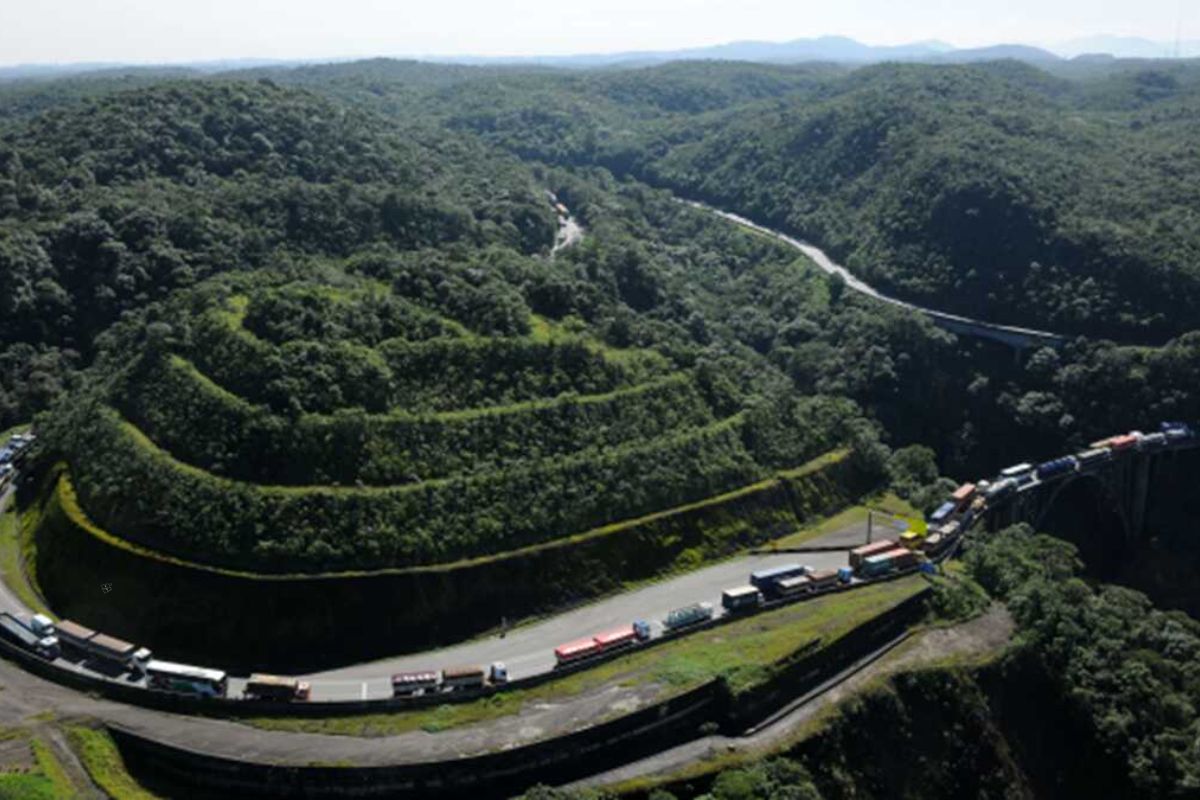
The Immigrant Highway, Axis of the Anchieta-Immigrants System, Concentrates Traffic Between the Capital and the Port of Santos and Houses the Largest Road Engineering Project in Latin America
The busiest highway in Brazil is not just a road. It is an entire system designed to connect the Metropolitan Region of São Paulo to the coast, sustain the largest port in Latin America, and accommodate millions of work and tourism trips. At the heart of this flow is the Immigrant Highway, the backbone of the Anchieta-Immigrants System (SAI), featuring extensive tunnels, overpasses over the Serra do Mar, and an operation that changes direction according to demand.
Over five decades, the SAI evolved from an emergency solution to a critical logistics platform, with reversible lanes, private management under concession, and constant security enhancement. Understanding how this structure was born, operates, and expands helps explain why the busiest highway in Brazil became a technical reference and a case study in regional mobility.
Why It Is the Busiest Highway in Brazil
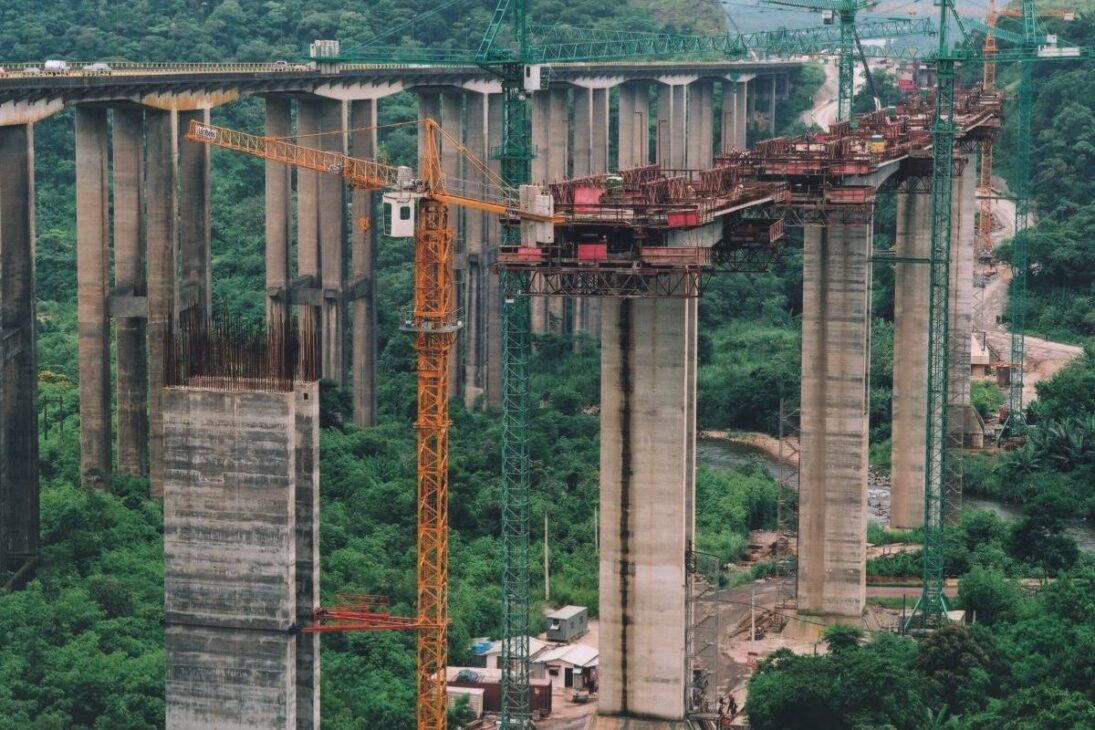
The volume is explained by the strategic function. The São Paulo–Baixada Santista connection concentrates daily cargo transportation to the Port of Santos, the largest in Latin America, as well as worker commutes and tourism peaks. When the economy accelerates, the highway feels it first, reflecting the increase in containers, interstate buses, and passenger vehicles.
-
A forgotten cord on the floor of a basement in Vienna leads a plumber to a box containing 30 kilograms of gold with Mozart’s face, hidden before World War II. The treasure, worth 2.3 million euros, was just centimeters away from a worker who ignored the sign a day earlier.

-
A couple buys an old chalet, breaks the kitchen floor for renovation, and finds over a thousand coins of gold and silver hidden since the English Civil War over 4 centuries ago.

-
Rigid bags with their days numbered: new trend prioritizes comfort in 2026.

-
YouTuber creates an excavator equipped with a giant 4.5-meter sword to challenge his brother to a rematch, and the invention quickly goes viral on social media.

There is also the geography. Access to the São Paulo coast converges at the Serra do Mar, which channels demand into a few corridors. Without the SAI, the bottleneck would be permanent, especially during extended holidays and peak hours for industry and commerce.
How the Anchieta-Immigrants System Was Born
The story begins with the Anchieta Highway, a pioneer in descending the mountain, which became insufficient with the industrialization of ABC and metropolitan growth.
The saturation of Anchieta demanded a high-standard alternative capable of reducing curves, increasing fluidity, and enhancing safety.
Inaugurated in 1974, the Immigrant Highway was that answer.
The modern layout, with a straighter profile and superior construction standards, distributed traffic and decreased pressure on Anchieta.
Years later, the expansion of the SAI gained new momentum with the second lane of the Immigrants, opened in 2002, consolidating the operation in multiple axes.
Giant Tunnels and Engineering in the Serra do Mar
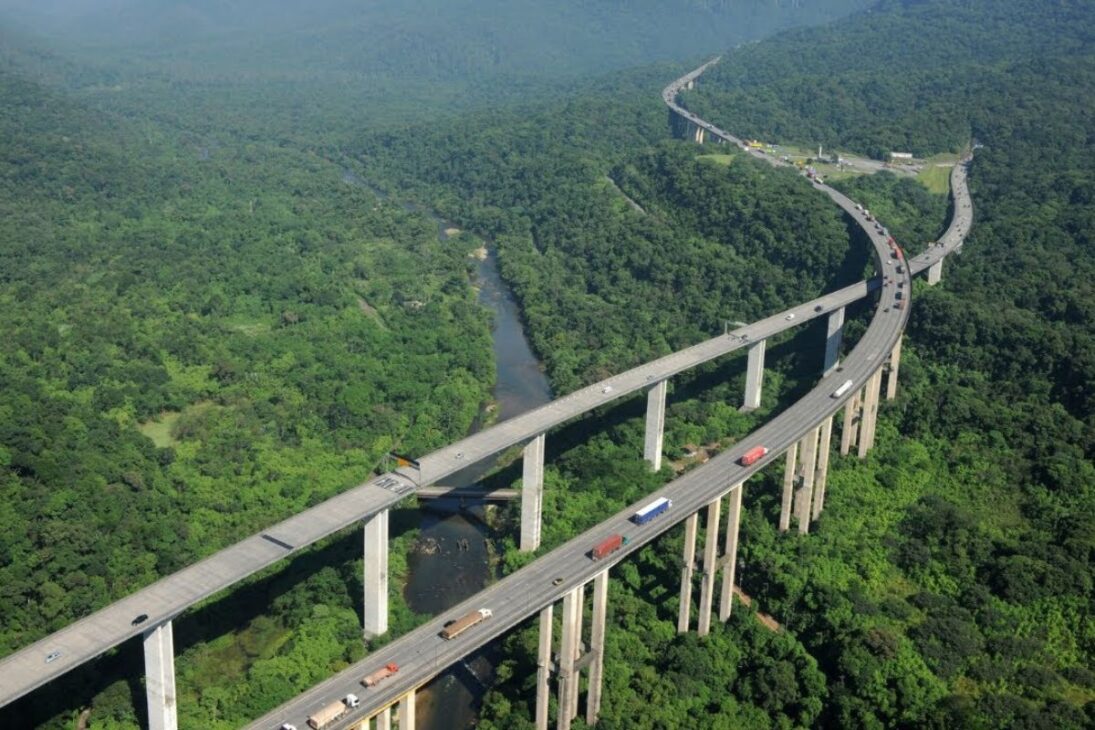
Overcoming the Serra do Mar without destroying the Atlantic Forest was the great challenge. The technical solution combined long tunnels and elevated viaducts to cross steep slopes and sensitive areas.
The tunnels of the Immigrants are among the longest in the country, and the set of works is recognized as the largest road engineering achievement in Latin America.
Before the heavy fronts, a 39-kilometer service road brought materials and equipment to the mountain, shortening deadlines and risks.
The construction method limited cuts and fills, minimizing the impact on the soil and water regime, a critical point in a high-rainfall region.
Operation with Reversible Lanes and Traffic Rules
The SAI operates with reversible lanes. On weekends and holidays, the directions are adjusted to match the flow of vehicles: more lanes heading to the beaches on the way down, more lanes returning on the way back.
This flexibility is key to reducing congestion on days of asymmetric demand, maintaining average speeds above the historical rates of the old Anchieta.
There are specific rules for safety. Trucks and buses do not descend via the Immigrants, using Anchieta downhill.
This measure reduces the braking effort on the steeper slopes and mitigates the risk of brake overheating, a classic problem on long downhill stretches.
Who Operates and Who Regulates
Since 1998, the SAI has been managed by the Ecovias concessionaire, responsible for maintenance, operations, user assistance, and contractually stipulated investments.
Regulation and oversight fall to ARTESP, a state agency that monitors service levels, safety, construction deadlines, and toll policies.
This concession arrangement allowed for the adoption of operational control centers, variable message panels, camera monitoring, and rapid responses to incidents, factors that increase road availability and reduce blockage times in occurrences.
What’s Coming: Third Lane and Capacity Expansion
With rising demand, the third lane of the Immigrants is underway, with an expected completion date set for 2031.
The project includes a new tunnel approximately 6 kilometers long, which is set to become the largest road tunnel in Brazil, along with access and system improvements.
The expansion aims to gain operational resilience for holiday peaks, port seasonality, and climatic events.
More capacity is not just more lanes. It involves safe evacuation in tunnels, reinforced drainage in the mountains, and active speed management to maintain steady flow and reduce chain collisions.
Economic and Environmental Impacts
On the economic side, the SAI is a logistical artery of the Southeast. The predictability of travel shortens delivery times, reduces in-transit inventory, and lowers freight costs, reflecting on Brazil’s cost of living.
Tourism also benefits from regular accessibility to the coast, which stimulates services and commerce in the Baixada cities.
On the environmental side, the evolution between phases has shown learning in mitigation.
During the duplication inaugurated in 2002, the area cleared of vegetation was substantially smaller than in the first lane, with an emphasis on elevated crossings and a design that avoids aggressive cuts.
The current expansion maintains this logic of work within the work, reducing impacts on the biome and wildlife.
Curiosities You Can’t See from the Wheel
Behind the scenery, the North Lane of the Immigrants hosts 11 tunnels over 58.5 kilometers, while the South Lane has four.
The 24-hour operation combines traffic sensing, local meteorology, and pre-defined reversal plans for holidays.
The nickname “Highway of the Century” originated at the launch, synthesizing the scale and modernity of the project at the time.
Another lesser-remembered aspect is the logistics of sand and concrete in a humid mountain environment, which required rigorous quality control for the durability of tunnels and slabs.
The structural reliability is what sustains the busiest highway in Brazil when the queue of trucks to the port and the convoy of cars to the coast converge.
The busiest highway in Brazil is, in practice, a system that balances heavy engineering, intelligent operation, and environmental protection. For you, what is the biggest challenge going forward: increasing capacity with construction in the mountains, maintaining fluidity during peak port and tourism times, or enhancing safety in long tunnels? Those who use the SAI daily feel real improvements with the reversals and assistance. Share in the comments how the operation impacts your routine, what improvements you would prioritize, and whether the third lane should focus more on capacity or on redundancy for emergencies.









-

-

-

-

-

-

244 pessoas reagiram a isso.