





 Portuguese
  English
  Spanish
  4 min of reading
  0 comments


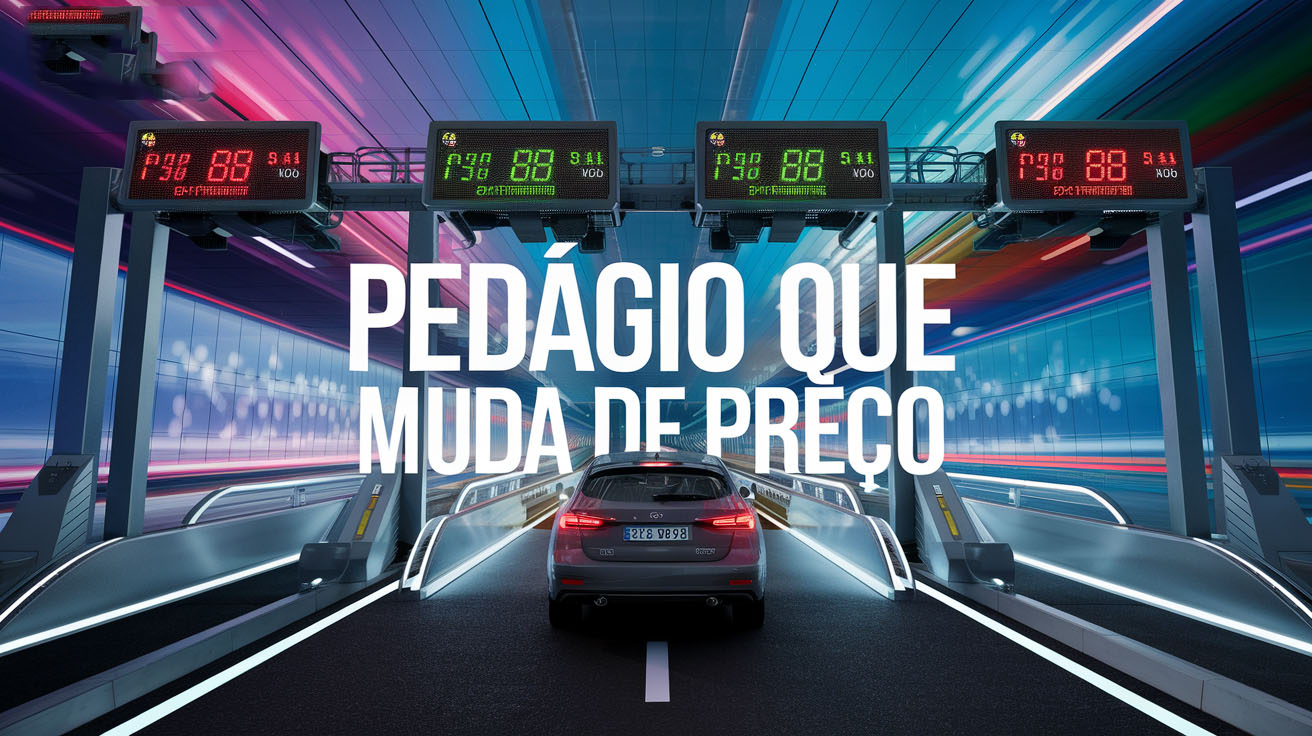
Proposal For Federation May Change Traffic On Brazilian Highways! Variable Toll Rates, Already Tested In Japan And The USA, Could Reach The BRs, Offering Cheaper Rides During Off-Peak Hours. Will This Be The End Of Traffic Jams?
Imagine crossing Brazilian highways paying less during alternative hours while avoiding traffic jams and saving money.
This possibility may soon become a reality, thanks to an innovative proposal that is stirring the debate about the toll system in Brazil.
Inspired by models already adopted in countries like the United States and Japan, the idea brings promises of smoother traffic and fairer rates, but also raises questions about its viability and acceptance.
-
50 viaducts, 4 tunnels, 28 bridges, and 40 kilometers of bike paths: BR-262 in Espírito Santo will receive 8.6 billion reais for the largest engineering project in the state’s history, inspired by the Immigrant Highway in São Paulo.

-
Brazil produces too much clean energy and doesn’t know what to do with it: over 20% of solar and wind capacity was wasted in 2025 while investors flee and 509 renewable generation projects were abandoned in the last year.

-
Piauí will produce a new fuel that replaces diesel without needing to change anything in the truck’s engine and reduces pollutant gas emissions by half: truck drivers from all over the Northeast are already celebrating the news that will arrive later this decade.

-
A new Brazilian shopping center worth R$ 400 million will be built in an area equivalent to more than 4 football fields, featuring 90 stores, 5 cinemas, a supermarket, a college, and parking for 1,700 cars, potentially generating 3,000 jobs.


How Variable Tolls Work
At the center of the proposal is the concept of variable tolls, where the price paid by the driver depends on the time of use of the highways.
During periods of lower traffic, the rate would be reduced, while during peak hours, the prices would increase.
This logic, according to the Federation of Industries of Santa Catarina (Fiesc), seeks not only to balance traffic but also to promote significant improvements in road infrastructure.
In a document sent to the Ministry of Transport and the National Land Transportation Agency (ANTT), Fiesc proposed adopting this model on BR-101 North and BR-116.
These highways, which pass through important regions in Santa Catarina, are known for high vehicle circulation and frequent congestion challenges.
Suggested Toll Models
The Fiesc proposal details two possible models of variable charging:
Scheduled Rate: pre-defined prices for specific hours, allowing drivers to plan their trips based on costs.
Dynamic Rate: prices adjusted in real-time, according to traffic volume, requiring advanced technological systems for monitoring and calculation.
While the scheduled rate offers predictability, the dynamic rate provides greater flexibility and efficiency in combating traffic jams.
According to Fiesc, this latter option would also be the most advantageous for mitigating queues at tolls, as it adjusts pricing almost instantly.
International Examples Prove Effectiveness
The concept of variable tolls is not new and has already been implemented in other countries with satisfactory results.
In the United States, the Midpoint Memorial bridge in Florida uses a toll system that varies according to the time of day.
In Japan, the Bay AquaLine expressway, which combines a bridge and a tunnel, also adopts dynamic pricing to encourage traffic during less busy times.
According to experts, these initiatives have helped better distribute vehicle flow, reducing congestion during peak hours and promoting a more pleasant experience for drivers.
Inspired by these examples, Fiesc believes Brazil can replicate the model, adapting it to local characteristics.
Infrastructure Investments
In addition to suggesting variable tolls, Fiesc highlighted the need to modernize the infrastructure of BR-101 and BR-116. Prioritized projects include:
- Construction of a flyover in Joinville, in the Expoville area, to relieve local traffic;
- Adoption of “free-flow” toll systems that eliminate the need for stops for payment, making trips faster;
- Increased use of monitoring technologies, essential for implementing dynamic pricing.
These improvements aim to transform Santa Catarina’s highways into examples of safety and efficiency, ensuring they are prepared to meet the growing demand from drivers and carriers.
Impact On Traffic And Finances
One of the promises of variable tolls is to directly benefit drivers who adjust their travel times to take advantage of lower rates.
This change can lead to a more balanced distribution of traffic and lessen the stress of congestion.
On the other hand, implementation requires drivers to adapt to a new mentality of travel planning.
Although it represents an opportunity for savings, the system may also generate initial resistance, especially among those accustomed to traveling at fixed times.
Technology As An Ally Of The New Model
For variable tolls to work, significant investment in technology will be necessary.
The dynamic model, in particular, requires sophisticated real-time monitoring systems capable of assessing vehicle flow and adjusting prices automatically.
According to Fiesc, utilizing these technologies is essential for modernizing Brazilian highways and aligning them with the best global practices in traffic management.
The challenge lies in ensuring that concessions have the necessary resources to implement these innovations efficiently.
Next Steps
The Ministry of Transport and ANTT are analyzing the proposal presented by Fiesc.
If approved, the measure could redefine the highway concession system in Brazil, bringing a more flexible model aligned with the demands of modern drivers.
Are Brazilians ready for this revolution on the highways? Would you adjust your travel time to pay less at the toll? Share your opinion in the comments!









-

-

2 pessoas reagiram a isso.