





 Portuguese
  English
  Spanish
 4 min of reading
  36 comments


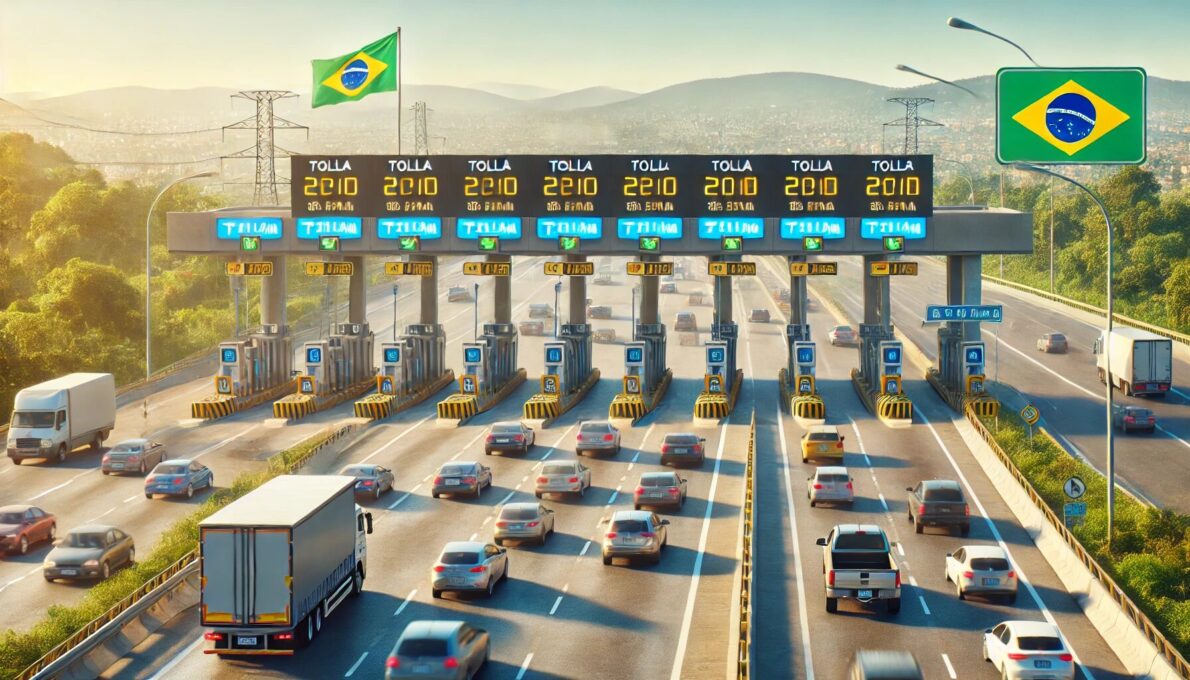

Federation Suggests Adoption of Variable Toll Rates on Highways, as Already Occurs in Countries Like Japan and the USA. The Model Would Encourage Traffic Outside Peak Hours and Bring Infrastructure Improvements.
Imagine paying a lower toll during off-peak hours and saving on your trip simply by adjusting your route throughout the day.
This reality, already present in some parts of the world, may be increasingly near Brazilian highways.
In a recent document, the Federation of Industries of Santa Catarina (Fiesc) proposed an idea that promises to revolutionize the concession system and impact drivers’ daily lives directly.
-
50 viaducts, 4 tunnels, 28 bridges, and 40 kilometers of bike paths: BR-262 in Espírito Santo will receive 8.6 billion reais for the largest engineering project in the state’s history, inspired by the Immigrant Highway in São Paulo.

-
Brazil produces too much clean energy and doesn’t know what to do with it: over 20% of solar and wind capacity was wasted in 2025 while investors flee and 509 renewable generation projects were abandoned in the last year.

-
Piauí will produce a new fuel that replaces diesel without needing to change anything in the truck’s engine and reduces pollutant gas emissions by half: truck drivers from all over the Northeast are already celebrating the news that will arrive later this decade.

-
A new Brazilian shopping center worth R$ 400 million will be built in an area equivalent to more than 4 football fields, featuring 90 stores, 5 cinemas, a supermarket, a college, and parking for 1,700 cars, potentially generating 3,000 jobs.


This idea is the charging of tolls with variable rates according to the time. Will this measure really help reduce traffic and costs for users?
New Proposal for Tolls in Santa Catarina
In search of improvements for the federal highways of Santa Catarina, Fiesc sent a document to the Ministry of Transport and the National Land Transport Agency (ANTT) suggesting the implementation of variable tolls on BRs 101 North and 116.
The variable toll proposal aims to encourage traffic outside peak hours, reducing congestion during busy times and promoting smoother travel on the roads.
According to Fiesc, the practice could dilute vehicle flow and improve the experience for those traveling on the state’s federal highways.
International Examples and Positive Results
The idea is not new and has been tested in countries like the United States and Japan. In Florida, for example, the Midpoint Memorial Bridge uses a variable toll model.
In Japan, the Bay AquaLine expressway, which includes a bridge and tunnel, also tested dynamic charging.
In both cases, the results were considered positive, encouraging traffic at alternative times while simultaneously reducing congestion.
These international models inspired Fiesc to propose a similar system for Santa Catarina’s highways.
The organization believes that, in addition to better distributing traffic, the model can ensure fairer rates for users who choose to travel during less busy times.
Two Models of Variable Toll
Fiesc suggests two possible approaches for charging variable tolls:
Scheduled Rate: with predetermined values for specific times, allowing drivers to plan their trips according to price variations.
Dynamic Rate: which requires more advanced technology and allows constant adjustments to prices based on real-time traffic volume.
The dynamic rate, although more complex, allows greater flexibility and adjusts the cost of the trip according to vehicle flow.
According to Fiesc, this approach would help avoid lines and congestion even more effectively, as the toll price would fluctuate in short intervals.
Planned Works and Improvements for BRs 101 and 116
In addition to the new toll model, Fiesc has also proposed a series of works to modernize and improve the infrastructure of the highways in question.
Among the suggested improvements are increased use of monitoring technologies, implementation of a “free-flow” toll system (without the need to stop for payment), and adapting the roads for various weather conditions.
On BR-101, for example, one of the planned works involves constructing an overpass in Joinville, in the Expoville area, which promises to ease local traffic.
These improvements aim to transform Santa Catarina’s highways into safer, modern, and better-equipped roads for heavy traffic while ensuring that travel conditions meet the needs of drivers.
Technology for an Efficient Toll
For the variable toll model to work, an investment in technology will be necessary.
Dynamic rates, in particular, require the installation of advanced monitoring systems capable of assessing vehicle flow in real time and automatically adjusting the toll amount.
According to Fiesc, the use of such technologies in Brazilian concessions would be an important step toward modernizing the highways, aligning the country with the most efficient and modern traffic management practices.
Impact on Drivers’ Pockets and Traffic
Fiesc’s proposal promises to benefit those willing to adjust their travel time to save on tolls.
Drivers will be able to choose between cheaper times, contributing to a more balanced distribution of traffic.
This policy, according to supporters, will allow highways to operate more efficiently, avoiding the stress of congestion and encouraging a more constant traffic flow.
On the other hand, the proposed model requires drivers to adapt to a more flexible charging system, which may generate some initial resistance.
The variation in rates, depending on the time, represents a new travel mindset that still needs to be accepted by the Brazilian public.
Next Steps and Analysis by the Ministry of Transport
At the moment, the Ministry of Transport and ANTT are analyzing the document submitted by Fiesc.
The decision on adopting this variable toll model still depends on legal approvals and adjustments.
If implemented, the system could redefine how highway concessions operate in Brazil, offering an alternative that, according to Fiesc, could benefit both drivers and concessionaire companies.
Will the variable toll rate become a reality on Brazilian roads? And you, would you be willing to adjust your travel schedule to save on tolls?








Pedágio nem deveria existir,tur o direito na constituição de ir e vir,pedágio e dupla tarifação,já que se paga IPVA pro desgoverno dar manutenção nas estradas,e o pior de tudo , concessionária são multinacionais que cobram as tarifas no Br semelhante ou maior que aos países de primeiro mundo que tem os salários mínimos de 15 euros por hora, enquanto no Br os salários mínimos são equivalente a 10 euros,por dia, então as tarifas teriam que ser relacionado a porcentagem do salário mínimo,mesma sacanagem ocorre com a gasolina e derivados,que eccercacde um dólar por litro nós países de primeiro mundo,e o mesmo aqui no país de r mundo ,bom também um país de 4 mundo lotado de **** **** vai esperar que tipo de reação….
Essa indústria da cobrança e fim da liberdade de ir e vir. No projeto tem a opção de não pagar qdo a concessionária qdo ela faz obras em horário inapropriado, causando filas e trânsito e atraso ou perda de tempo no percurso? Essas interdições muda e atrasa o motorista a pagar um valor diferente do que ele pretendia.
Pedágio justo é a cada 100km não a 70 como é na br116. E todo ano tem aumento, e tem muitos buracos, remendos horríveis, e sem iluminação 90% da mesma.
Rodovia marechal Rondon é a cada 10km tem vez que tem buraco na praça de pedágio faço rota de Araçatuba a panorama rodovia que liga Andradina a Tupi paulista é uma verdadeira **** principalmente em cima da ponte sobre o rio tem umas divisórias que eles colocam pixe que ficam pior que quebra molas quando passa é radiador intercooler vai trinca tudo difícil o dia que não quebra um caminhão a impressão que dá é que o responsável por aquele trecho tem parente que tem oficina verdadeiro descaso
Acho ótimo, ficaria melhor ainda se os preços praticados nas rodovias do estado de são Paulo ,(que são altíssimos,)igual aos cobrados nas Br…