





 English
  Francês
  Alemão
  Italiano
  Japonês
  Norueguês
  Portuguese
  Spanish
  3 min of reading


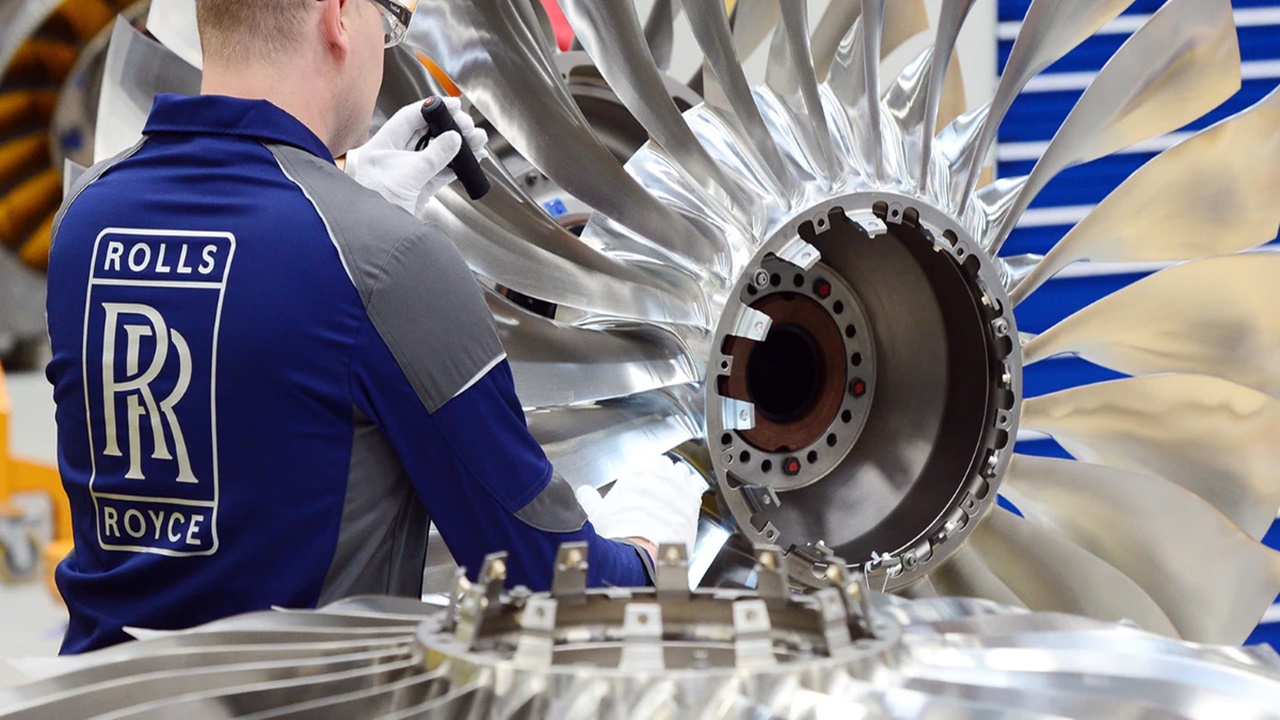
The Largest Aircraft Engine with Gear and Turbine Under Construction by Rolls-Royce Will Break the Current Record Set by General Electric Aviation
On last Monday (04/06), the Rolls-Royce, a subsidiary of the German group BMW, announced it has begun assembling the world’s largest aircraft engine, the UltraFan, which combines a turbine and gears. The British company aims to present the first demonstration model by the end of 2021, as it hopes to drive the reduction of polluting emissions.
Also Read
- New Portable Wind Turbine Generates Energy Anywhere and Can Operate Together with Solar Panels
- Ford’s Missing Giant, a 600-Horsepower Turbine-Powered Truck, Found After Forty Years
- Blade-Less Turbines Could Revolutionize Wind Farms and Change the World of Renewable Energy
- The World’s Most Powerful Steam Turbine Will Leave General Electric’s Factories to Equip a Nuclear Power Plant in England
- 92 Job Openings for High School and Higher Education to Work at the Multinational General Electric Today, April 5
- Using Mobile Technology for Site Management
The British company is beginning to build the world’s largest aircraft engine, aiming to achieve the desired sustainability in aviation over the next decades. The current record belongs to the GE9X, manufactured by General Electric Aviation, which was created to power the Boeing 777X.
Gas turbines will continue to be the backbone of long-haul aviation for many years, and the efficiency of the UltraFan, which combines turbine and gears, will help improve the industry’s transition to more sustainable fuels, which are likely to be more expensive in the short term than traditional jet fuel. The first operational test of the engine will be conducted with 100% sustainable aviation fuel.
-
‘Interlocking brick’ made of earth arrives in the construction industry with cost reductions of up to 40% on the project.

-
Espírito Santo will receive the largest engineering project in its history with the duplication of BR 262, which will have 50 viaducts, 28 bridges, and 2-kilometer tunnels cutting through the most challenging mountainous region of the entire state.

-
A project of nearly 9 million reais already has the first kilometer paved in Santa Catarina and promises to completely transform the access between Jaraguá do Sul and Rio dos Cedros in an area where tourism is growing at a rapid pace.

-
A couple builds a system to bring water from the spring to their land, climbs a hill with materials on their backs, and creates a simple, cheap, and sustainable solution to ensure their own water supply.


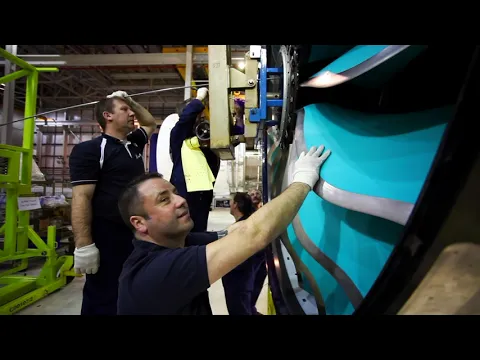

About the Largest Aircraft Engine in the World from Rolls-Royce
The first module of the project is under development in the United Kingdom. The engine will form the basis for a new family of UltraFan models, capable of powering both small and large aircraft, also known as narrowbody and widebody aircraft, respectively.
According to the company, the goal is to improve fuel efficiency by 25% compared to the first generation of the Trent engine, also developed by Rolls-Royce.
Some analysts speculate that the UltraFan, an engine that combines turbine and gears, could be surpassed by other low-carbon emission technologies.
But Rolls-Royce has stated that fossil fuel-powered turbines will continue to be the cornerstone of long-haul aviation for many years and that the UltraFan’s efficiency will aid in the transition to more sustainable fuels, which may be more expensive in the short term than traditional aviation fuel.
Specifications of the UltraFan Engine, Which Combines Turbine and Gears
- 140-inch (3.56 meters) fan with a total diameter of approximately 4 meters.
- A new Advance 3 core architecture combined with the ALECSys lean combustion system, to provide maximum efficiency in fuel burning and low pollutant emissions.
- Carbon titanium fan blades and a composite casing that reduce weight by up to 680 kg per aircraft.
- Advanced ceramic matrix composite (CMC) components that operate more effectively at high-pressure turbine temperatures.
- A gear system design that provides efficient power for high-thrust engines.










Seja o primeiro a reagir!