





 Português
  Inglês
  Espanhol
  5 min de leitura
  0 comentários


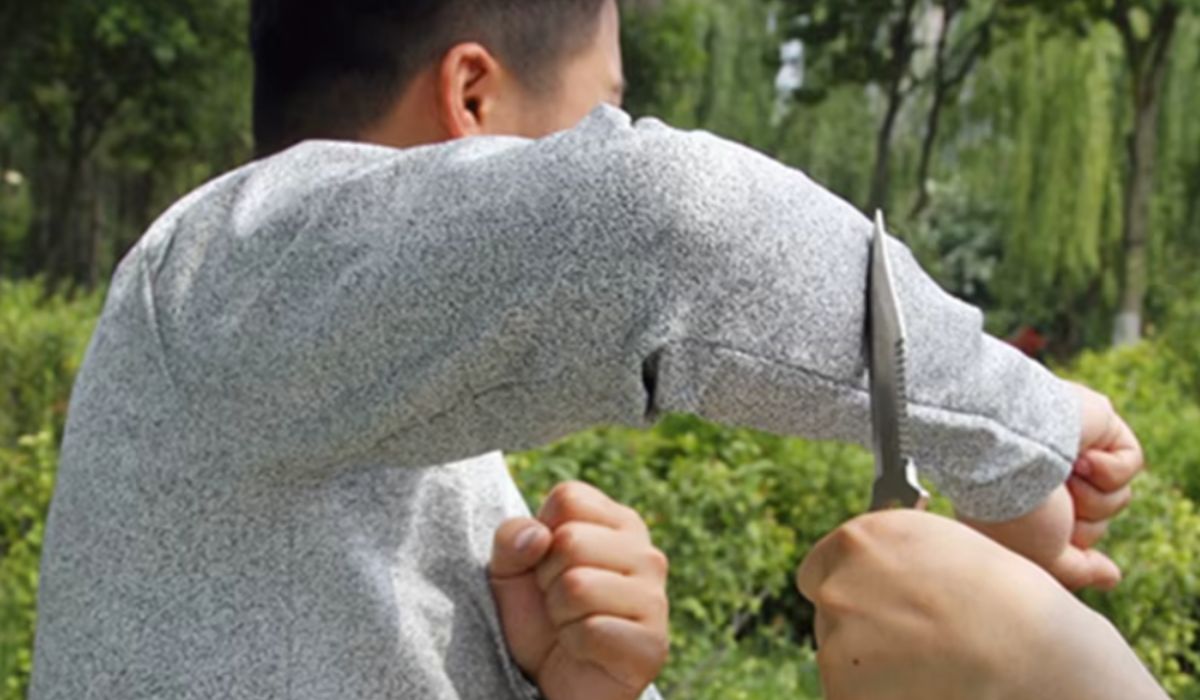
High-Performance Clothing Has Gained Space in International E-Commerce, Has Left Professional Use and Has Reached Common Consumers, Including in Brazil, Boosted by Global Marketplaces, New Logistical Routes and a Growing Discourse About Daily Protection.
Clothing advertised as “anti-knife” has begun to appear more frequently in export catalogs and e-commerce showcases linked to Chinese suppliers.
Jackets, vests, and t-shirts made from high-performance materials have been offered to everyday consumers.
This movement is also reaching buyers outside of China, including in Brazil, as reported by Diário da Região.
-
A bright yellow mushroom imported from Asia escaped from a cultivation farm in the United States in 2010 and is now aggressively spreading across 25 states, destroying entire communities of native fungi in American forests.

-
Buried under China, a colossal machine weighing 20,000 tons began operating as the largest neutrino detector on the planet and, in just 59 days, surpassed results that science took half a century to achieve.

-
Iran enters the center of a climate alert after the war emitted 5.6 million tons of CO2 in two weeks, surpassing the annual pollution of entire countries.

-
Lunar exploration may change after a Chinese probe finds a “cavity” of radiation that reduces the impact on astronauts by up to 20% at certain times on the Moon.


The expansion is driven by the growth of international online sales platforms and partnerships with marketplaces operating in the country.
This type of product, previously associated almost exclusively with security forces, private surveillance, and high-risk professional environments, has started to be presented to the civilian public as an additional protection alternative for daily life.
Chinese manufacturers, in promotional materials, highlight the possibility of combining mechanical resistance, mobility, and an appearance similar to conventional clothing.
According to the suppliers themselves, this set of characteristics would expand the potential for use outside of professional contexts.
Despite the language used in the ads, experts in personal protective standards emphasize that the term “anti-knife” does not indicate absolute protection.
The resistance to cuts and punctures varies according to the material, the construction of the piece, and the tests to which the product has been subjected.
In international standards, such as those adopted in the United States, there are specific methodologies to assess stab resistance, with distinct performance levels depending on the type of threat considered.
From The Protection Industry to Civil Consumption
For decades, the development of impact-resistant clothing was concentrated in military and police applications.
Starting in the second half of the last decade, Chinese companies began adapting materials already used in these segments for products aimed at civil use.
This information appears in technical descriptions disclosed by manufacturers in the textile sector.
This commercial repositioning occurs in parallel to the evolution of so-called technical fabrics.
These materials were already employed in areas such as sports, occupational safety, and personal protective equipment.
The proposal presented to consumers is that of an extra layer of protection, without the weight and characteristic look of traditional vests.
Nevertheless, the effectiveness of these pieces depends on objective parameters.
Clothing may show good resistance to superficial cuts.
However, it may have limited performance against deeper punctures.
The result varies depending on the type of blade, the angle of the strike, and the force applied.
Therefore, technical bodies and professionals in the field recommend paying attention to the specifications and tests reported by the manufacturer.
Mentioned Materials and Technical Limits

In export ads, the mention of ultra-high molecular weight polyethylene fibers is common.
This material is known by the acronym UHMWPE.
It is used in different types of protective equipment due to its combination of lightness and mechanical resistance.
This description appears in technical publications and industrial catalogs.
However, academic studies on protective fabrics and composites indicate that final performance does not depend solely on the type of fiber.
The way the fabric is structured directly influences the result.
The number of layers is also decisive.
The association with other materials alters the capacity to absorb impacts and resist cuts or punctures.
Thus, the mere presence of a specific fiber does not guarantee, by itself, a certain level of protection.
Tests, Certifications and Cited Standards
When certifications are referenced, they are often based on standards aimed at evaluating mechanical risks.
Among the most well-known examples is the standard of the National Institute of Justice, the NIJ.
This standard is used for stab-resistant vests.
It establishes testing methods and minimum performance criteria.
References to European standards applied to personal protective equipment also appear.
These standards are used, for example, to evaluate resistance to cuts and punctures in gloves and other items.
Experts explain that although these tests provide technical parameters, they do not substitute for specific certifications for trunk protection.
This distinction is relevant when the goal is to resist blade attacks.
Therefore, the commercial use of the term “anti-knife” can lead to broad interpretations.
In practice, technical standards work with measurable and defined resistance levels.
They do not rely on the idea of invulnerability.
Sales Channels and Arrival in Brazil
In Brazil, the presence of these products is linked to the strengthening of international e-commerce.
The integration between major platforms has expanded consumer access to imported items.
This movement includes technical clothing.
Partnerships between Brazilian marketplaces and foreign companies have allowed international suppliers to offer their products directly to the local public.
In addition, investments in logistics and distribution centers aimed at the Brazilian market have reduced delivery times and operational costs.
This information has been disclosed by the platforms themselves.
This context facilitates the circulation of niche products, such as mechanically resistant clothing.
Still, availability varies based on stock and commercial policies.
Target Audience and Manufacturer Discourse
In promotional materials, manufacturers often indicate travelers as the target audience.
Professionals circulating in urban areas are also cited.
Another mentioned group is individuals interested in enhancing personal protection.
The central argument is the search for security in daily life.
This scenario is presented as a growing demand.
However, the ads do not provide consolidated public data on sales volume.
They also do not detail the profile of buyers.
The language used emphasizes discretion and versatility.
The pieces are designed to resemble ordinary clothing.
Consumer experts observe that this type of approach is common in introducing technical products to the civil market.
They stress that the purchasing decision should consider objective information about performance and certifications.
Available Data and Information Gaps
Despite the increased visibility of these products on online platforms, there is still no widely consolidated public data.
This information would be necessary to size the civil market for knife-resistant clothing in isolation.
Sector reports typically group different categories of protective clothing.
This makes it difficult to separate items aimed at everyday use from those intended for professional applications.
It is also common for demonstrations in promotional videos to replace detailed information about laboratory tests.
For experts, this reinforces the importance of checking cited technical standards and understanding protection limits before purchase.
This recommendation is even more relevant in international transactions.
With the expansion of access to advanced materials and the consolidation of global sales channels, these pieces are likely to continue being present in marketplaces accessible to the Brazilian public.






Seja o primeiro a reagir!