





 Portuguese
  English
  Spanish
 4 min of reading
  0 comments


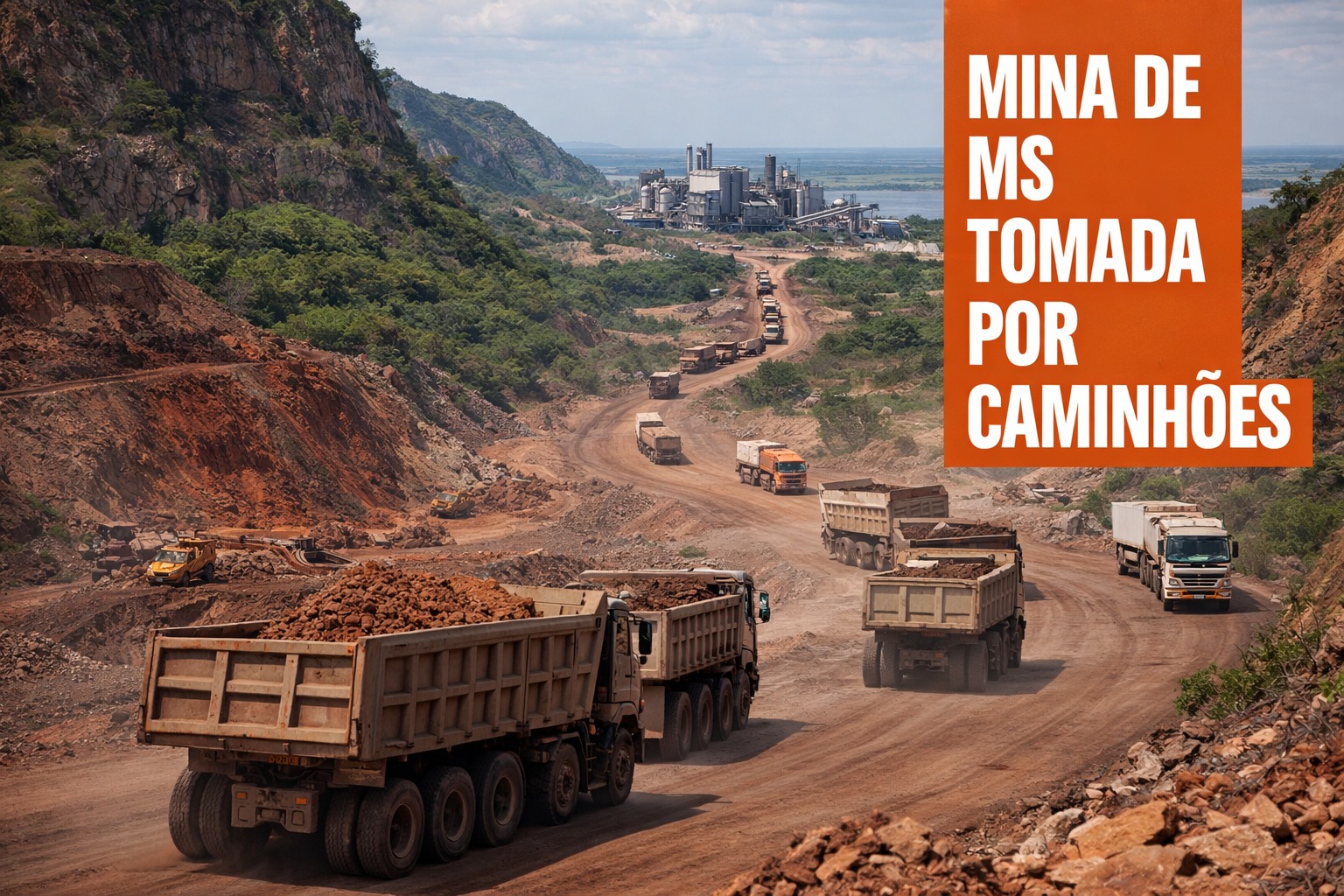
12-Kilometer Conveyor Belt Integrates R$ 4.03 Billion Package, Aims to Remove About 300 Trucks per Day, Increase Annual Production, and Generate Thousands of Direct Jobs in the Region
The routine of trucks loaded with ore cutting through winding roads in the hills between Corumbá and Ladário may be numbered. LHG Mining, owned by brothers Joesley and Wesley Batista, plans to implement a Long-Distance Conveyor Belt (TCLD), a type of “conveyor belt” with a minimum length of 12 kilometers. The proposal is to transfer a large part of road transport to a continuous system, practically in a straight line. The data in this article is from Correio do Estado.
The first concrete action took place on Tuesday when a state government decree expropriated 846 hectares belonging to nine owners.
According to the official gazette publication, 338.5 hectares already belong to the mining company, while the remaining 507 are under other owners’ names. The amount of compensation has not yet been defined.
-
While Brazil wants to end the 6×1 work shift, the president of Argentina wants 12 hours for his workers, increasing political tension in the country.

-
The village where two rivers run side by side without mixing in Santarém and Alter do Chão reveals some of the most beautiful freshwater beaches on the planet.
-
Mars is accelerating, and scientists have discovered that the planet’s day is getting shorter, revealing surprising signs of internal activity.

-
Artemis 2 is set to launch on April 1 at 7:24 PM to orbit the Moon with four astronauts, but a class X solar flare and coronal mass ejection could interfere with communications and threaten the launch.

Batista Brothers: Billion Investment and Production Increase
The installation of the conveyor is part of a R$ 4.03 billion investment package that LHG, a company of the J&F group, has been executing since last year.
According to the Environmental Impact Study, the goal is to increase extraction from 12 million to 25 million tons annually.
In the document, the company states that “the ore produced at the Processing Plant will be sent by conveyor belt, extending 12 km, to the storage yard for products, where piles will be formed. The belts will be covered, preventing dust from being blown by the wind.”
To obtain the operating license, the company indicated that the TCLD would transport the ore to the vicinity of the railway.
From this point, the flow would continue by train to the Gregório Curvo port in the Porto Esperança district. From there, the ores would be transported by the Paraguay River to the international market.
Rail Suspension Increased Truck Flow
Since early December of last year, however, railway transport has been suspended. As a result, all material has been transported by trucks between the Maria Coelho district and Porto Esperança.
By train, this route was 46 kilometers. The change has significantly increased heavy traffic on BR-262.
In the first nine months of last year, LHG dispatched 4.2 million tons of ores via the Paraguay River from the Gregório Curvo terminal, which operates on the left bank of the river.
This data highlights the scale of the logistical operation and helps explain the urgency for more efficient alternatives.
Reduction of Trucks and Environmental Gains
According to Eduardo Pereira, Mining Coordinator at the Department of Environment and Sustainable Development (Semadesc), the implementation of the TCLD represents a significant advancement from both environmental and safety perspectives.
“The implementation of the Long-Distance Conveyor Belt to the Menkc Railway Terminal will remove about 300 trucks daily from the winding roads connecting the mines,” he stated.
Currently, each truck transports about 40 tons of ore, departing from areas with an altitude of 900 meters.
Due to the rugged terrain, the route taken on the roads exceeds the 12 kilometers planned for the conveyor.
Per day, the “conveyor belt” is expected to move about 12,000 tons of ore. “This represents a significant reduction in CO emissions, increased road safety, preservation of lives, and lower environmental impact,” Pereira emphasized.
In the Environmental Impact Study, LHG also emphasizes that “the implementation of the ore conveyor will help reduce noise impacts by replacing part of road transport, minimizing effects on the environment.”
Environmental Compensation and Jobs
On Wednesday (11), a new publication in the official gazette revealed that LHG Mining will transfer over R$ 53.2 million to the state administration as environmental compensation for the expansion of activities in Corumbá and Ladário.
Since mining is considered a potentially high-polluting activity, the compensation amounts to 1.32% of the total planned investment.
After the completion of the investments, the study forecasts a significant hiring of personnel for administrative and operational activities related to extraction, processing, transport, and operation of the product yard and railway dock.
The estimate is to hire 551 people, increasing the number of jobs from 969 to 1,520.
During the implementation phase, the creation of positions will be even greater. At its peak, around 4,300 workers will be needed, with accommodation for 2,600 workers in the project area, the Environmental Impact Study reports.
Although similar systems already exist in states like Minas Gerais and Pará, this will be the first long-distance conveyor applied to the mining sector in Mato Grosso do Sul.
Even with the current suspension of rail transport, the project includes the construction of a new loading terminal along the railway, signaling a possible future resumption. The railway is expected to undergo a new bidding process in November of this year.
With information from Correio do Estado.








-

-

-

6 pessoas reagiram a isso.