





 Portuguese
  English
  Spanish
  3 min of reading
  0 comments


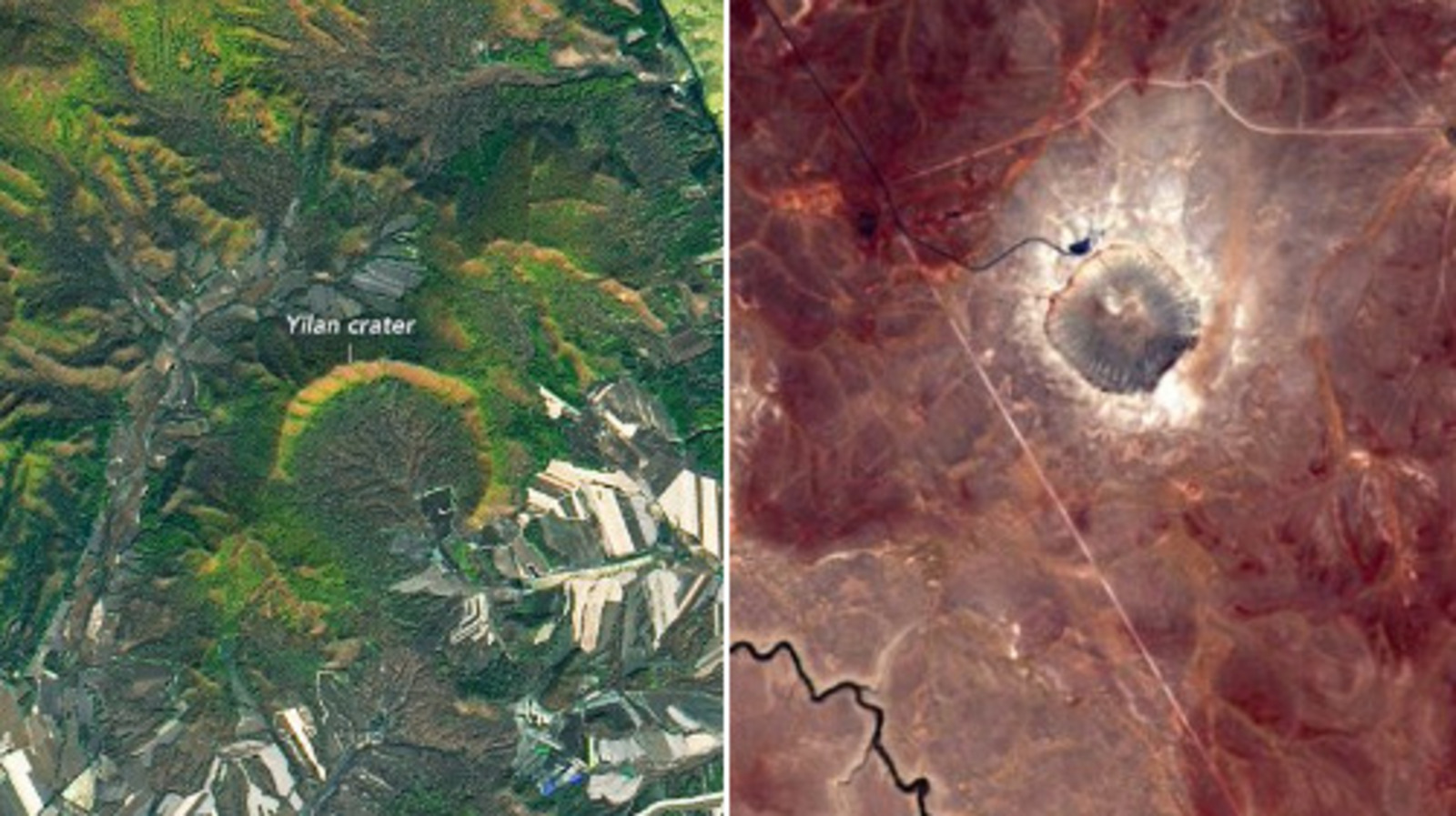
Yilan Crater in China Reveals Impact of Meteorite That Occurred About 49 Thousand Years Ago and Shows Preserved Evidence of Cosmic Collision on Earth
The Yilan crater in China has returned to the center of scientific studies after research indicated that the formation, created by the impact of a meteorite about 46 thousand to 53 thousand years ago, has an approximate diameter of 1.85 kilometers.
What Is the Yilan Crater
The Yilan crater is a geological structure located in the Chinese province of Liaoning. It formed when a celestial body collided with the Earth’s surface, creating a wide cavity in granite rocks.
These rocks were originally formed about 200 million years ago, during the Jurassic period.
-
A “silent skill” is allowing Brazilians to earn up to R$ 22,000 per month without a degree and become indispensable for companies that rely on millions of data to survive.

-
Researchers at the Toyota Research Institute found that if a human uses robotic arms to flip a pancake 300 times in an afternoon, the robot learns to do it on its own the next morning, and this is currently the most promising method to solve the biggest bottleneck in modern robotics.

-
Goodbye iron: a common item in households is starting to lose space to technology that smooths clothes in minutes without an ironing board and with less energy consumption.

-
Antarctica reveals an unusual clue high in the Hudson Mountains, and what appeared to be just an isolated rock began to expose a secret hidden under the ice for ages.


The impact occurred over this ancient geological material, profoundly altering the structure of the region.
Even after tens of thousands of years, the Yilan crater remains well preserved. For this reason, it has become one of the clearest pieces of evidence of meteorite impact ever identified in the territory of China.
Scientific Drillings Confirmed the Impact
Researchers confirmed the origin of the formation after a series of scientific drillings carried out at the center of the structure.
The teams drilled into the ground to about 438 meters deep to examine the internal layers and identify marks left by the cosmic collision.
In the collected samples, impacted quartz, partially melted granite, and glassy particles formed by extremely high temperatures were found.
These elements are considered classic indicators of meteorite impacts and helped confirm the origin of the Yilan crater.
Dimensions of the Structure Impress Researchers
With an approximate diameter of 1.85 kilometers, the Yilan crater is considered the largest known crater under 100 thousand years old.
The size surpasses that of another known impact-formed structure, the Barringer crater, located in Arizona, which is about 1.2 kilometers in diameter.
The edges of the Yilan crater are also noteworthy. They rise about 150 meters above the bottom of the cavity, evidencing the enormous energy released during the collision.
During the investigation, scientists identified different internal layers formed after the event.
Among them are 110 meters of lacustrine sediments deposited after the formation of the crater and 319 meters of granite fragmented by the impact.
Fragments of molten granite, glassy particles, and preserved charred wood residues were also found within the structure.
What the Studies Indicate About the Impact
Analyses conducted on sediments and charred wood found within the Yilan crater indicate that the impact occurred around 49 thousand years ago.
This estimate was obtained through dating using carbon-14, a method applied by researchers to determine the age of the materials.
Scientists also identified evidence that local vegetation may have been burned during the event.
According to the analyzed data, the extremely high temperatures generated by the collision possibly caused fires in the region shortly after the impact.
The study of the Yilan crater helps researchers understand how large impacts have shaped the Earth’s surface throughout the planet’s geological history.
With information from O Antagonista.






Seja o primeiro a reagir!