





 Portuguese
  English
  Spanish
  3 min of reading
  0 comments


Plate Fragmentation Occurs Gradually, Generating Microplates and Altering the Seismic Dynamics of the Cascadia Region
Scientists have recorded for the first time the gradual rupture of a tectonic plate in subduction in the Pacific Ocean, and this discovery has completely transformed the understanding of earth movement. Moreover, the study revealed that this process does not occur abruptly, but rather in a slow, constant, and progressive manner, challenging previous theories about the stability of plates.
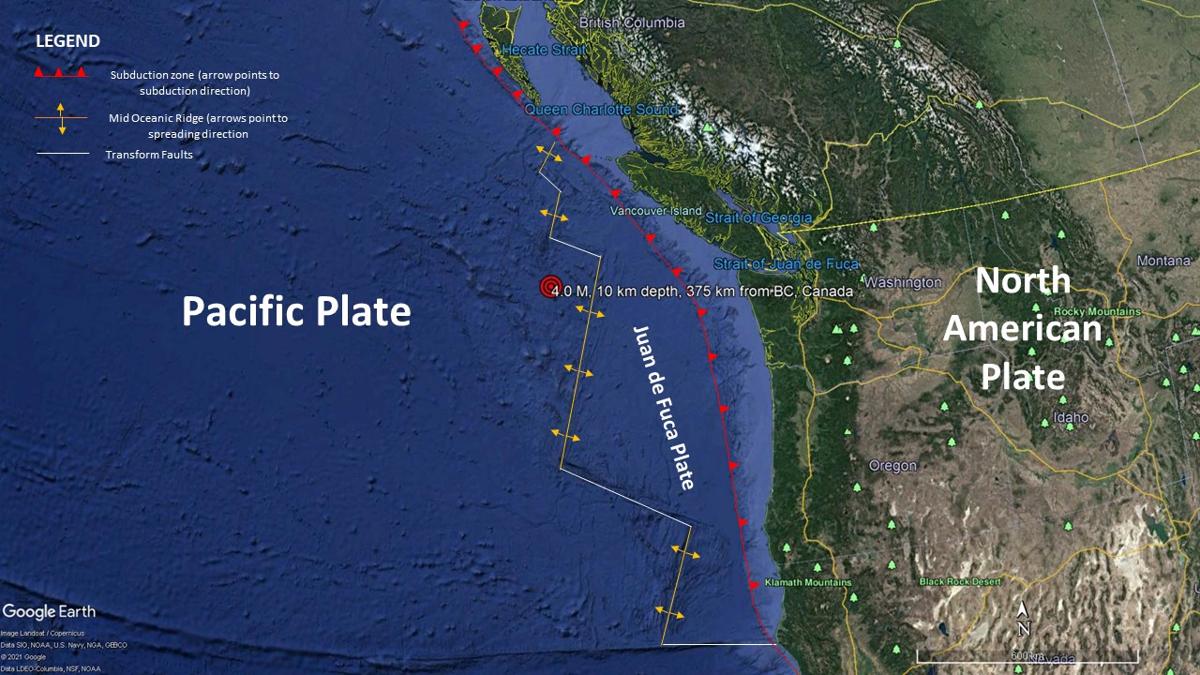
The research, published in September 2025 by Louisiana State University (USA) and published in Science Magazine, was conducted by geologist Brandon Shuck. According to the expert, the phenomenon shows how the Earth’s internal forces reshape the seafloor over time, highlighting the importance of studying the Cascadia subduction zone, between northern California and southern British Columbia, Canada.
Progressive Fragmentation on the Seafloor
According to researchers, the Juan de Fuca plate, located near Vancouver Island, is breaking apart in successive stages, resulting in the formation of microplates that slide slowly beneath the ocean. Thus, the tectonic system does not break all at once but goes through a series of interconnected small ruptures.
-
A “silent skill” is allowing Brazilians to earn up to R$ 22,000 per month without a degree and become indispensable for companies that rely on millions of data to survive.

-
Researchers at the Toyota Research Institute found that if a human uses robotic arms to flip a pancake 300 times in an afternoon, the robot learns to do it on its own the next morning, and this is currently the most promising method to solve the biggest bottleneck in modern robotics.

-
Goodbye iron: a common item in households is starting to lose space to technology that smooths clothes in minutes without an ironing board and with less energy consumption.

-
Antarctica reveals an unusual clue high in the Hudson Mountains, and what appeared to be just an isolated rock began to expose a secret hidden under the ice for ages.

As Shuck explained, “the tectonic system does not stop suddenly, but undergoes a series of gradual ruptures”, which shows that the oceanic crust is more dynamic than previously thought. Furthermore, this continuous process alters the downward force of the main plate, directly influencing the balance of the others.
The scientists used seismic reflection images combined with detailed earthquake records, allowing them to observe vertical separations of up to five kilometers deep. While some zones remain active, others have ceased to register tremors, indicating loss of contact between rock blocks and a slow, yet constant fragmentation.
How the Discovery Was Made
To map the process, the team used sound waves emitted by vessels, which reflected off the internal layers of the crust and were captured by high-precision underwater sensors. From this data, scientists were able to generate three-dimensional images of the ocean floor, revealing fractures and displacements in real-time.
According to the portal Science Daily, this discovery offers a new perspective on global tectonics, as it demonstrates that plates can decompose continuously, not just during large seismic events. Thus, the study provides valuable information for natural risk prevention in earthquake and tsunami-prone regions.
Furthermore, the study confirmed that the newly formed microplates continue to integrate into the tectonic system. Meanwhile, other areas continue to experience subduction, confirming that the Earth’s crust is in constant transformation.
Geological Consequences and Implications
The phenomenon helps to explain the origin of ancient fossil microplates, such as those found in Baja California, whose formation remained without direct evidence until now. Therefore, the fragmentation pattern observed confirms how these smaller blocks emerge and evolve over millions of years.
With the advancement of ruptures, “tectonic windows” open, allowing hot mantle materials to rise toward the crust. As a result, the chances of temporary volcanic activity and changes in plate boundaries increase, which may directly influence the occurrence of regional earthquakes.
Scientists emphasize that the Cascadia region, known for its strong earthquakes and tsunami risk, may face new geological challenges in the coming decades.
Importance of the Study and Next Steps
The phenomenon has been studied since 2019 and represents one of the most relevant discoveries in modern geology. Over six years of continuous observation, scientists have noticed that fractures accumulate slowly but irreversibly, indicating that the Earth is in constant reconstruction.
According to Shuck, this “progressive decomposition” leaves visible geological records in the age of volcanic rocks, allowing for the reconstruction of the history of the planet’s internal dynamics.
The team from Louisiana State University is currently analyzing how these fractures may affect seismic risk in the Cascadia region. Additionally, scientists argue that understanding the rhythm of these ruptures is essential to predict the frequency and intensity of future earthquakes.
As the planet continues to shape beneath our feet, science seeks answers to understand how far this transformation can take us.
What else might be moving without us noticing?







Seja o primeiro a reagir!