





 Portuguese
  English
  Spanish
  4 min of reading
  8 comments


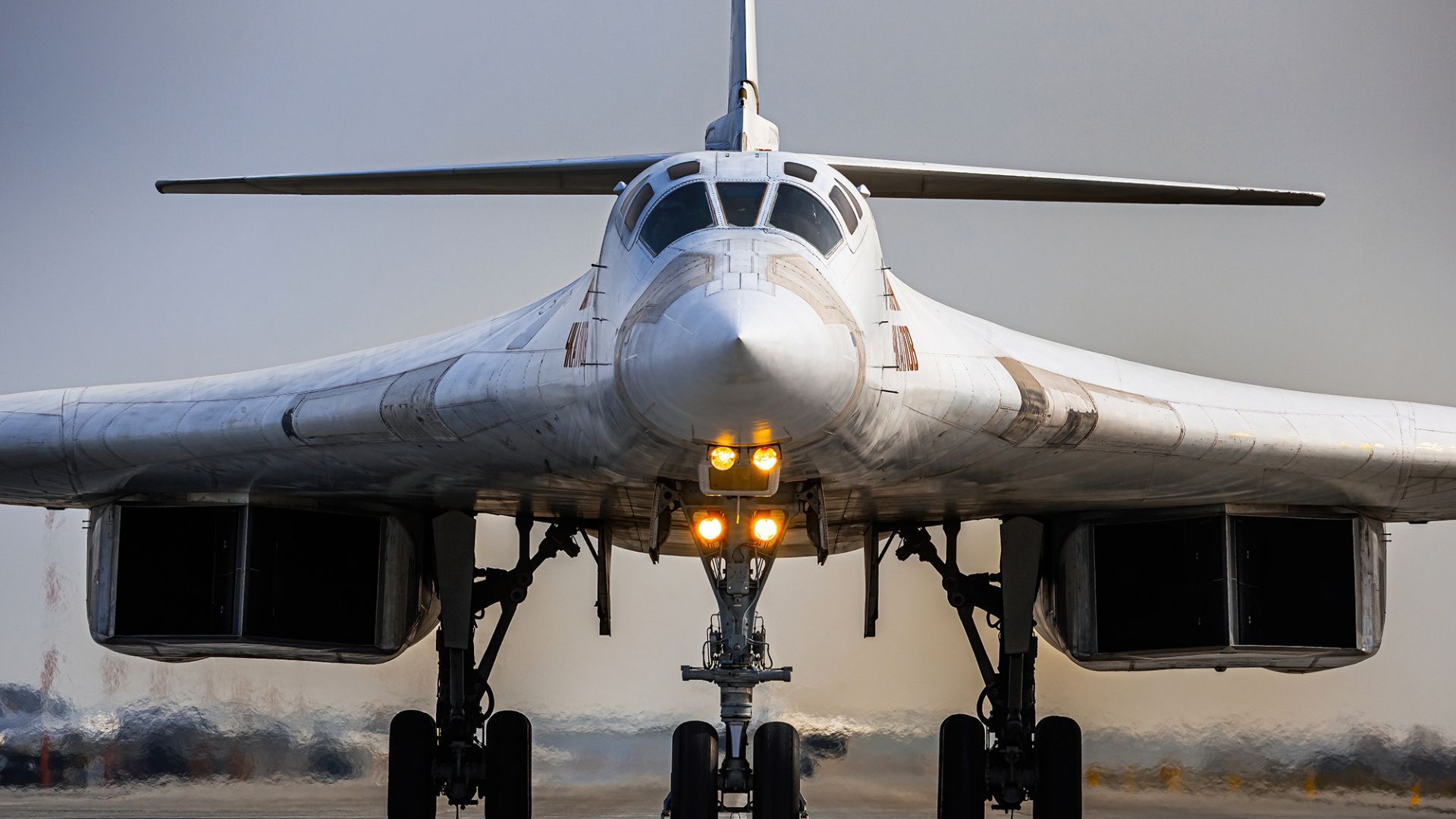


Russian Industrial Comeback Marks First Flight of Strategic Bomber Tu-160M Built From Scratch After the End of the Soviet Union, With Deep Modernization of Systems, Recovery of Critical Technologies, and Direct Impact on Air Defense Capability and Global Military Balance.
Russia conducted the first flight of the Tu-160M, a supersonic strategic bomber built from scratch in the post-Soviet era, according to information released by the state-owned Rostec and by executives of the program.
The test lasted about 30 minutes, reaching approximately 600 meters in altitude and marked the resumption, on an industrial scale, of the ability to produce heavy strategic aircraft in the country.
The prototype took off from the Kazan Aviation Plant, a unit linked to Tupolev, and performed initial maneuvers to check stability and controllability.
-
Motorola launched the Signature with a gold seal from DxOMark, tying with the iPhone 17 Pro in camera performance, Snapdragon 8 Gen 5 that surpassed 3 million in benchmarks, and a zoom that impresses even at night.

-
Satellites reveal beneath the Sahara a giant river buried for thousands of kilometers: study shows that the largest hot desert on the planet was once traversed by a river system comparable to the largest on Earth.

-
Scientists have captured something never seen in space: newly born stars are creating gigantic rings of light a thousand times larger than the distance between the Earth and the Sun, and this changes everything we knew about stellar birth.

-
Geologists find traces of a continent that disappeared 155 million years ago after separating from Australia and reveal that it did not sink, but broke into fragments scattered across Southeast Asia.

Test pilots conducted the mission in a short profile, typical of preliminary stages, focusing on the basic behavior of the aircraft before longer flights.
First Flight of the Tu-160M Symbolizes the Comeback of the Aerospace Industry
Although the time in the air was limited, the announcement was treated as a milestone for the Russian industry.
The head of test pilots at Tupolev, Viktor Minashkin, stated that the observed performance was above expectations and attributed the result to the recovery of critical technical competencies for the sector.
The central information, behind the symbolism, is the fact that the aircraft was not only modernized from old airframes.

The proposal presented is for a resumption of production with an aircraft fully assembled in the post-Soviet period, something that requires suppliers, tooling, and industrial routines capable of sustaining series manufacturing.
Modernized Systems Account for 80% of the Aircraft
The United Aircraft Corporation (UAC) reported that approximately 80% of the systems of the Tu-160M have been upgraded or replaced.
Among the cited sets are engines, avionics, navigation systems, flight controls, and weapons management, as well as adjustments in mission systems.
This percentage indicates a high degree of technological renewal, maintaining the overall configuration of the original Tu-160.
In practice, the model now operates with modern electronic architecture, updated instruments, and components designed to increase service life and facilitate maintenance.
When mentioning next-generation weapons, the Russian Minister of Industry and Trade, Denis Manturov, stated that the Tu-160M is prepared to employ more modern systems, including some still in development.
The official statement, however, does not detail which weapons these would be nor does it present a public integration timeline.
Recovery of Technologies Considered Strategic
In addition to the aircraft, the program was presented as an effort for the reconstruction of Russia’s industrial base.
The resumption required the reorganization of production lines and the recovery of manufacturing processes that had degraded after the end of the Soviet Union.

One of the central points was the complete digitization of the technical documentation of the Tu-160, allowing for quality control, traceability, and industrial repeatability.
The Kazan plant underwent structural modernization, with renewal of a significant part of the manufacturing facility.
The highlight was the recovery of vacuum titanium welding, a technology essential for structural components subjected to high loads and thermal variations.
2015 Political Decision Boosted Production Resumption
The resumption of Tu-160M production was announced as a decision made in 2015, by order of President Vladimir Putin.
The measure was part of a broader strategy for reconstruction of the defense industry and preservation of long-range strategic capabilities.
Since then, the modernization of the Tu-160 and the reactivation of the production line have been mentioned in official communications, albeit with long timelines.
The complexity of the program is linked to the need for sophisticated production chains, specialized suppliers, and highly qualified labor.
Why the Tu-160 Continues to be a Central Element of Strategic Aviation
Originally developed in the Soviet Union, the Tupolev Tu-160, known as the “White Swan”, is described as the largest supersonic bomber in operation.
The aircraft measures about 54 meters in length and can reach approximately 56 meters in wingspan with its wings fully extended.

Classified as a heavy strategic bomber, the model was designed to carry large loads of conventional or nuclear weapons over long distances.
In Russian strategic aviation, the Tu-160 operates alongside the Tu-95MS, forming the backbone of the country’s air deterrent capability.
Updates in navigation, communication, and weapon systems have a direct impact on the operability and longevity of the platform.
The technical details that will define the actual performance of the Tu-160M depend on subsequent tests, internal certifications, and production pace.
With the announcement of the inaugural flight of the new Tu-160M, Russia seeks to demonstrate that it has resumed an industrial chain capable of manufacturing strategic bombers.







A Russia é uma nação surpreendente sob variados aspectos. O tecnológico é apenas um deles. Os aviões russos, além de serem muito bonitos, apresentam capacidades inovadoras e incomparáveis. E conseguem fazer tudo isso nadando contra a correnteza das sanções econômicas e logísticas.
Kkkkkkkkkkk. Cara tu ao menos tem o lóbulo frontal funcionando? Tu sabe que a Rússia deixou de ser comunista a muito tempo né senti até dor física com seu comentário
O mais engraçado é que China, também é Socialista
E segundo esse infeliz comentário, está com Pires na mão, né?
A Rússia de hoje está entrando num espiral semelhante ao que destruiu a União Soviética, tirando dinheiro de onde não tem, tentando mostrar músculos que também não tem.