





 Português
  Inglês
  Espanhol
  3 min de leitura
  0 comentários


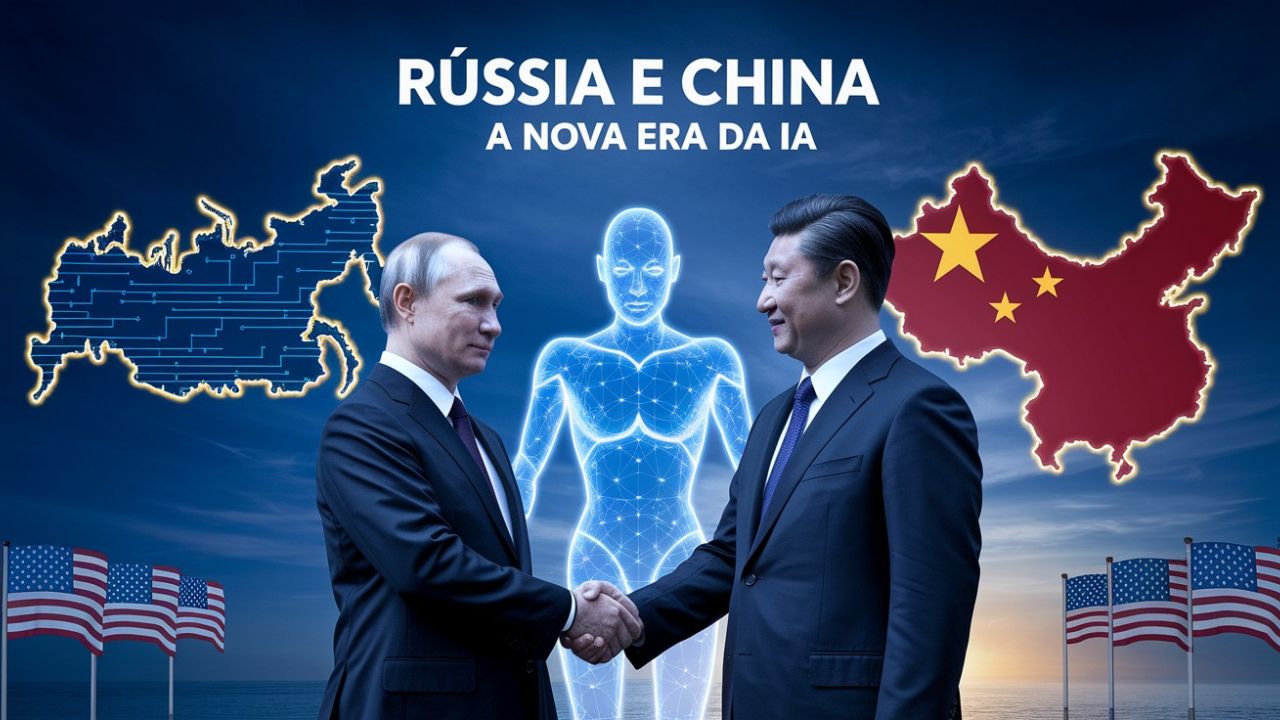
With the Launch of GigaChat, Russia Enters the Race for Artificial Intelligence, Occupying the 31st Global Position. In a Strategic Move, Putin Joins Forces with China, Betting on the BRICS Alliance to Overcome Sanctions, Develop Technology, and Face US Dominance.
The race for artificial intelligence is one of the biggest technological challenges today, and Russia, led by Vladimir Putin, does not want to miss out. In April 2023, the launch of GigaChat, a chatbot that promised to rival ChatGPT, demonstrated that the country intends to gain relevance in this sector. But does Russia have what it takes to compete with AI giants like the US and China? And what does its alliance with Beijing mean for the global balance?
A New Player on the AI Board: The Launch of GigaChat
In a strategic move, Russia announced GigaChat, its first major step in the field of conversational AI. The idea? To create a competitor that can stand up to technologies like ChatGPT. However, in the Global AI Index by Tortoise Media, Russia ranks only 31st among 83 countries assessed. This makes it clear that there is still much work to be done.
Despite the enthusiasm, experts question whether GigaChat can truly compete on an equal footing with tools developed in the US and China. While the Russian chatbot seeks to stand out, it faces limitations in infrastructure and funding.
-
A bright yellow mushroom imported from Asia escaped from a cultivation farm in the United States in 2010 and is now aggressively spreading across 25 states, destroying entire communities of native fungi in American forests.

-
Buried under China, a colossal machine weighing 20,000 tons began operating as the largest neutrino detector on the planet and, in just 59 days, surpassed results that science took half a century to achieve.

-
Iran enters the center of a climate alert after the war emitted 5.6 million tons of CO2 in two weeks, surpassing the annual pollution of entire countries.

-
Lunar exploration may change after a Chinese probe finds a “cavity” of radiation that reduces the impact on astronauts by up to 20% at certain times on the Moon.


Why is Russia Behind in the AI Race?

The economic sanctions imposed by the US and its allies have hindered Russia’s access to essential technologies, such as advanced GPUs, crucial for AI development. This restriction has not only delayed progress but also made it more difficult for Russian companies and researchers to innovate.
German Gref, CEO of Sberbank, acknowledged in 2023 that high-performance chips needed for AI are one of the biggest obstacles. This shortage forces Russia to seek alternatives — and its alliance with China emerges as a natural solution.
Strategic Alliance with China: A Step Forward
With China as a partner, Russia hopes to overcome its technological barriers. The Kremlin has already announced plans to intensify cooperation with BRICS countries, particularly in the field of AI.
The BRICS alliance, composed of Brazil, Russia, India, China, and South Africa, represents an emerging economic force. This union can provide Russia with the necessary support to advance in the technological race.
China also faces sanctions in the semiconductor field but has made remarkable progress in AI. Its experience and infrastructure may be key to boosting Russia and challenging US dominance together.
The Geopolitical Implications of This Alliance
The partnership between Russia and China is seen as a direct threat to Western dominance in technology. For the US, this alliance represents a new challenge in the geopolitical landscape.
If Russia manages to overcome its limitations and leverage Chinese support, the world may witness a significant shift in the technological balance of power. However, there are still uncertainties about the success of this collaboration.
Putin’s plan to position Russia in the AI race may be ambitious, but it is not without challenges. The alliance with China is a strategic move that promises to shake up the global landscape. However, as Russia attempts to advance, the question remains: will this plan be sufficient to transform the country into an AI powerhouse? Time will tell.





-

-

-

3 pessoas reagiram a isso.