





 Portuguese
  English
  Spanish
  3 min of reading
  0 comments


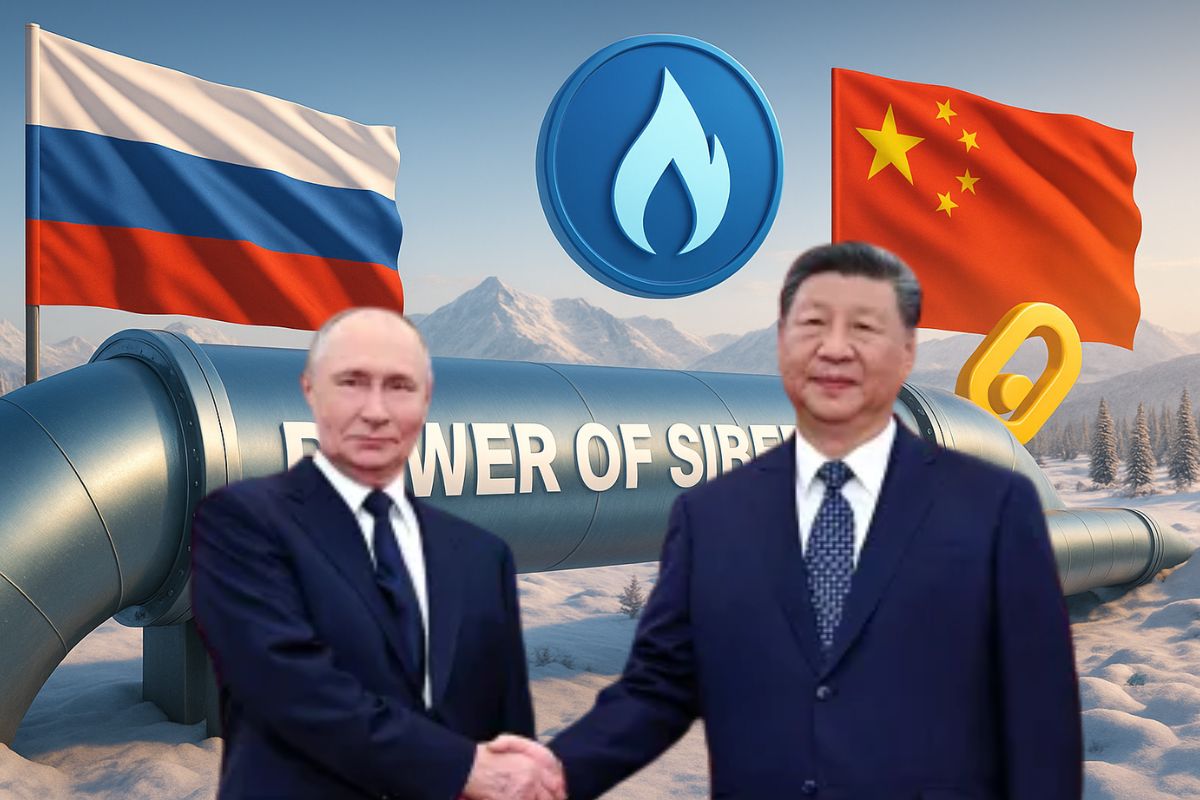
The Pipeline “Power of Siberia 2” Will Make China the Largest Energy Client of Russia, Replacing Once and for All the European Market Lost After the War in Ukraine.
According to the portal IstoÉ Dinheiro, on Tuesday (September 2, 2025), Russia and China signed a binding agreement in Beijing for the construction of the Power of Siberia 2 pipeline, considered the largest capital project in the global gas industry. The agreement was signed between the Russian state company Gazprom and the China National Petroleum Corporation (CNPC), with the presence of Presidents Vladimir Putin and Xi Jinping, reinforcing the strategic alliance between Moscow and Beijing.
In practice, the project redirects to China the volume of gas that Russia used to export to Europe, a market virtually lost after international sanctions due to the war in Ukraine. This move consolidates Beijing as Moscow’s main energy client, while also ensuring China a stable and competitive supply.
Why is the Power of Siberia 2 Strategic?
The Power of Siberia 2 pipeline will be one of the largest energy endeavors on the planet. Estimated to be thousands of kilometers long, the pipeline will allow Russia to transport to Asia volumes equivalent to those that previously supplied the European market. This change represents a structural shift in global gas trade, reinforcing the mutual dependence between the two countries.
-
Brazilian city gains industrial hub for 85 companies that is equivalent to 55 football fields.

-
Peugeot and Citroën factory in Argentina cuts production by half and opens a layoff program for more than 2,000 employees after Brazil drastically reduced purchases of Argentine vehicles.

-
A Brazilian city gains a factory worth R$ 300 million with the capacity to process 200 thousand tons of wheat per year, a mill of 660 tons/day, silos for 42 thousand tons, and an industrial area of 276 thousand m².

-
Havan will leave the shopping mall in Blumenau to inaugurate something that the chain has never done before: a megastore in half-timbered style in the Historic Center of the city, which is expected to be completed in May and change the landscape of local retail.


For Russia, the project is the most concrete response to the losses caused by Western sanctions. By closing the door to Europe, Moscow opens a new commercial front with Beijing, which becomes its most important client. For China, it is about enhancing energy security at a time of strong growth in industrial and urban demand.
What Was Signed Besides the Pipeline?
The meeting between Russia and China resulted in the signing of 22 additional cooperation documents, according to the Russian news agency Tass. Among them is a Strategic Cooperation Agreement in Energy, which envisions an expansion of the partnership in sectors such as oil, coal, and new energy technologies.
According to Gazprom’s CEO, Alexey Miller, the Power of Siberia 2 “will be a milestone for the global gas industry,” not only because of its size but also for the reconfiguration of export routes. The consolidation of this energy alliance reinforces the position of both countries against Western powers.
What is the Geopolitical Impact?
The strengthening of the partnership between Russia and China goes beyond energy. The agreement signals that Moscow has found in Beijing an ally capable of absorbing a significant portion of its gas production, reducing the vulnerability caused by European isolation. China, in turn, gains supply predictability, an essential condition to sustain its economic expansion.
This energy realignment also puts pressure on the global geopolitical balance. While the U.S. and the European Union seek diversification and transition to renewable sources, Russia and China reinforce their bilateral cooperation in fossil fuels, consolidating an alternative axis in the international energy market.
The agreement between Russia and China for the Power of Siberia 2 pipeline is a watershed moment in the energy sector. On one hand, Moscow secures a destination for its main export product; on the other, Beijing ensures large-scale supply at competitive prices. The impact is not only economic but also geopolitical, bringing the two countries even closer together in a scenario of global fragmentation.
Do you believe that this alliance between Russia and China could reshape the global energy map? Or does the West still have ways to contain this partnership? Leave your opinion in the comments — we want to hear different views on this strategic movement.








Seja o primeiro a reagir!