





 Português
  Inglês
  Espanhol
  4 min de leitura
  0 comentários


Partnership Between The Two Countries Advances With Plan To Power Lunar Base With Nuclear Energy, While US Project Faces Delays
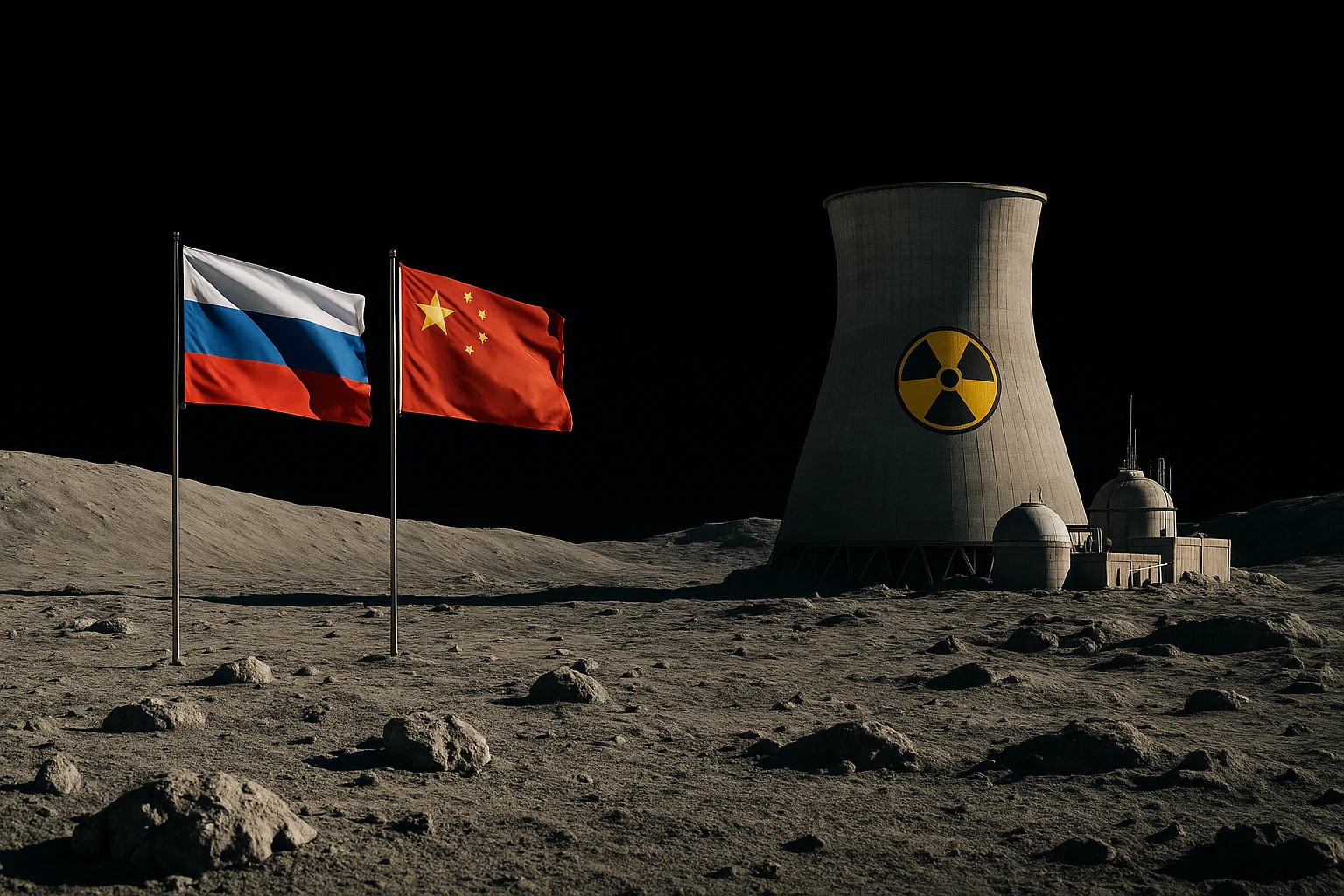
China and Russia have signed an agreement to build a nuclear power plant on the Moon by 2035.
The goal is to provide power for the International Lunar Research Station (ILRS), a joint project that plans to establish a robotic base and, in the future, a human base near the Moon’s south pole.
The document was signed between the Russian space agency Roscosmos and the China National Space Administration (CNSA).
-
A bright yellow mushroom imported from Asia escaped from a cultivation farm in the United States in 2010 and is now aggressively spreading across 25 states, destroying entire communities of native fungi in American forests.

-
Buried under China, a colossal machine weighing 20,000 tons began operating as the largest neutrino detector on the planet and, in just 59 days, surpassed results that science took half a century to achieve.

-
Iran enters the center of a climate alert after the war emitted 5.6 million tons of CO2 in two weeks, surpassing the annual pollution of entire countries.

-
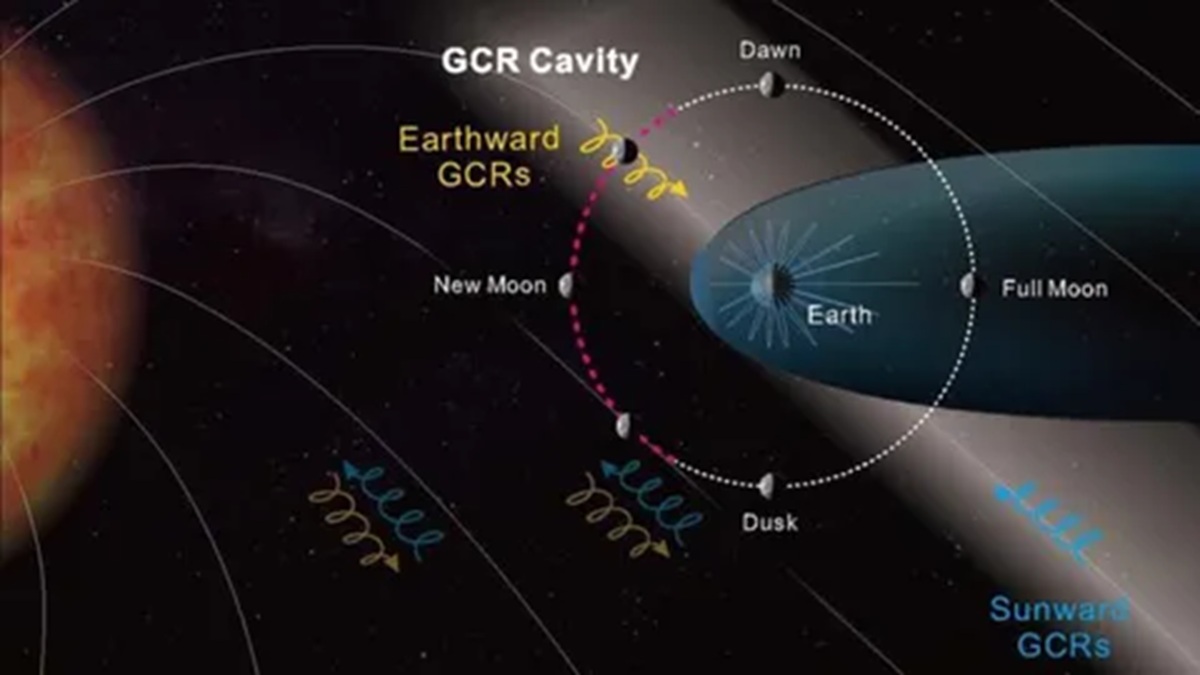
Lunar exploration may change after a Chinese probe finds a “cavity” of radiation that reduces the impact on astronauts by up to 20% at certain times on the Moon.

The announcement marks another step in cooperation between the two countries in space.
According to Roscosmos, the station will allow for fundamental space research and testing of technologies for long-duration uncrewed operations.
The agency reported on May 8 that there is a possibility of human presence at the site in the future.
Reactor Without Human Presence
There are not many details released yet. However, Russian officials state that the construction of the reactor will be fully autonomous, without human intervention on the Moon’s surface.
Yury Borisov, director-general of Roscosmos, stated that the technological advancements for this are “almost ready,” in an interview with the Russian state news agency TASS.
Lunar Race Between Powers
The ILRS project emerges as a direct rival to the Artemis program, led by the United States with participation from 55 countries.
The Artemis program aims to install an orbital station called Gateway and to send astronauts to the Moon, with the first crewed mission planned for December 2025 — but with a high likelihood of postponement.
Meanwhile, China and Russia continue to expand their network of partners. Since the formal launch of the ILRS in 2021, there are now 17 countries involved, including Egypt, Venezuela, and South Africa.
This number may grow with the new Chinese initiative called “Project 555.” The plan aims to bring together 50 countries, 500 scientific institutions, and 5,000 researchers.
South Pole of The Moon Is The Focus
Both the ILRS and the Artemis program intend to establish themselves at the Moon’s south pole. This region is strategic for receiving more sunlight and for containing possible ice deposits.
Additionally, it can serve as a base for more distant missions, such as those heading to Mars.
The Chinese mission Chang’e-8, planned for 2028, will be one of the first stages. It is expected to test autonomous construction with 3D printing using lunar soil. It could also represent China’s first crewed landing on the Moon.
Between 2030 and 2035, there will be five launches with heavy rockets to deliver components to the satellite. By 2050, China plans to have a network of interconnected bases, powered by solar, radioisotope, and nuclear energy.
Nuclear Energy As A Solution
Keeping equipment functioning on the Moon is one of the major challenges. Sunlight is not always available, especially in craters that remain in constant shadow. In these locations, it is believed there may be ice.
Solar panels and batteries may not be sufficient. Therefore, the use of nuclear energy is considered essential.
The US has been exploring this option through NASA’s Kilopower project. However, Russia has historical experience with space nuclear systems dating back to the Cold War.
Wu Weiren, chief designer of the Chinese lunar program, told Reuters that Russia has a “natural advantage” in this sector and is “ahead of the United States.”
China appears willing to incorporate this capability. During a presentation in Shanghai, Pei Zhaoyu, deputy director of the CNSA, mentioned nuclear energy as part of the planned infrastructure for the ILRS, alongside solar panels and conduits.
If realized, it will be the first nuclear reactor installed off Earth. It could power not only research instruments but also heating systems, communication, and vehicles exploring the lunar surface.
Dispute Goes Beyond Science
The announcement of the Sino-Russian project came just days after the US government released a budget proposal for 2026 that foresees the cancellation of the Gateway station.
This decision directly affects the Artemis program, which is already facing delays. The Artemis III mission, previously scheduled for 2025, is now expected to take place in 2027 or later.
Meanwhile, China is making progress. In 2024, the Chang’e-6 mission successfully returned with samples from the Moon’s far side. No other country had done this until now. Chinese state media classified the achievement as an unprecedented feat in the history of lunar exploration.
The ILRS began to be discussed in 2017. But it gained momentum after Russia’s invasion of Ukraine in 2022, which isolated Moscow from space partnerships with the West. China took on a prominent role, offering technical and political support.
This space alliance worries some experts. A European analyst cited that “the Moon is becoming a new stage for geopolitical dispute.” Unlike other space missions, this race may not have solely scientific motivations.
The Moon may contain rare metals, oxygen in the soil, and even helium-3 — a potential fuel for fusion reactors. The 1967 Outer Space Treaty prohibits sovereignty over celestial bodies. However, the legal debate over the exploitation of these resources remains open.
The construction of the ILRS will effectively begin after 2028. The goal is to have a robotic base with nuclear energy operational by 2035. After that, the plan includes expansion with new modules, more partner countries, and crewed missions.
NASA, for its part, is still trying to send astronauts to the Moon before China. But with budget cuts and constant delays, the winds appear to be changing direction.






Seja o primeiro a reagir!