





 Português
  Inglês
  Espanhol
  7 min de leitura
  0 comentários


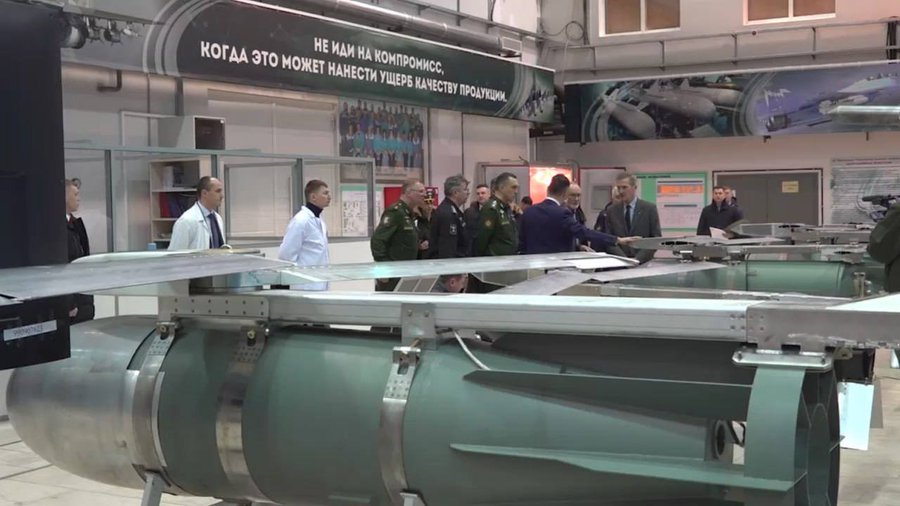
Russian Bombs Over Ukraine: 70 km Range, Aerodynamic Wings, and Modified Engines! Laser and GPS Guided
The Taiwanese company TRC was contracted by the Russian Federation to produce and modify servomotors for UMPK modules, used to convert unguided bombs into high-precision glide bombs. This was revealed by the international intelligence group InformNapalm, quoting public activist Vadim Labas.
Taiwanese Technology and the Impact on the Modernization of Russian Bombs Over Ukraine
According to Labas, the initial use of TRC’s unmodified servomotors in UMPK modules was part of Russia’s early attempts to improve its bomb guidance systems. However, these servomotors were originally designed for the automotive industry, not for military applications. For this reason, the components were not developed to withstand the extreme demands of a military environment.
The servomotors were created for less demanding conditions, and their inability to support the heavy loads imposed by the control wings resulted in issues. The shafts of the servomotors often broke due to excessive tension, and the motors could not sustain the weight of the wings.
-
A bright yellow mushroom imported from Asia escaped from a cultivation farm in the United States in 2010 and is now aggressively spreading across 25 states, destroying entire communities of native fungi in American forests.

-
Buried under China, a colossal machine weighing 20,000 tons began operating as the largest neutrino detector on the planet and, in just 59 days, surpassed results that science took half a century to achieve.

-
Iran enters the center of a climate alert after the war emitted 5.6 million tons of CO2 in two weeks, surpassing the annual pollution of entire countries.

-
Lunar exploration may change after a Chinese probe finds a “cavity” of radiation that reduces the impact on astronauts by up to 20% at certain times on the Moon.


In light of these performance issues, Russian authorities turned to TRC and requested modifications to the propellers to increase their durability and efficiency in military use.
In response to these demands, in 2024, TRC’s factory implemented several modifications. Five specific changes were made to the actuators, including the use of high-strength alloys for key components.
The motor was upgraded with a more powerful version, capable of supporting greater loads, ensuring that the modules could operate reliably under the extreme conditions required by precision-guided bombs. These modifications allowed Russia to improve the use of these bombs, transforming them into highly effective glide weapons.
Russian Glide Bombs: Strategic Range and Challenges in Ukraine Defense
Russian glide bombs are a fundamental component of the country’s evolving arsenal, designed to provide high precision and significantly reduce the risk to the launch platform. Unlike traditional unguided bombs, which rely on pure impact for effectiveness, glide bombs are equipped with wings, guidance systems, and advanced control mechanisms that allow them to glide toward their target from a considerable distance.
The most notable advantage of glide bombs is that they can be launched from a safe distance, keeping the aircraft out of reach of enemy defenses while maintaining accuracy. This makes them an increasingly preferred weapon in modern warfare, especially when precise strikes are required, and the risk of close-range confrontations needs to be minimized.
The operational role of Russian glide bombs is directly linked to improving the effectiveness of their airstrikes. These bombs can be launched from various aircraft, including bombers and fighters, and their extensive range allows for attacks on heavily defended targets, such as military infrastructure, air defense systems, and critical command centers.
The accuracy of these bombs depends largely on the precision of their guidance systems, designed to lock onto a target and adjust the trajectory in real time. This increases the likelihood of a successful strike, even in contested airspace, where traditional bombings may be less effective due to evasive maneuvers or the presence of air defense systems.
What makes Russian glide bombs particularly dangerous to adversaries is their ability to remain discreet and effective at long distances. The extended flight time provided by their gliding capability offers the element of surprise.
Additionally, these bombs can be equipped with multiple guidance systems, such as GPS, laser, or inertial navigation, making them adaptable to different combat scenarios. Their ability to adjust course mid-flight, according to the precision required for the mission, allows them to hit targets with extreme accuracy, even in complex or heavily defended environments.
The combination of their stealth and high probability of success in attacks poses a significant threat to enemy forces, especially those relying on static defenses or unprotected infrastructures.
The danger posed by Russian glide bombs goes beyond the immediate impact of their strikes. Due to the increasing sophistication of these weapons, they represent a fundamental shift in modern warfare tactics. Glide bombs, with their long range and accuracy, enable Russian forces to strike strategic targets without having to engage in direct combat or depend on vulnerable bombers.
This makes them valuable tools in asymmetric warfare, allowing Russia to inflict significant damage on enemy forces while minimizing the risk of losing aircraft and pilots. This approach is particularly advantageous in scenarios where air superiority is contested, and even small skirmishes can result in considerable losses.
As with any advanced weaponry, countermeasures against precision-guided glide bombs have been developed. However, these countermeasures tend to be expensive, technologically complex, and not always foolproof.
A common defense involves the use of advanced radars and infrared tracking systems to detect incoming bombs before they reach their targets. This requires sophisticated early warning systems capable of identifying the launch of glide bombs at a distance, giving defensive forces time to mobilize interceptors or missile defense systems.
However, these systems do not always work effectively, especially in environments with electronic warfare tactics that can interfere with or confuse tracking systems.
Other countermeasures include the use of electronic warfare (EW) systems to interfere with or deceive the guidance systems of glide bombs, diverting them from their targets. While effective against certain guidance methods, such as GPS or infrared tracking, EW systems can be neutralized by more advanced or multispectral guidance technologies.
This makes it increasingly difficult for adversaries to completely neutralize the threat posed by these weapons. Furthermore, the development of more advanced air defense systems capable of intercepting and neutralizing guided munitions has not yet reached the same level of sophistication as Russian glide bombs.
The ongoing advancement in offensive and defensive technologies suggests that the arms race between glide bomb developers and countermeasure manufacturers is likely to continue in the foreseeable future.
The increasing use of Russian glide bombs represents a significant change in how airstrikes are conducted, focusing on long-range precision and minimal risk. Their ability to penetrate heavily defended areas while staying out of reach of enemy fighters and surface-to-air missile systems has made them key components of Russia’s aerial strategy.
International Networks and Sanctions: How Russia Maintains Its Advanced Military Capability
Although countermeasures are being developed to combat these weapons, the threat posed by Russian glide bombs remains considerable.
As technology evolves, both in terms of offensive weapons and defensive strategies, it is likely that the future of warfare will increasingly depend on these precision weapons. This makes it essential for military forces to adapt quickly to maintain the advantage against this growing threat.
This development is part of a broader pattern in which Russian forces have sought to circumvent Western sanctions and continue utilizing advanced military technology.
The InformNapalm investigation also revealed the involvement of the Kazakh company ARC Group, which has been providing services to Russian combat aircraft Su-30SM, using French equipment from Thales and Safran.
After the large-scale invasion of Ukraine, Russia lost access to French military technologies and support services, prompting the Russian government to seek alternative ways to sidestep the restrictions.
The ARC Group became a key intermediary, continuing to provide services and repairs on aircraft and associated technologies despite the sanctions. The company concealed its operations by acting as an intermediary between French suppliers, especially in partnership with Aircraft Repair Plant No. 405 in Kazakhstan.
Despite these attempts at concealment, seized documents and communications revealed that ARC Group was directly involved in maintaining French military equipment in Russia, particularly at the Irkutsk Aviation Plant, responsible for maintaining the Su-30SM.
In October 2022, the Russian state-owned Rosaviaspetskomplekt fully financed the training and certification required for ARC Group specialists in France. The training took place at Thales’ training center and focused on the maintenance of SMD 55S/66S and HUD systems at the organizational level (OLM).
This training was part of a broader strategy by Russia to maintain its military capability in the face of international sanctions, ensuring its air force continued to operate.
Involved French companies, Thales and Safran, took steps to combat these attempts to circumvent sanctions. In October 2024, both confirmed that they had terminated all contracts with the Kazakh plant.
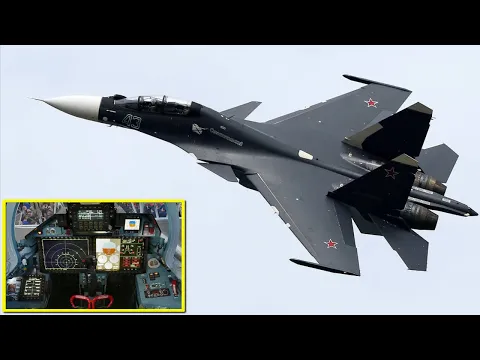

Additionally, Thales announced that it was considering taking legal action against the plant, intending to end contracts and possibly seek compensation for damages. This highlights the ongoing struggle between Russia’s need for advanced military technology and international sanctions aimed at preventing this access.
The revelations about TRC and ARC Group highlight the complex global network that allows Russia to circumvent sanctions and maintain its military capability. These efforts reflect the broader geopolitical dynamics, in which countries like Russia increasingly rely on intermediary nations and companies to circumvent restrictions and access critical technologies.
With international sanctions continuing to hit Russian military infrastructure, it is likely that these clandestine operations will increase, creating a persistent challenge for Western nations seeking to limit Russia’s military effectiveness on the global stage.







-

-

2 pessoas reagiram a isso.