





 English
  Francês
  Alemão
  Italiano
  Japonês
  Norueguês
  Portuguese
  Spanish
  4 min of reading
  0 comments


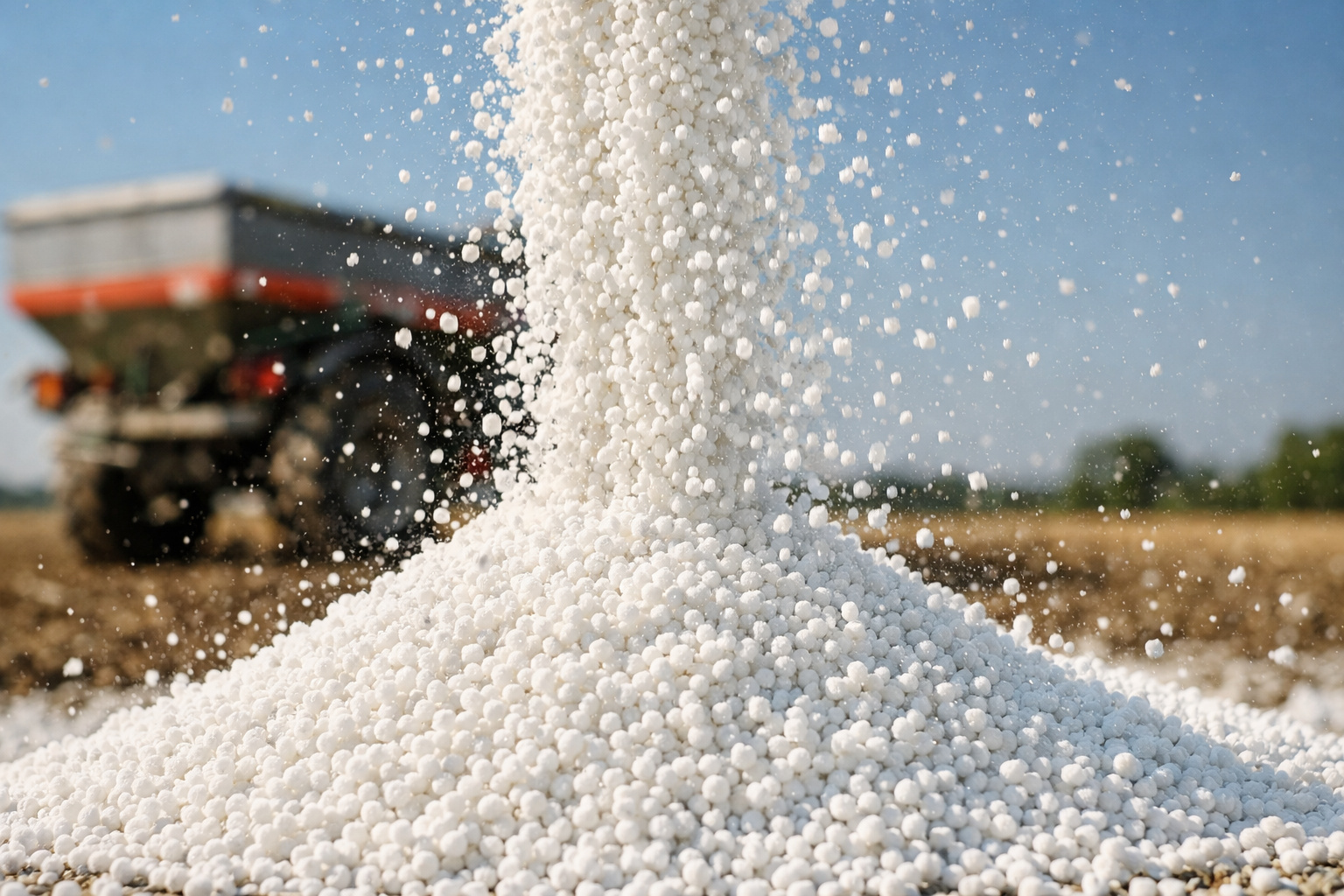
Strategic decision to prioritize the domestic market during spring planting occurs amid global logistical tensions, attacks on infrastructure, and Brazil’s critical dependence on imported agricultural inputs
The Russian decision to temporarily suspend ammonium nitrate exports has raised an immediate alert in the global fertilizer market, especially in Brazil, which heavily relies on external supply to sustain its agricultural production. The move, which will last for a month, comes at a delicate moment marked by geopolitical tensions and logistical bottlenecks that directly impact international trade in strategic inputs.
The information was released by Reuters, based on official statements from the Russian Ministry of Agriculture, which confirmed the suspension of exports until April 21. According to the agency, the measure aims to ensure internal supply during the spring planting season, considered one of the most important for the country.
Moreover, the global context further exacerbates the scenario. This is because the closure of the Strait of Hormuz, one of the world’s main maritime routes, directly affects the transport of ammonia — an essential component in the production of ammonium nitrate. Currently, about 24% of the global trade of this substance passes through the region, intensifying pressure on the fertilizer supply chain.
-
Forgotten region becomes a powerhouse in the heart of Brazil, transforming unproductive lands into fortune and making MATOPIBA the new billion-dollar agricultural empire that almost no one saw being born.
-
With a 775 hp engine, the world’s largest axial combine harvester arrives in Brazil, promising to harvest more in less time with advanced automation and the capacity for platforms up to 61 feet.
-
With 18 million feet, giant farms, and 2.2 million sacks per year, a mining group is building a coffee empire in Brazil with heavy mechanization, giant silos, and exports to various continents.
-
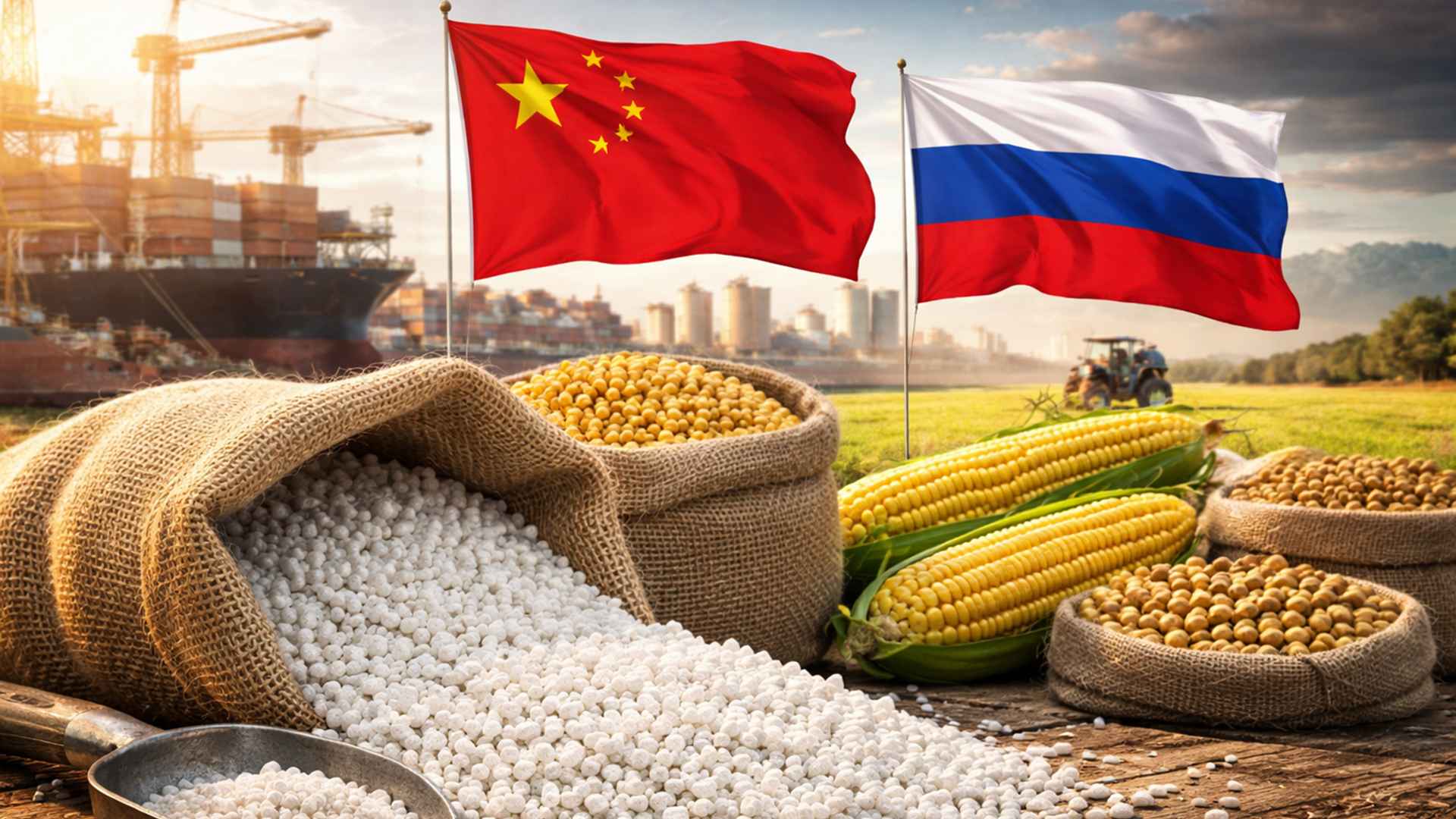
China and Russia suspend fertilizer exports, prices soar, and Brazil is already at real risk of shortages in the fields.


Brazil’s dependence exposes strategic vulnerability
The impact of the Russian decision is even more significant when observing Brazil’s strong dependence on imported fertilizers. In 2025, Russia accounted for 25.9% of all chemical fertilizers purchased by Brazil, according to data from the Ministry of Foreign Trade.
This data highlights a critical point: the Brazilian agribusiness, although one of the largest in the world, still heavily relies on foreign inputs to maintain its productivity. And, in the face of a sudden supply interruption, the risk of impact on costs and production becomes real.
Additionally, Russia holds a dominant position in the global market. The country accounts for about a quarter of the world’s ammonium nitrate production and controls up to 40% of the international trade of this input. In other words, any internal decision has immediate repercussions on the global scenario.
To worsen the situation, Russia is already facing production limitations. This is because there is no capacity to increase production this year, especially in light of a global supply crisis. As a result, the trend is for greater pressure on prices and availability.
Attacks, restrictions, and logistics pressure the market
Another relevant factor contributing to this scenario is the direct impact of recent events on Russian productive infrastructure. In February, Ukrainian drones hit the Dorogobuzh factory, considered the main asset of the company Acron, responsible for about 11% of Russia’s ammonium nitrate production.
According to estimates, the unit is not expected to return to full capacity before May, further reducing the available supply in the international market. Consequently, the combination of factors — conflicts, restrictions, and logistical bottlenecks — intensifies instability in the sector.
Moreover, the Russian government has been adopting control measures since 2021, with export limits and guidance for producers to prioritize the domestic market. Now, with the new total suspension of licenses (except for government contracts), the movement becomes even stricter.
It is worth noting that ammonium nitrate is not only used in agriculture. The input also has applications in the production of explosives, making it even more sensitive in conflict and international security scenarios.
Why Brazil depends so much on external fertilizers
To understand the magnitude of the problem, it is essential to analyze the structure of the Brazilian fertilizer market. According to experts, three inputs form the basis of agricultural fertilization: NPK — nitrogen (N), phosphorus (P), and potassium (K).
However, Brazil imports about 95% of the nitrogen it uses, as well as 75% of phosphate and 91% of potassium. These figures highlight a structural dependence that cannot be reversed in the short term.
According to Professor Cicero Lima from FGV Agro, this reality is due to factors such as the scarcity of raw materials in the national territory and the high cost of local production. In the case of nitrogen, for example, production requires cheap natural gas, which puts countries like the United States, Russia, and Qatar at a competitive advantage.
Additionally, potassium is concentrated in a few countries, such as Canada, Russia, and Belarus, which dominate the global market. The phosphate available in Brazil has inferior quality and higher exploration costs, making its economic viability difficult.
Another important point is the high internal demand. Brazil, being one of the largest food producers in the world, has soils that are naturally poor in nutrients, requiring frequent fertilization to maintain high productivity levels.
Crops such as soybeans, corn, coffee, and sugarcane are major consumers of fertilizers, further increasing external dependence. As a result, any interruption in international supply generates direct impacts on the production chain.
National plan aims to reduce dependence by 2050
In light of this scenario, the Brazilian government has already begun efforts to reduce this vulnerability. In 2022, the National Fertilizer Plan was launched, aiming to increase domestic production and decrease external dependence over the coming decades.
The established goal is ambitious: to produce between 45% and 50% of the fertilizers consumed in the country by 2050. To achieve this, the government plans investments exceeding R$ 25 billion by 2030, according to the Ministry of Agriculture and Livestock.
However, experts warn that the results will be gradual. This is because building a robust production chain requires time, infrastructure, and favorable economic conditions.
Meanwhile, Brazil remains exposed to fluctuations in the international market. And, in light of decisions like Russia’s, it becomes evident that the country’s food security also hinges on geopolitical and strategic issues.
With information from the national portal: G1









Seja o primeiro a reagir!