





 English
  Francês
  Alemão
  Italiano
  Japonês
  Norueguês
  Portuguese
  Spanish
  5 min of reading
  0 comments


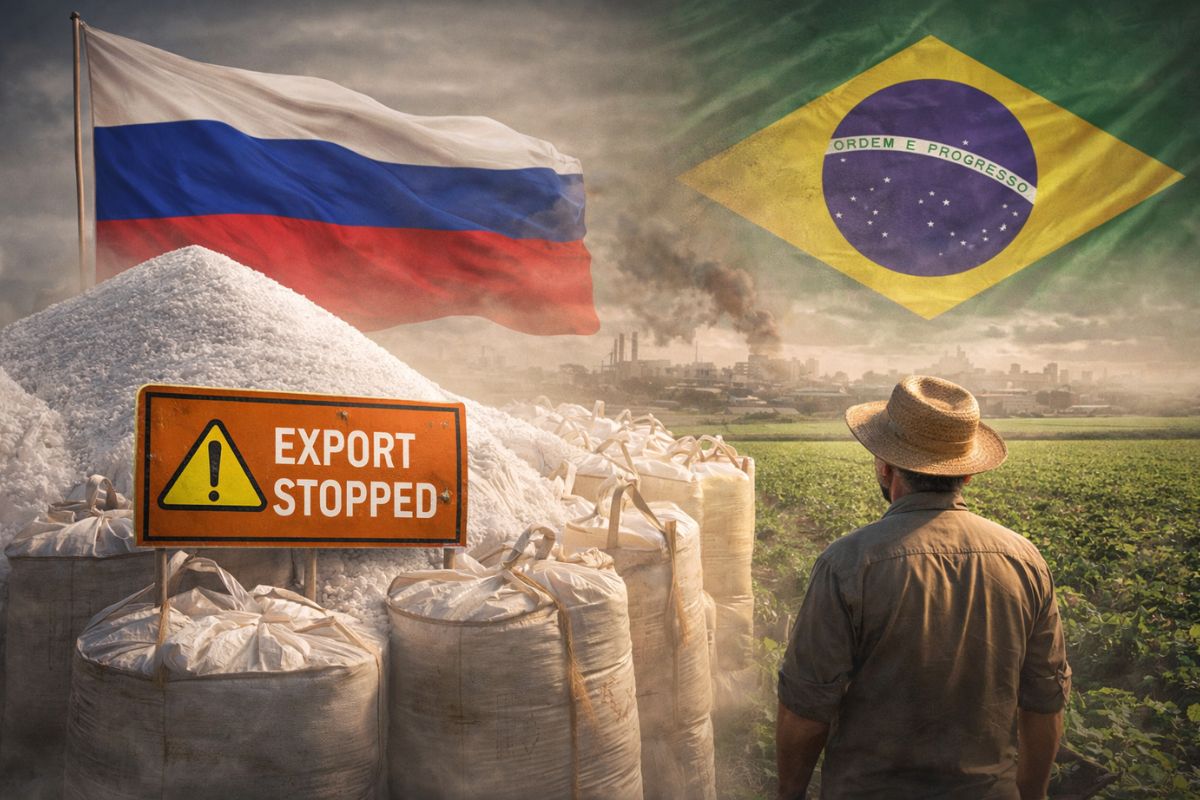
Russia, the largest supplier of fertilizers to Brazil and responsible for 25.9% of the chemical fertilizers imported by the country, has suspended exports of ammonium nitrate until April 21 to prioritize the domestic market. This decision could bring losses to Brazilian agriculture amid the closure of the Strait of Hormuz, through which 24% of global ammonia trade passes.
The largest supplier of fertilizers to Brazil has just made a decision that could bring serious losses to Brazilian agriculture. Russia announced on Tuesday, March 24, that it will suspend exports of ammonium nitrate for one month, until April 21, to ensure sufficient stock during the spring planting season in the Northern Hemisphere. The country controls up to 40% of the global ammonium nitrate trade and produces a quarter of all ammonium nitrate fertilizer in the world. According to Reuters, the Russian Ministry of Agriculture has suspended all export licenses issued and will not issue new ones, except for government contracts.
According to g1, the Russian decision takes on even more serious contours because it occurs amid a global supply crisis caused by the closure of the Strait of Hormuz. This maritime route accounts for 24% of global ammonia trade, an essential ingredient for ammonium nitrate. Russia does not have the capacity to increase production this year, and in February, Ukrainian drones hit the Dorogobuzh factory, responsible for about 11% of Russian ammonium nitrate production. The factory is not expected to be fully operational before May. For Brazil, which is the largest importer of fertilizers in the world, the scenario is concerning.
Why Russia is the largest supplier of fertilizers to Brazil and what this means

In 2025, Russia accounted for 25.9% of the chemical fertilizers purchased by Brazil, according to data from the Ministry of Foreign Trade. This makes the country the largest supplier of fertilizers to Brazil by a wide margin.
-
Forgotten region becomes a powerhouse in the heart of Brazil, transforming unproductive lands into fortune and making MATOPIBA the new billion-dollar agricultural empire that almost no one saw being born.
-
With a 775 hp engine, the world’s largest axial combine harvester arrives in Brazil, promising to harvest more in less time with advanced automation and the capacity for platforms up to 61 feet.
-
With 18 million feet, giant farms, and 2.2 million sacks per year, a mining group is building a coffee empire in Brazil with heavy mechanization, giant silos, and exports to various continents.
-
China and Russia suspend fertilizer exports, prices soar, and Brazil is already at real risk of shortages in the fields.
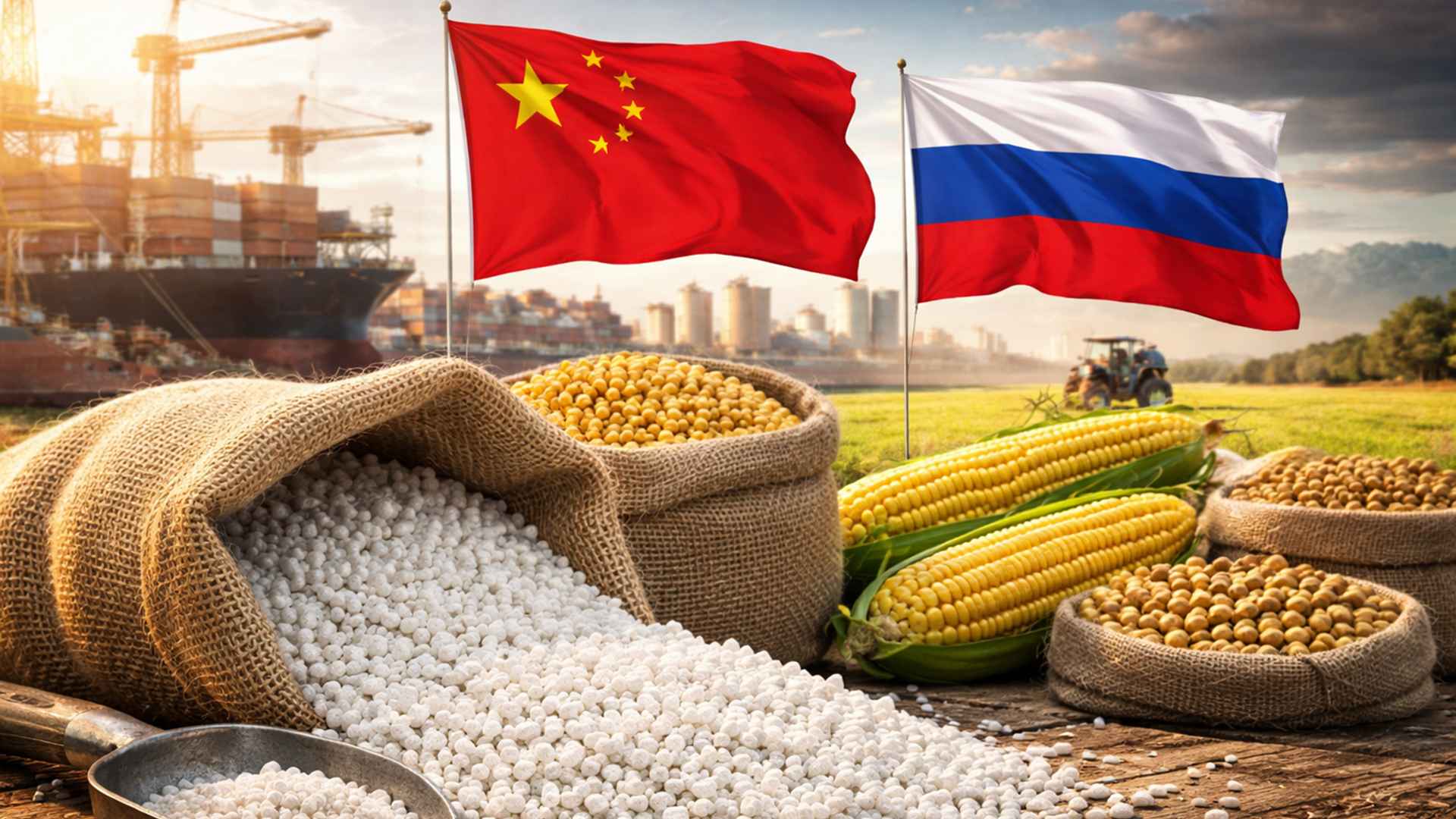

Brazil’s dependence on Russia in this sector is not new and has been deepening over the past few years, driven by competitive Russian prices and the country’s production capacity, which has abundant natural gas reserves, a key raw material for the production of nitrogen fertilizers.
Russia exports ammonium nitrate to Brazil, India, Peru, Mongolia, Morocco, and Mozambique, among other countries. In the case of Brazil, the importance is even more critical: Brazil imports 95% of the nitrogen it uses in agriculture, 91% of potassium, and 75% of phosphate.
These three inputs form the so-called NPK, the basis of practically all chemical fertilization used in soybean, corn, coffee, and sugarcane crops. Any interruption in the supply from the largest supplier of fertilizers to Brazil directly impacts the agribusiness production chain.
The Strait of Hormuz and the crisis that exacerbates the problem for Brazilian agriculture

The suspension of Russian exports does not happen in isolation. The closure of the Strait of Hormuz, motivated by the conflict in the Middle East, has caused a supply crisis that directly affects the global fertilizer market.
This route accounts for 24% of global ammonia trade, one of the essential ingredients for the production of ammonium nitrate. With the Strait blocked, the global supply of the input was already under pressure even before the Russian decision.
The combination of these two events creates a particularly unfavorable scenario for Brazil. On one hand, the largest supplier of fertilizers to Brazil suspends exports. On the other hand, the maritime route through which a large part of the world’s ammonia flows is closed.
The likely result is pressure on prices and supply difficulties at a critical moment for planning Brazilian crops. Agricultural sector analysts are already warning that the cost of fertilizers could rise significantly in the coming weeks if the situation does not normalize.
Why Brazil depends so much on imported fertilizers
Brazil’s dependence on imported fertilizers has structural roots. According to experts like Cícero Lima from FGV Agro and consultant Carlos Cogo, there are three main factors. The first is the lack of raw materials: the country does not have significant potassium reserves, and the production of nitrogen fertilizers requires cheap natural gas, a resource that Brazil does not offer under competitive conditions.
The second factor is the enormous demand: despite being one of the largest food producers in the world, Brazil has soil that is naturally poor in nutrients, which requires frequent fertilization to maintain productivity.
The third factor is economic: importing is still cheaper than producing domestically because logistics in Brazil is expensive and industrial infrastructure is limited. The result is that Brazil has become the largest importer of fertilizers in the world, relying on countries like Russia, Canada, Belarus, and Qatar to supply its crops.
This dependence puts Brazilian agriculture in a vulnerable position whenever one of the suppliers faces internal crises or decides to prioritize its own market, as the largest supplier of fertilizers to Brazil has just done.
The National Fertilizer Plan and the attempt to reduce external dependence
Brazil has a National Fertilizer Plan, created in 2022, with the goal of producing between 45% and 50% of the inputs that the country consumes by 2050. To achieve this, the federal government intends to invest more than R$ 25 billion by 2030, according to the Ministry of Agriculture and Livestock.
The plan recognizes that dependence on suppliers like Russia is a strategic vulnerability for Brazilian agribusiness.
However, the 2050 goal is distant, and progress so far has been modest. While the plan is not realized, Brazil remains exposed to decisions like the one just made by the largest supplier of fertilizers to Brazil.
Each month of suspension in Russian exports could mean higher costs for rural producers and, ultimately, higher prices for the end consumer. The current situation serves as an urgent reminder that Brazilian agricultural sovereignty necessarily depends on the ability to produce its own fertilizers.
What do you think about this situation?







Seja o primeiro a reagir!