





 English
  Francês
  Alemão
  Italiano
  Japonês
  Norueguês
  Portuguese
  Spanish
  5 min of reading
  0 comments


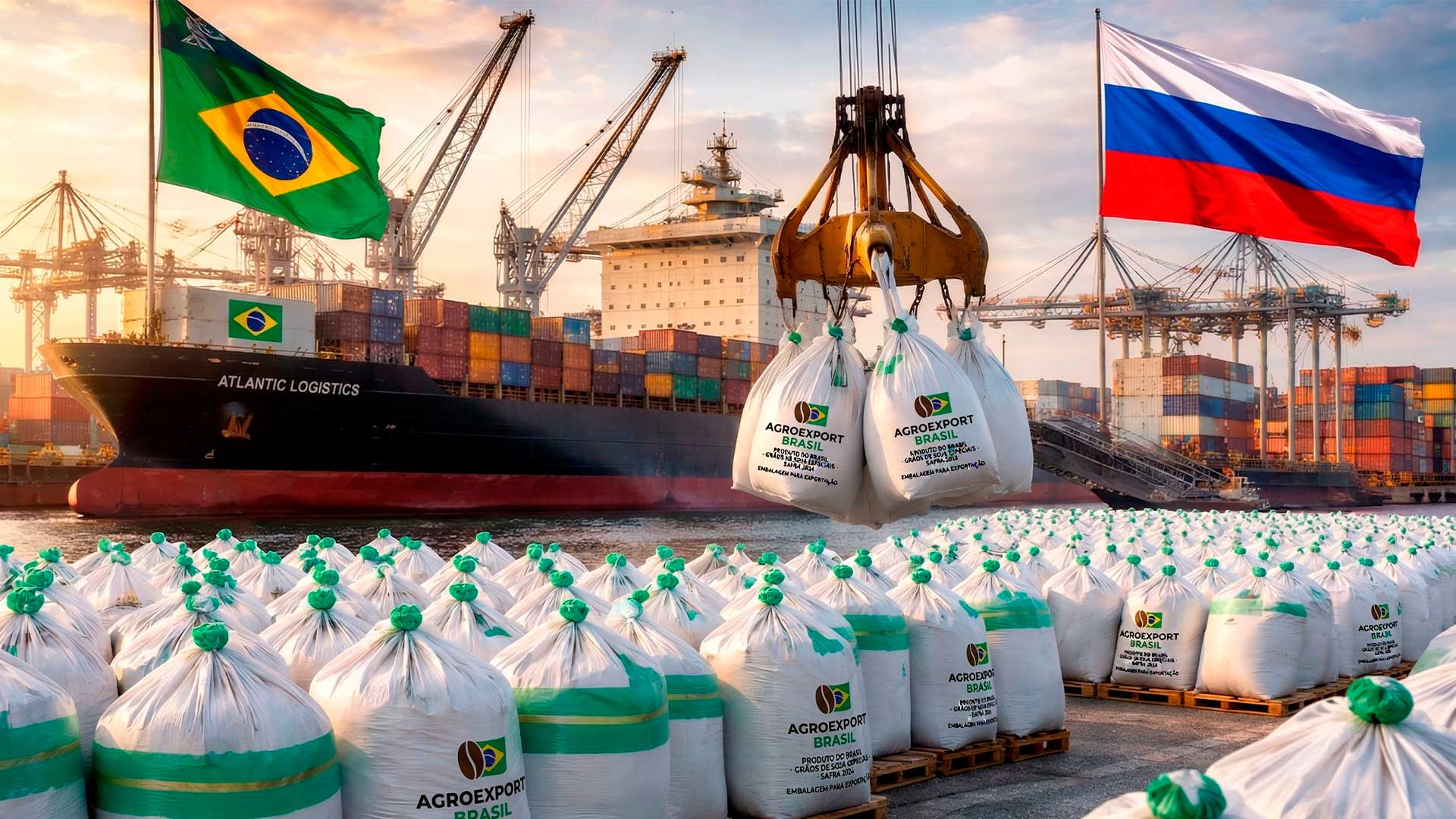
The temporary suspension announced by Moscow until April 21 puts the fertilizer market on alert. For Brazilian agriculture, the movement increases concern about prices, supply, and production costs in an international scenario that was already under strong tension.
The Russian decision to halt ammonium nitrate exports for a month has raised a new alarm in the global agribusiness. On Tuesday, March 24, the Russian government announced that it would suspend external sales of the fertilizer until April 21 to ensure supply to the domestic market during the spring planting in the Northern Hemisphere.
According to Reuters, export licenses have been blocked and new authorizations will not be issued during this period, except for government contracts.
The announcement carries weight because it does not involve a secondary supplier. According to Reuters, Russia accounts for up to 40% of the global ammonium nitrate trade and about a quarter of the world’s production of the input, which means any interruption has the potential to quickly affect prices and availability.
-
Forgotten region becomes a powerhouse in the heart of Brazil, transforming unproductive lands into fortune and making MATOPIBA the new billion-dollar agricultural empire that almost no one saw being born.
-
With a 775 hp engine, the world’s largest axial combine harvester arrives in Brazil, promising to harvest more in less time with advanced automation and the capacity for platforms up to 61 feet.
-
With 18 million feet, giant farms, and 2.2 million sacks per year, a mining group is building a coffee empire in Brazil with heavy mechanization, giant silos, and exports to various continents.
-
China and Russia suspend fertilizer exports, prices soar, and Brazil is already at real risk of shortages in the fields.
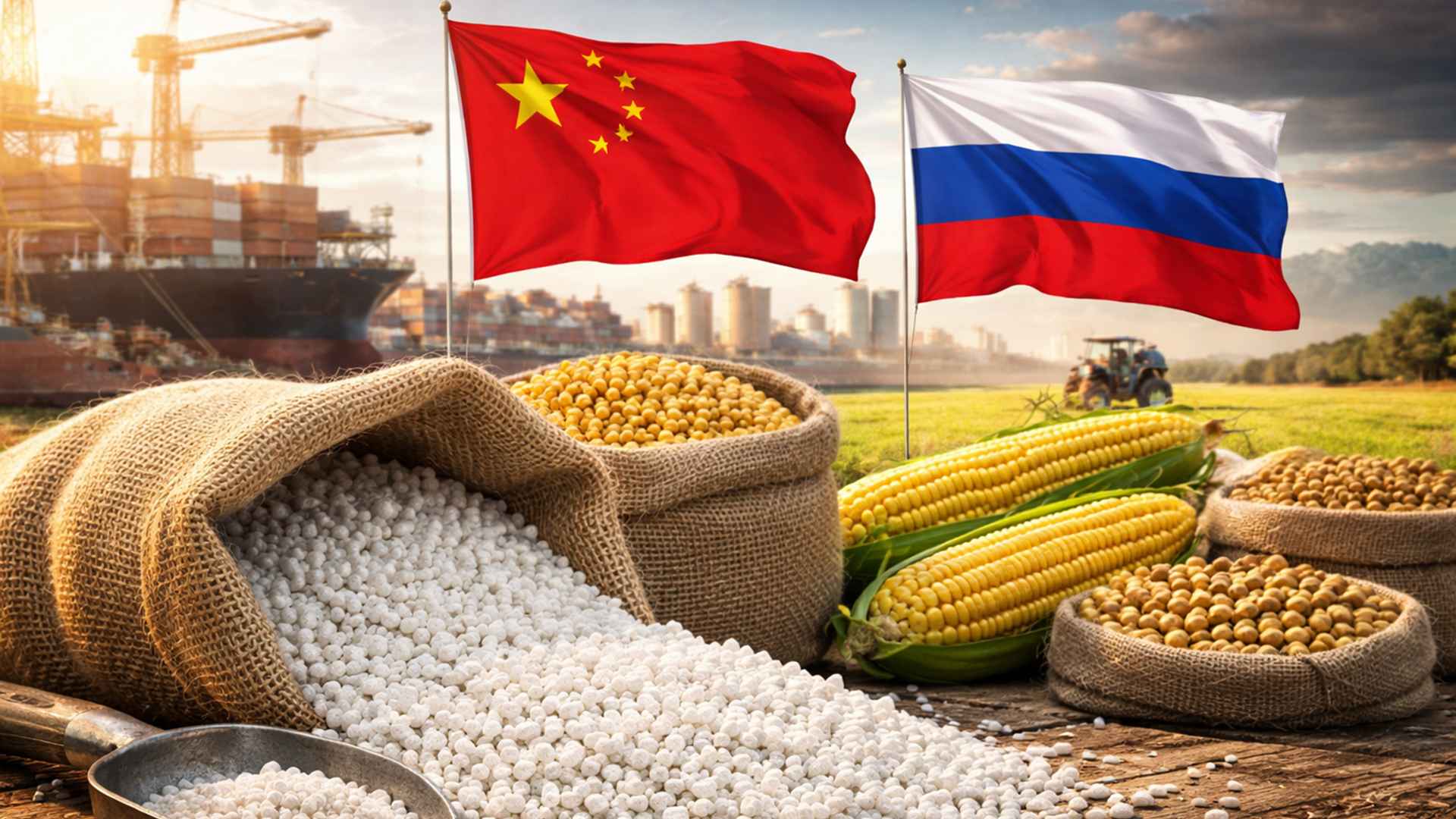

For Brazil, the news is particularly sensitive. The country is among the destinations for Russian ammonium nitrate exports and enters this new shock with a strong external dependence in the fertilizer market. In a presentation by ANDA, based on data from Comex Stat for 2025, the sector reports that 85% of the fertilizer consumed in Brazil is imported, which increases the vulnerability of agriculture to geopolitical crises and logistical bottlenecks.
The problem is that Moscow’s decision does not arise in isolation. The international market was already under pressure due to the disorganization of routes linked to the Strait of Hormuz, a crucial point for the trade of nitrogenous inputs. Reuters reported that about 24% of the global ammonia trade, an important raw material for ammonium nitrate, passes through this route, which helps explain why the sector entered a new phase of instability even before the Russian announcement.
Why the Russian suspension weighs so much on the global fertilizer market
Ammonium nitrate plays an important role at the beginning of the agricultural cycle, especially during planting and starter fertilization.
Reuters itself highlighted that the product is widely used at the start of the agricultural season, which explains the Russian choice to prioritize domestic supply when internal demand rises.
In practice, the measure further tightens a market that was already operating with little slack. In addition to the international logistical shock, Russia also faces internal limitations to increase supply this year, which reduces the chance of quick compensation by the country itself even after the suspension ends.
There is also an additional pressure factor. According to Reuters, the Dorogobuzh plant, owned by Acron, which was hit by drones in February, accounts for about 11% of Russian ammonium nitrate production and is not expected to return to full operation before May, which helps keep global supply tighter for longer.
Brazil enters the new shock with high external dependence and already pressured costs
The potential impact on Brazil does not necessarily mean immediate shortages. But the risk of increased costs and logistical delays grows because the country heavily relies on fertilizer imports and has already been facing a more expensive purchasing environment. ANDA points to this structural dependence as one of the main bottlenecks in the sector, especially when external crises hit strategic suppliers.
On March 18, even before the Russian suspension was confirmed, Agriculture Minister Carlos Fávaro told Reuters that Brazil could face fertilizer supply issues if the crisis in the Middle East did not ease. In the same report, the agency noted that the country imported a record 45.5 million tons of fertilizers in 2025, highlighting the extent of Brazil’s exposure to the international market.
The same investigation showed that price pressures had already reached the Brazilian market. According to Reuters, data cited by StoneX indicated a jump of about 35% in the price of urea delivered in Brazil in just two weeks, a movement that led part of the market to discuss replacements with cheaper alternatives.
Although urea and ammonium nitrate are not the same product, both belong to the group of nitrogenous fertilizers and tend to react to similar shocks in supply, energy, and logistics. Therefore, the new Russian halt reinforces the perception that production costs in the field may continue to be under pressure precisely at a time when producers need to plan margins, purchases, and planting schedules more cautiously.
What changes for Brazilian agriculture from here on
For rural producers, the most immediate effect tends to appear in market sentiment. When a supplier as significant as Russia temporarily exits the scene, global buyers begin to compete for alternative sources, which usually pressures prices, freight, and delivery times. This type of reaction is even stronger when the disruption occurs in an environment of already compressed international supply.
In Brazil, this may mean more volatility in fertilizer negotiations for the coming weeks, with repercussions on crops that depend on rigorous fertilization planning and cost control. The greatest risk at this moment seems to be the increased cost of the input and greater commercial unpredictability, rather than an instant shortage across the national market.
The episode also highlights an old fragility of the country. Whenever there is geopolitical conflict, logistical blockade, or export restriction by major suppliers, Brazilian agribusiness feels the effects of its external dependence. The new decision by Russia only reinforces that fertilizers are, today, a central part of the productive security of Brazilian agriculture.
With information from A Crítica.
The Russian suspension will last only a month, but its effects may extend far beyond this period. Do you think Brazil should have advanced further to reduce dependence on imported fertilizers, or can the market absorb this shock without greater damage to producers? Leave your opinion in the comments and participate in this debate.










Seja o primeiro a reagir!