





 Portuguese
  English
  Spanish
  5 min of reading
  0 comments


Curitiba Surprises by Consolidating Solid Growth of the Middle Class, with Advances in Income and Poverty Reduction, While Other Brazilian Capitals Face Distinct Challenges in the Economic and Social Distribution of the Urban Population.
Curitiba emerges as the Brazilian capital with the highest proportion of the middle class, according to updated data until 2025.
According to a survey conducted by the City Hall of Rio de Janeiro, through the Municipal Secretary of Economic Development (SMDE), 40.9% of Curitiba’s population belongs to class C, known as the middle class.
This index surpasses other Brazilian capitals traditionally associated with economic growth, such as Goiânia, Palmas, and Campo Grande.
-
The government requests the Federal Revenue Service for a new system to automate the income tax declaration, reducing errors, time, and bureaucracy for millions of Brazilians.

-
Friends have been building a small “town” for 30 years to grow old together, with compact houses, a common area, nature surrounding it, and a collective life project designed for friendship, coexistence, and simplicity.

-
Pix in installments, international Pix, and contactless payment without internet: the Central Bank revealed the new features coming to the tool that is already used by almost every adult in Brazil.

-
This small town in Germany created its own currency 24 years ago, today it circulates millions per year, is accepted in over 300 stores, and the German government allowed all of this to happen under one condition.


The study, which used data from IBGE to map the evolution of social classes in 27 capitals between 2020 and 2023, reveals important changes in the socioeconomic profile of the capital of Paraná.
The Social Transformation Behind the Growth of the Middle Class
The growth of the middle class in Curitiba reflects a significant social transformation, marked by poverty reduction and increased family income.
According to the survey, the number of people in class C increased by 27,700 between 2020 and 2023.
Additionally, the population of classes A and B also registered growth, respectively of 13,500 and 15,600 people.
In contrast, the poorer layers, defined as classes D and E, decreased by about 14,300 inhabitants in the same period.
This phenomenon highlights an improvement in local economic conditions, which extend beyond the capital of Paraná and reveal a broader pattern of upward social mobility.
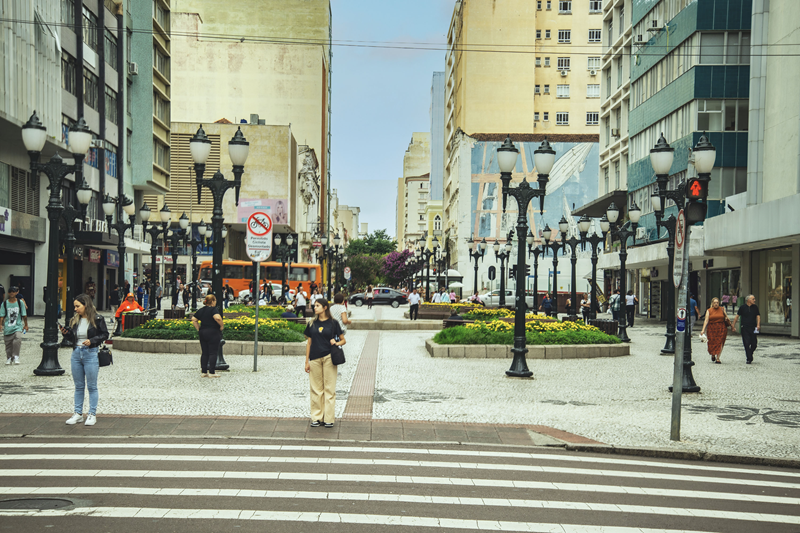
Distribution of Social Classes and Inequality in Curitiba
Curitiba is now the second Brazilian capital with the lowest percentage of residents in classes D and E, representing 25.1% of the population.
This number is only behind Florianópolis, which registers 16.5% in these categories.
In some other Brazilian capitals, classes D and E exceed 60% of the population, highlighting the contrast in income distribution.
This scenario is the result, according to Mayor Eduardo Pimentel, of the strength of the local economy, which has been generating formal jobs and fostering entrepreneurship.
“We are focused on increasing job creation, supporting small businesses, and attracting new companies to Curitiba, which contributes directly to improving income and reducing inequality,” the mayor stated in a recent interview.
This public effort is accompanied by investments in strategic sectors, such as technology, industry, and commerce, which drive the sustainable development of the city.
Criteria and Data of the Study on Social Classes
To better understand the study, the definitions adopted for social classes consider the monthly income of all household members, including salaries, rents, transfers, and financial earnings.
Class A includes families with income above R$ 25,000; class B, between R$ 8,000 and R$ 25,000; class C, between R$ 3,500 and R$ 8,000; and classes D and E, with monthly income below R$ 3,500.
In 2023, according to the data, class A represented 6.4% of Curitiba’s population (approximately 113,500 people), while class B encompassed 27.7% (about 491,400 inhabitants).
Class C maintained its leadership with 40.9%, totaling 725,000 people.
Classes D and E accounted for 25.1%, equivalent to 445,200 residents.
This distribution indicates that about 68% of the population of the capital of Paraná is concentrated in classes B and C, the so-called expanded middle class.
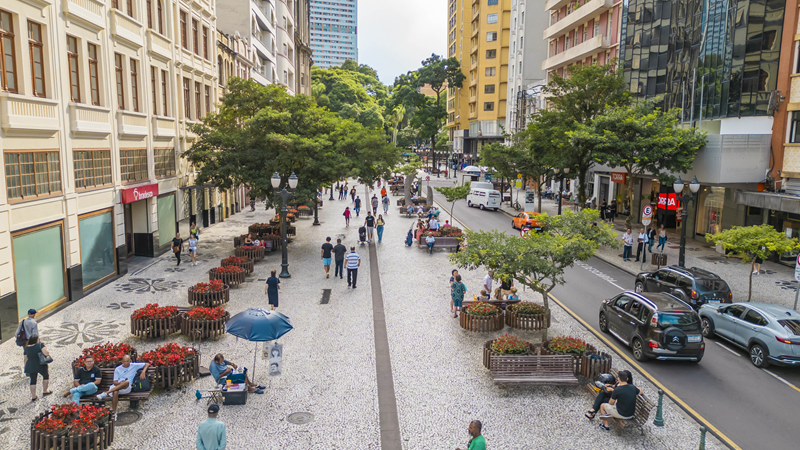
Curitiba in the National Context
Compared to the national scenario, Curitiba presents a more favorable economic situation and less social inequality.
In Brazil, class A accounts for only 3.9% of the population, class B represents 15%, and class C, 31.2%.
Classes D and E are still the majority in the country, reaching almost half of the total population, at 49.9%.
This picture highlights Curitiba’s uniqueness within the Brazilian context, signaling concrete advances in the standard of living and economic opportunities for its population.
Furthermore, the study emphasizes that local public policies, combined with the dynamism of the labor market, are essential factors for this transformation.
Regional Challenges and Inequality Within the City
It is important to highlight that the upward social mobility observed in Curitiba does not occur uniformly across all regions of the city.
Centrally located areas and more developed neighborhoods have a higher concentration of classes A, B, and C, while peripheral neighborhoods still host a significant portion of the population from classes D and E.
This regional disparity points to challenges in resource distribution and infrastructure, which must be addressed to consolidate the growth of the middle class.
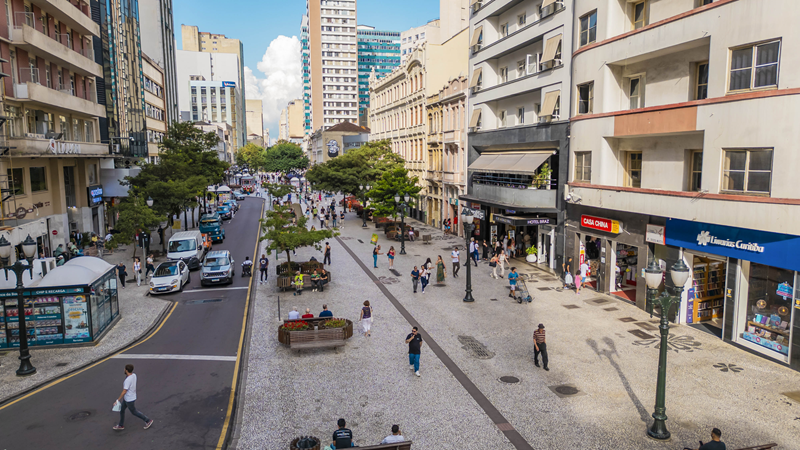
The Impact of the Pandemic and Economic Resilience
Another relevant point is the impact of the Covid-19 pandemic on this scenario.
Although it severely affected the national economy, Curitiba managed to maintain job stability, especially in the services and industry sectors, which helped preserve the population’s income.
According to experts, economic diversification and the swift adoption of emergency support policies contributed to this resilience.
Moreover, the increase in consumption and demand for services in the city boosted local businesses and encouraged entrepreneurship, creating a positive cycle of income generation.
This movement strengthened the middle class and helped reduce the inequalities that traditionally affect large Brazilian metropolises.
Curitiba as a Model for Brazil
The capital of Paraná serves as an example for other Brazilian cities seeking to promote social inclusion and sustainable economic development.
The combination of effective public policies, private investment, and community participation has proven essential for the advancement of the quality of life of residents.
With the prospect of economic growth and continuous improvement, Curitiba can cement its role as a national reference in social mobility and poverty reduction. The complete study can be accessed by clicking here.
Do you think other Brazilian capitals can follow the same path as Curitiba to strengthen the middle class and reduce social inequality? What public policies do you consider most effective for promoting this transformation?








Seja o primeiro a reagir!