





 Português
  Inglês
  Espanhol
  3 min de leitura
  0 comentários


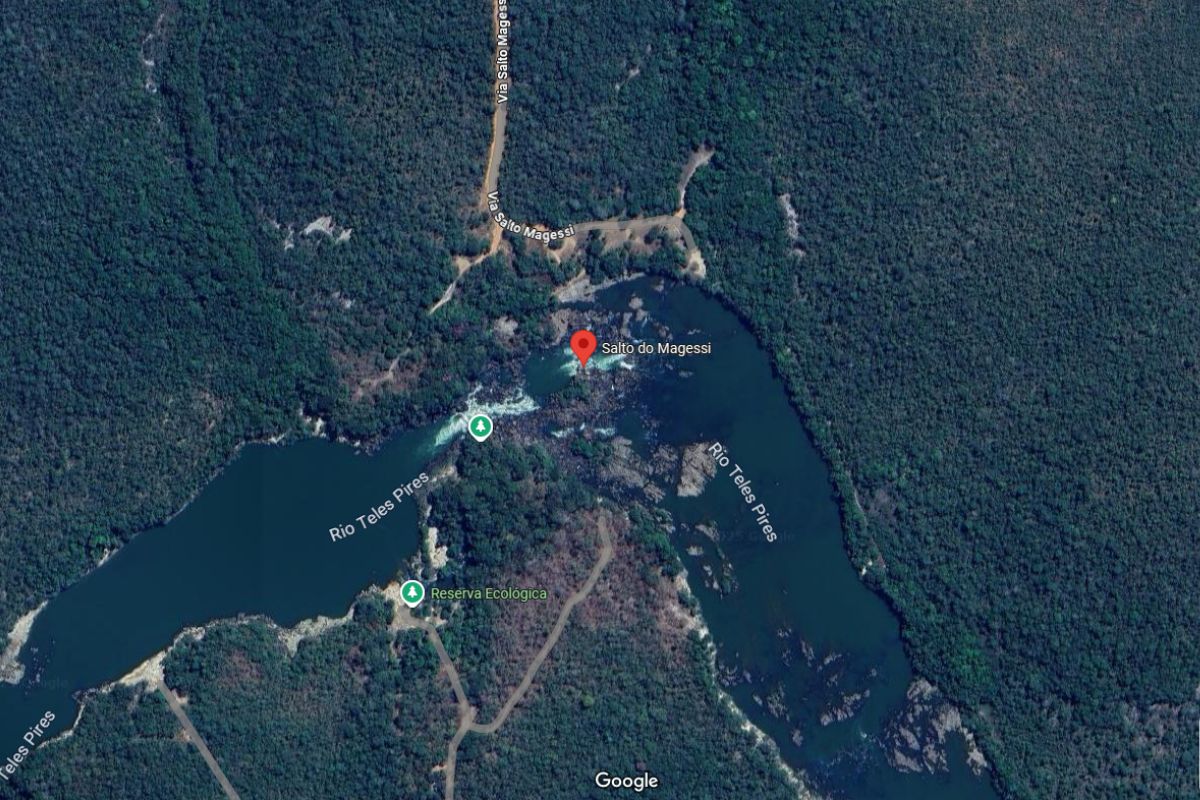
Discover Details of the Drilling That Reached Nearly 6 Km Below the Surface of Mato Grosso, Marking Onshore Exploration and Becoming the Deepest Well in Brazil on Land.
The quest for energy resources drove Petrobras on an audacious journey into the depths of Mato Grosso. The result was Salto Magessi-1 (2-SM-1-MT), considered the deepest well ever drilled on land in Brazil, an engineering feat and geological exploration that reached 5,777 meters below the surface in the Parecis basin.
This milestone of onshore exploration, completed on January 30, 1995, did not reveal commercially viable hydrocarbon reserves, being classified as “dry.” However, the importance of Salto Magessi-1 transcends immediate commercial exploration, providing crucial data about a frontier basin and cementing its place in history as the deepest well in Brazil in its segment.
Record Drill Details: The Sleeping Giant in Mato Grosso

The Salto Magessi-1 well was operated by Petrobras. Its exact location is in the Juruena sub-basin, in the state of Mato Grosso. The similarly named area, APA Salto Magessi, encompasses municipalities such as Sorriso and Santa Rita do Trivelato. The main objective of this pioneering drill was stratigraphic. It aimed to obtain detailed geological information about the subsurface of the Parecis basin.
-
Offshore industrial demand in Macaé skyrockets with the recovery of oil and gas and could grow by up to 396% by 2026 in the Campos Basin.
-
Offshore industrial demand in Macaé surges with the recovery of oil and gas and could grow by up to 396% by 2026 in the Campos Basin.
-
Brazilian giant expands borders in the Southeast: Petrobras confirms new oil discovery in ultra-deep waters in the pre-salt of the Campos Basin.

-
Alert in the global energy market: Severe tropical cyclone hits the coast and disrupts gas production at major plants in Australia, threatening global supply.


Reaching 5,777 meters (or 5,779 meters, according to another source) established Salto Magessi-1 as a record holder. Unlike offshore exploration, which deals with water columns and thick salt layers, deep onshore drilling faces challenges such as complex geological formations and logistics in remote areas.
What Did the Depths of the Deepest Well in Brazil Reveal?
Despite being dry for commercial purposes, Salto Magessi-1 unveiled significant geological secrets. The well penetrated a vast sedimentary column from the Paleozoic to the Neoproterozoic. Formations such as Uiaritis, Salto das Nuvens, Diamantino, Sepotuba, Raizama, Serra Azul, Araras, and Puga were identified. Notably, the crystalline basement was not reached.
Indicators of oil were recorded in three distinct intervals, between 4762-4768 meters and at two levels in the Alto Paraguai Group (4963-4987 meters and 5094-5095 meters). A test confirmed compact sandstone with “rare drops of black oil.” “Immobile gas” was also detected, indicating gas generation in the basin, although not in volumes or flow conditions that are economically viable. Geochemical analyses indicated a Total Organic Carbon (TOC) of 2.98% at 5,122 meters, showing rocks with generative potential.
Scientific Legacy: More Than a Dry Well
The scientific and exploratory value of Salto Magessi-1 is immense. The data collected allowed for a reevaluation of the stratigraphy and tectonic evolution of the Parecis basin. The exploration of the deepest well in Brazil on land confirmed an active petroleum system, even without commercial accumulation at that point.
This foray into the depths provided fundamental geological knowledge. The information guides future exploratory campaigns in the region. The apparent “commercial failure” translated into progress in the understanding of the Brazilian subsurface.
Current Status and Access to Data from the Exploratory Milestone
Officially, well 2-SM-1-MT is classified as “dry” by ANP. The standard practice for dry wells is to plug and abandon (P&A), for safety and environmental protection. It is highly likely that Salto Magessi-1 is now permanently abandoned.
Researchers and companies can access detailed data in the ANP’s Exploration and Production Database (BDEP). Although some reports may have restricted access, much information is public. Even with gaps in data such as temperature, pressure, and technical details of the drilling, the informative legacy of Salto Magessi-1 remains accessible.










-

Uma pessoa reagiu a isso.