





 Portuguese
  English
  Spanish
 4 min of reading
  0 comments


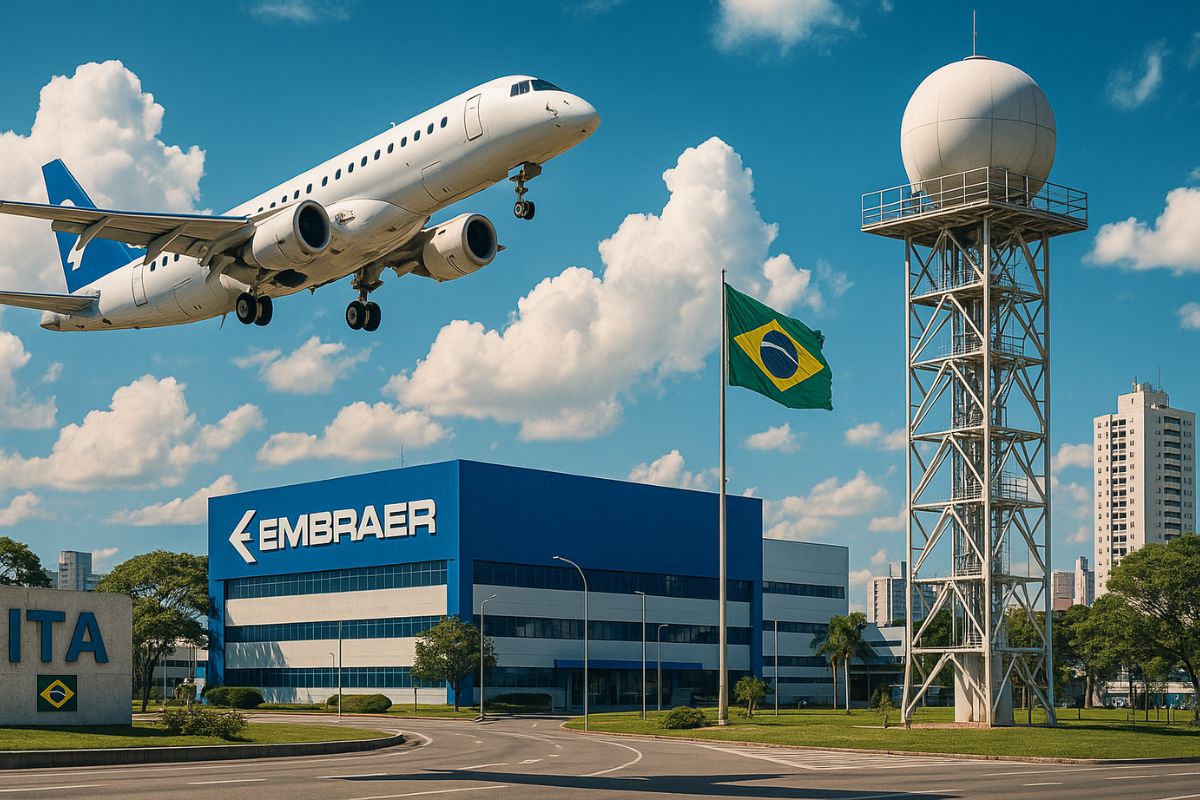
The Ecosystem Brings Together Embraer, ITA, DCTA and More Than 100 Companies, with 15 Thousand Jobs, State-of-the-Art Technology Park and Projects Ranged From Avionics to eVTOLs
The largest aerospace hub in Latin America is in São José dos Campos, in the state of São Paulo. The city houses a rare ecosystem: Embraer as the anchor company, ITA training elite engineers, and the DCTA (formerly CTA) with research institutes supporting world-class engineering. The arrangement brings together more than 100 companies and approximately 15 thousand job positions, covering aerospace, defense, space, avionics, and MRO.
This group is organized in the Brazilian Aerospace Cluster, articulated with the Technology Innovation Park, recognized as the largest in the country. The result is scale, specialization, and continuous innovation, explaining why the city leads sector exports and attracts trade missions, investments, and experimental projects such as vertiports for eVTOLs.
How the Ecosystem Formed and Why It Works
According to Gazeta de SP, the story begins with the creation of the then Aeronautics Technical Center (CTA) in 1946, the seed of the current Aerospace Science and Technology Department (DCTA).
-
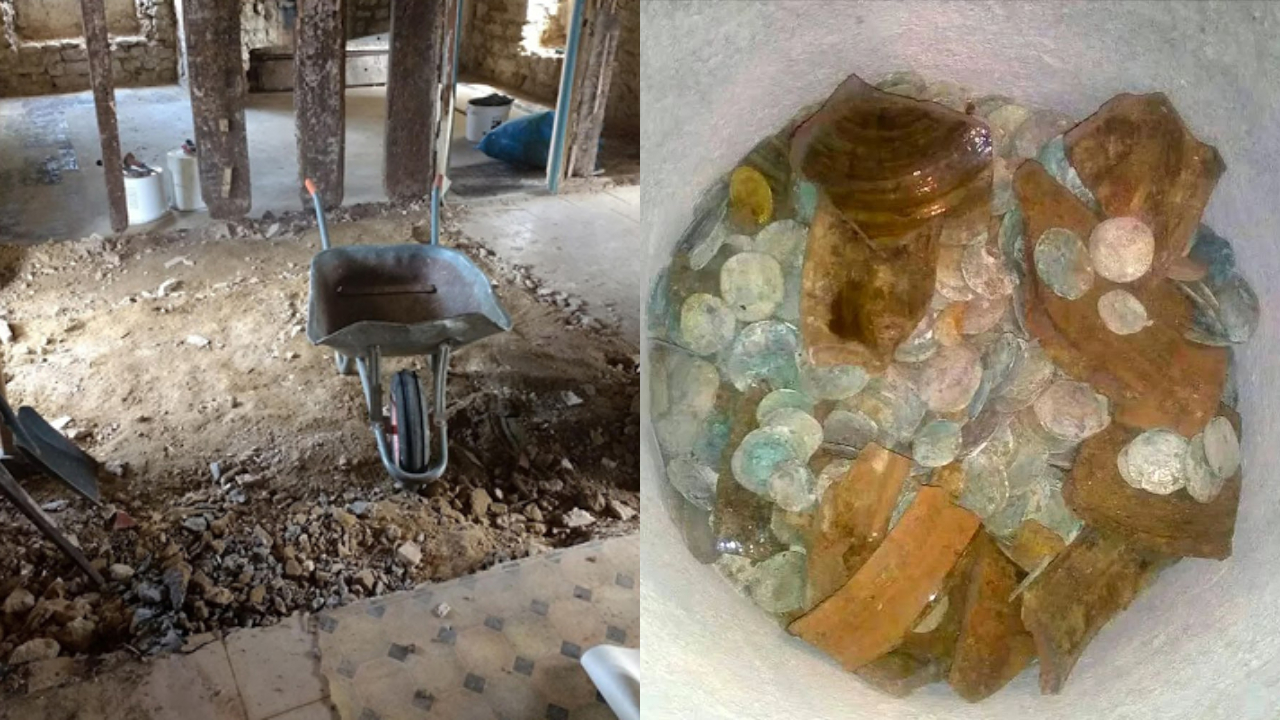
A couple buys an old chalet, breaks the kitchen floor for renovation, and finds over a thousand coins of gold and silver hidden since the English Civil War over 4 centuries ago.
-
Rigid bags with their days numbered: new trend prioritizes comfort in 2026.

-
YouTuber creates an excavator equipped with a giant 4.5-meter sword to challenge his brother to a rematch, and the invention quickly goes viral on social media.

-
The U.S. Army surprises the world by presenting the UH-60MX Black Hawk helicopter capable of flying without pilots, controlled by a tablet, featuring the MATRIX system, smart sensors, and full autonomy in real combat and rescue missions.


From it arose the Aeronautics and Space Institute (IAE), the Advanced Studies Institute (IEAv), and the Aerial Space Control Institute (ICEA), which integrate education, R&D, and certification.
This tripod gave rise to Embraer in 1969 and consolidated a culture of applied engineering.
The functioning of the hub is sustained by local supply chains and governance that encourages training, internationalization, fundraising, and business rounds.
When universities, the Air Force, and industry share goals, prototyping is faster, qualification is continuous, and technology transfer becomes routine.
Who Are the Protagonists and What Does Each Deliver
Embraer anchors the cluster with commercial, executive jets, and defense platforms.
ITA trains engineers who supply companies and institutes, reducing talent bottlenecks. DCTA, IAE, IEAv, and ICEA push the frontier in materials, propulsion, hypersonics, electronic warfare, and air traffic control.
Surrounding them, more than 100 companies specializing in structures, composites, precision machining, critical software, and avionics complete the cycle.
This is how prototypes leave the lab and become products, keeping the city competitive in rigorous certifications and delivery times.
Economic Dimension: Jobs, Exports, and Attraction of Investments
The cluster brings together around 15 thousand qualified jobs. The multiplier effect is direct on high-complexity services, suppliers, and testing centers.
In 2024, aerospace and automotive exports from the municipality registered a nearly 30% increase, signaling a recovery in demand and local delivery capacity.
The São José dos Campos brand also weighs in the investment balance: foreign funds and companies seek the hub for partnerships, engineering centers, and technology transfer.
For investors, relying on a workforce trained by ITA and DCTA’s infrastructure reduces technical risk and accelerates timelines.
Innovation in Daily Life: From the Technology Park to eVTOL Testing
The Technology Innovation Park hosts incubators, APLs, and shared laboratories, facilitating spin-offs, pilots, and proof of concept.
It is there that startups connect to requirements of aviation, defense, and space, shortening the distance between low TRL and market applications.
At the forefront, the local airport has been selected to deploy an experimental vertiport, a candidate for the first in Latin America oriented to eVTOLs.
This positions the hub for advanced air mobility, attracting operators, integrators, and manufacturers of batteries, systems, and navigation software.
Competitive Advantages and the Challenges Ahead
The structural advantage is the complete cycle: talent formation, applied research, and production coexist in a short range, which reduces coordination costs and increases the speed of learning.
Add to that a network of suppliers and recognized certifications, and the hub maintains high entry barriers.
The challenges are clear. Global scale is still lower than hubs like Toulouse and Seattle, and dependence on Embraer calls for continuous diversification in space, C4ISR, UAVs, and critical software.
Sustainability imposes an agenda for alternative fuels and electrification, where partnerships and stable R&D will be decisive.
What Changes for Brazil and for the Production Chain
For the country, São José dos Campos is a technological and exporting anchor. Each international contract raises the regulatory standard and spreads good practices to Brazilian suppliers.
For the chain, the hub offers efficient minimum scale, access to testing and certifiers, as well as internationalization routes through missions and fairs.
In practice, small and medium-sized enterprises can climb technological steps when testing, validating, and delivering within this environment, generating higher-income jobs and competitive local content.
The largest aerospace hub in Latin America cannot be explained by a single name, but rather by a system that connects Embraer, ITA, DCTA, and more than 100 companies around common goals.
When talent, laboratory, and factory floor come together, innovation happens faster.
Do you work or have you ever worked in the hub? What technical skills are still lacking to accelerate certifications and exports, advanced materials, embedded software, environmental testing, system integration? And the vertiport for eVTOL: does it open new chains (batteries, navigation, maintenance) or is it a showcase without scale in the short term? Share your views in the comments, we want to hear from those who live this ecosystem day to day.






-

-

-

-

-

17 pessoas reagiram a isso.