





 Portuguese
  English
  Spanish
 6 min of reading
  0 comments


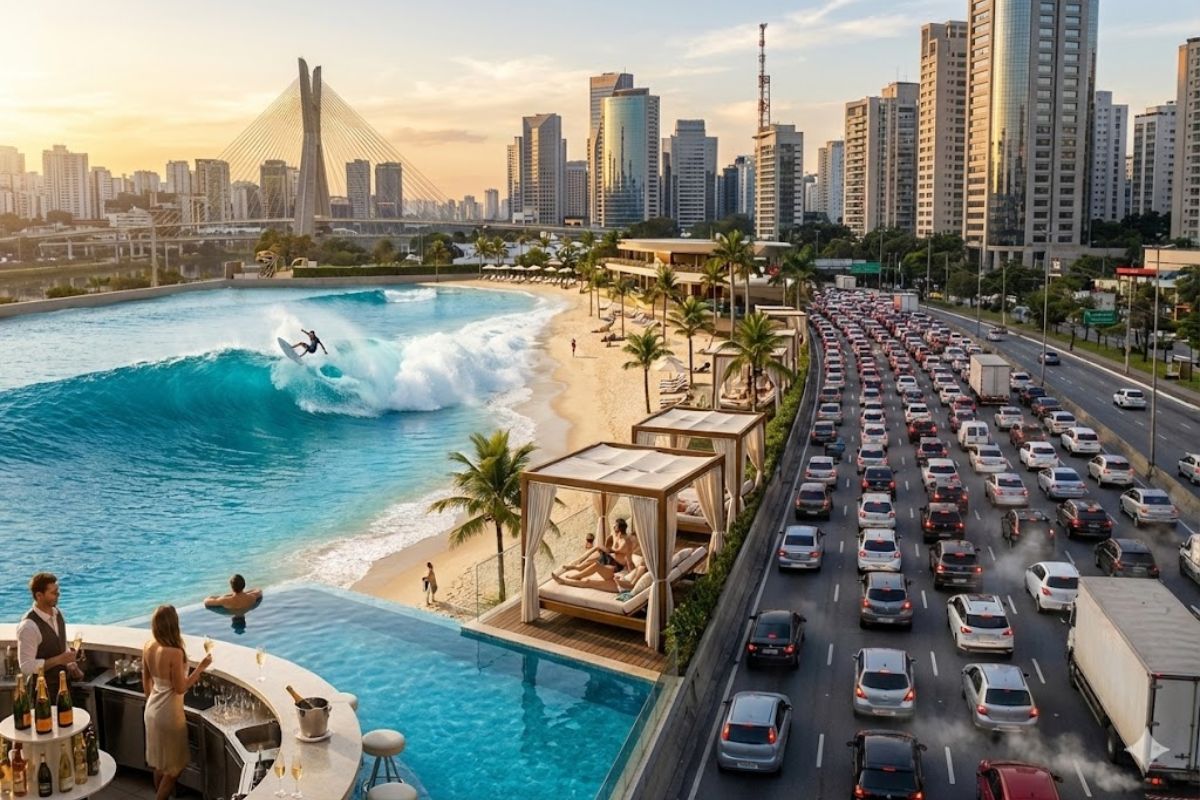
Opened on December 4, 2025, the São Paulo Surf Club creates an artificial surfing beach on Marginal Pinheiros, featuring 22-second waves, a title for R$ 1.25 million, a monthly fee of R$ 3,3 thousand, and a high-end resort-like structure in the southern zone of the entire São Paulo capital
On Wednesday, December 3, 2025, still in the pre-opening phase, guests tested perfectly calculated waves alongside Marginal Pinheiros. One day later, on December 4, 2025, São Paulo inaugurated its first artificial surfing beach in an urban luxury setting, installed at the São Paulo Surf Club, targeting high-income members.
With a 220-meter-long pool, programmed waves of up to 22 seconds, and a direct view of the heavy traffic on Marginal Pinheiros, the member-only club in Real Parque, a wealthy neighborhood in Morumbi, charges a lifetime membership fee of R$ 1.25 million and a monthly fee of R$ 3.3 thousand, offering a predictable, climate-controlled surfing routine focused in a single point in the southern zone.
How the First Artificial Surfing Beach on Marginal Pinheiros Came to Be

The new artificial surfing beach in São Paulo was designed to function as a luxury resort setting amid concrete. Located next to Marginal Pinheiros, the main pool is 220 meters long and was conceived to generate long wave sets, averaging around 22 seconds, longer than the average period observed at many ocean breaks.
-
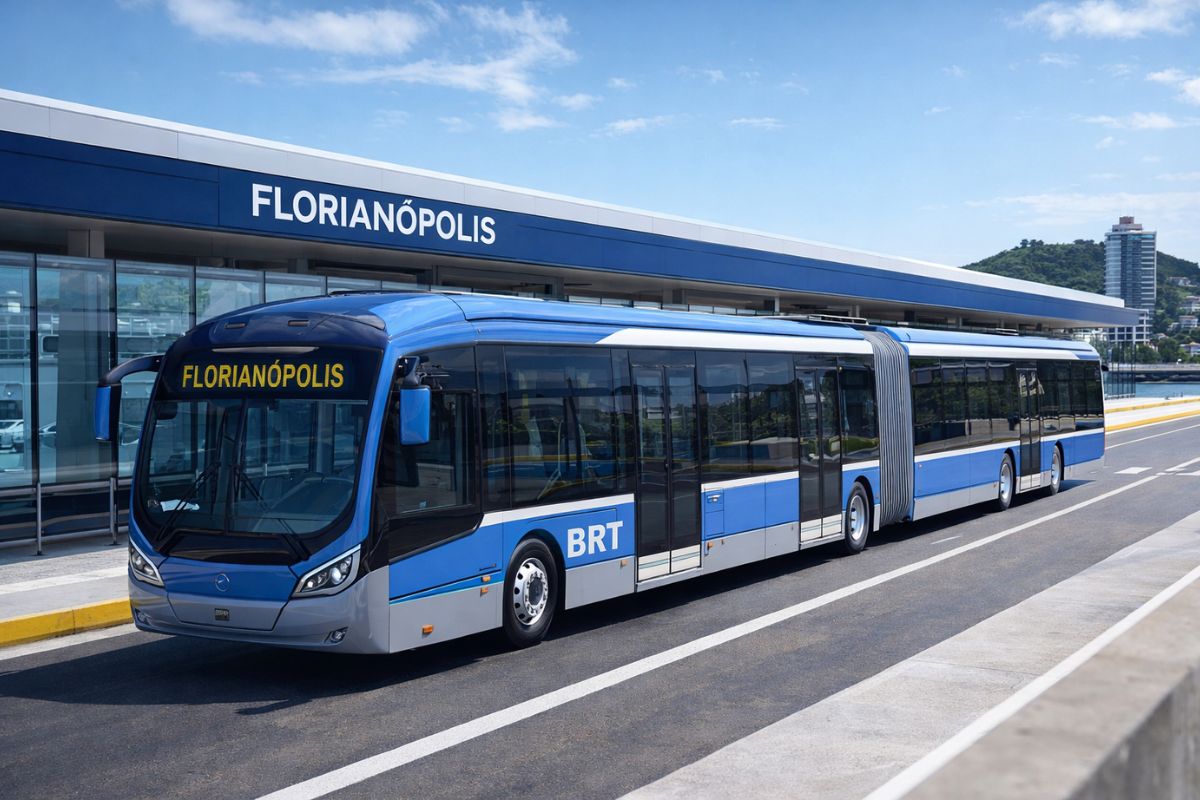
Florianópolis will receive a million-dollar BRT that will begin construction in 2026 with nearly 400 million in funding from the federal government and the Inter-American Development Bank, and the map already shows the routes for the exclusive bus corridors.
-
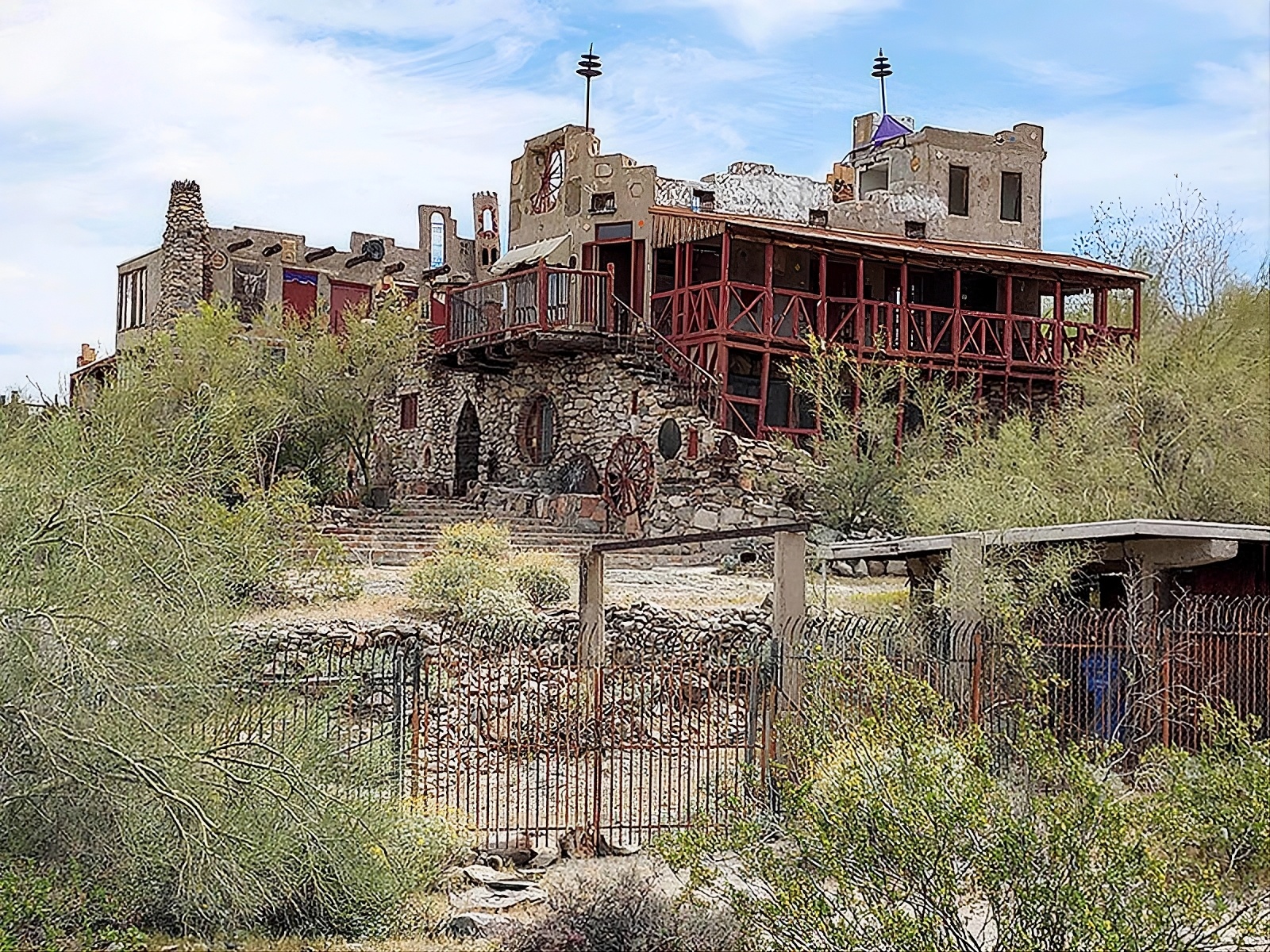
Without a blueprint, without an engineer, and using scrap from the dump, a father spends 15 years building an 18-room castle for his daughter, featuring tram tracks, 13 fireplaces, and over 700 m², which may now be demolished.
-
A megaproject worth R$ 89 billion is advancing in Iraq and promises to change the game in global trade by creating a new corridor between Asia and Europe, reducing traditional routes and repositioning the country as a logistics powerhouse.

-
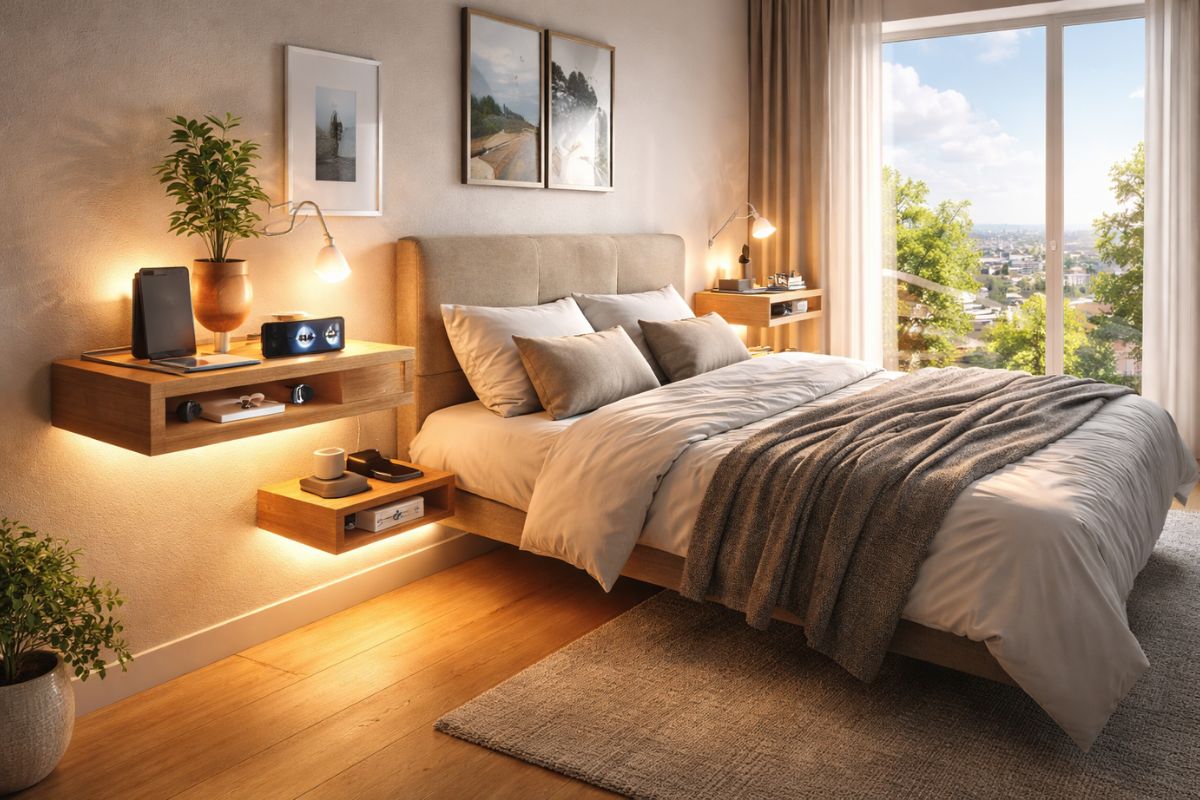
Goodbye bedside table: floating shelves become a trend in 2026 by freeing up space in the bedroom, improving circulation, bringing visual lightness, and integrating technology without taking up floor space.

The São Paulo Surf Club was planned to operate as a private club, with exclusive access through the purchase of a title and payment of a membership fee.
The stated goal of the venture is to bring the surfing experience into the daily lives of those living or working in the capital, without the need to travel to the coast and without relying on a combination of swell, wind, and tide.
The ambiance includes palm trees, light sand, and high-quality furniture arranged around the pool, contrasting directly with corporate buildings, residential towers, and the congested lanes of Marginal.
The landscape combines artificial tubes in the water with lines of stopped cars just meters away, reinforcing the high-end urban leisure concept in an area traditionally associated with heavy traffic.
Waves Programmed by Algorithms and Training Routine


The technological heart of the artificial surfing beach is the PerfectSwell system, developed by American Wave Machines and operated exclusively by JHSF in Brazil.
The solution allows programming the height, shape, speed, and duration of the waves from a control center, adjusting specific scenarios for beginners, intermediates, or advanced surfers.
According to the operators, each surfing session is designed by algorithms that precisely define the water’s behavior, creating predictable and repeatable wave sequences.
This predictability is presented as a pedagogical advantage for those learning and as a refined training tool for athletes looking to repeat the same maneuver numerous times.
Before entering the pool, those who have never surfed must take a mandatory ground lesson. Instructors present the parts of the board, guide on posture, weight distribution, paddling, and riding movements.
Only after this initial training is each student directed to the edge of the pool, divided into numbered positions corresponding to different types of waves.
Professionals associated with the Brazilian Surf Institute report that the variations in starting points produce quite distinct behaviors.
For beginners, the system offers predictable and consistent waves, considered ideal for accelerating learning in a controlled environment, with treated water and no natural currents.
Private Club with Urban Resort Structure
The São Paulo Surf Club operates with extended hours, from 6 AM to 11 PM, from Thursday to Tuesday, in an exclusive regime for members.
The company does not publicly detail the guest policy, but the model is that of a traditional high-end club, where the access title gives the right to use the infrastructure for the whole family, upon additional payment of monthly fees.
The complex is spread over six floors dedicated to leisure.
On the ground floor are the entrance lobby, changing rooms, first aid station, glass-enclosed restaurant with a view of the surfing pool, bar, the artificial surfing beach area, board storage, specialty shop, and a large play area. Outdoor pools surround the main area, reproducing the aesthetics of tropical resorts.
The second floor houses a complete gym, pickleball and squash courts, massage rooms, relaxation areas, and a heated 25-meter swimming lane, as well as a beauty salon.
On the third floor, the focus remains on wellness, with an additional fitness space, Pilates room, and structured spa.
The clay tennis courts are located on one of the upper levels, with a direct view of the surfing pool and the skyline of buildings in the southern zone.
Above the administrative area, situated on the fifth floor, are a multi-sports court and a fast tennis court, surrounded by transparent fences that highlight the city.
The proposal is for the club to function as a high-end leisure lookout over Marginal Pinheiros.
Million-Dollar Title and Costs to Surf in the Capital
One of the central points of discussion around the São Paulo Surf Club is the cost of membership. The announced lifetime title is around R$ 1.25 million, which serves as a key to access the club’s infrastructure, along with a monthly fee of R$ 3.3 thousand. In practice, this represents an economic barrier that restricts the experience of the artificial surfing beach to a very small fraction of the population.
This title model follows the logic of other private clubs and enterprises managed by the same company, JHSF, which also operates luxury hotels, shopping malls, executive airports, and high-end restaurants. The combination of a high initial investment with ongoing monthly fees positions the São Paulo Surf Club in the high-income leisure segment in the capital.
In addition to surfing sessions, the costs include access to the gym, courts, spa, pools, and other services of the complex. However, the symbolic center of the investment is precisely the possibility of surfing long, programmed waves without leaving São Paulo, in an environment that combines comfort, climate control, and hospitality services.
High-End Residential Integrated with São Paulo Surf Club
The project is not limited to the artificial surfing beach. JHSF plans the São Paulo Surf Club Residences, a residential complex in the pre-reservation phase, with a launch expected in the first half of 2026.
Construction is set to begin after the launch, with an estimated delivery approximately three years after work commences.
The apartments will range from 260 to 870 square meters, with three to four suites, and an estimated price of around R$ 45,000 per square meter.
In practice, a unit could reach around R$ 36 million, reinforcing the classification of the project in the ultra-high-end real estate segment in the southern zone of São Paulo.
Those who acquire a unit will have a permanent view of the surfing pool and the artificial surfing beach, as well as access to the club, contingent upon title ownership.
The residential project consolidates the strategy of integrating leisure, housing, and luxury services in the same address, transforming Marginal Pinheiros into a showcase for a new type of urban club condominium.
Urban Luxury, Social Contrast, and the Routine of Programmed Tubes
During the test visits and the pre-opening of the space, the scene that unfolded at noon was recurring: while cars were piling up on Marginal Pinheiros during yet another rush hour, surfers took turns in perfectly calculated tubes just meters from the chaotic traffic.
For JHSF and invited athletes, the project marks a new phase of urban leisure, where it is possible to fit a surfing session between work commitments.
Champions and surfing instructors see technical training potential in repeatable waves, with the possibility of simulating specific situations without depending on the instability of open water.
At the same time, the venture exposes the contrast between a sophisticated leisure infrastructure and a metropolis still facing challenges such as the full pollution cleanup of the river bordering the very artificial surfing beach.
The club juxtaposes one of the most congested traffic flows in the country with a high-end sports facility reserved for a few paying guests.
In light of this scenario, the project raises questions about access, investment priorities, and city models that combine private megaprojects of leisure with historical mobility and sanitation issues in the same region.
Do you see the artificial surfing beach on Marginal Pinheiros as a desirable advancement in urban leisure in São Paulo or as a symbol of a type of exclusivity that deepens the city’s contrasts?









-

-

3 pessoas reagiram a isso.