





 Portuguese
  English
  Spanish
  5 min of reading
  0 comments


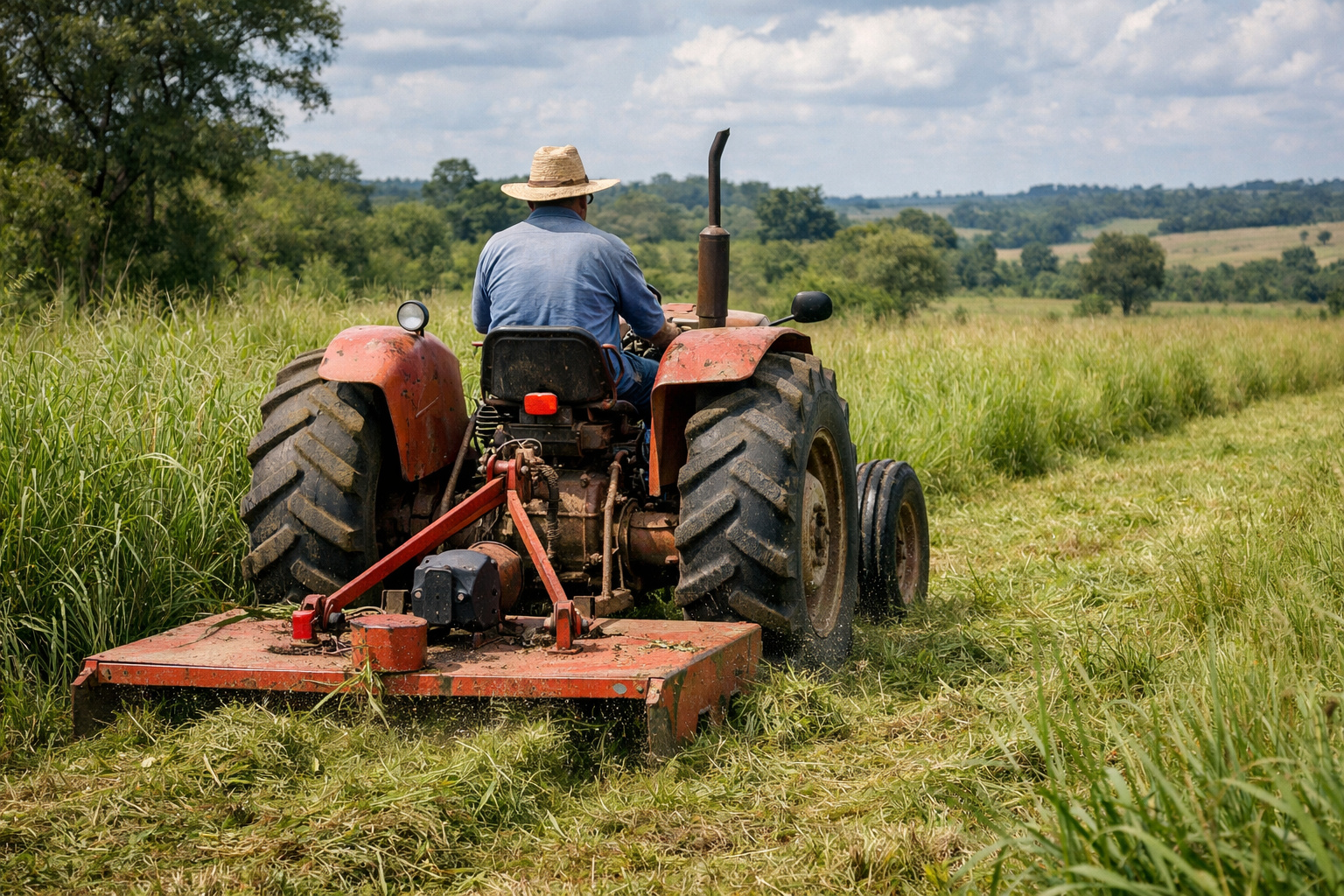
Remote Monitoring Identifies Changes in Vegetation, Generates Automatic Notices, and Can Transform Routine Management into Environmental Infringement with Fines, Area Embargo, and Blockage of Rural Financing
The rural producer enters with the tractor to mow the pasture. Control of invasive plants, improvement of forage, adjustment of management — a common practice on any livestock property. However, days later, the notification arrives: notice of environmental infringement, fine for the suppression of native vegetation, and embargo of the area. The surprise has become increasingly frequent. This is because satellites already fine producers for heavy cleaning of pastures, and the penalty can reach US$ 6,000 per hectare or fraction, depending on the classification.
This information was disclosed by “Compre Rural Notícias,” which details how the advancement of environmental oversight by satellite has changed the scenario in the field. According to the portal, remote monitoring already compares images at short intervals and identifies abrupt changes in vegetation cover, generating automatic alerts that can result in administrative fines even before an on-site inspection.
In other words, what was previously considered just routine management can be interpreted as irregular intervention, especially when it involves native vegetation in natural regeneration. And it is precisely at this point that many producers are being caught by surprise.
-
The sugar-energy sector advances with agricultural technology, but agricultural productivity still raises concerns.

-
The eggshell that almost everyone throws away is made up of about 95% calcium carbonate and can help enrich the soil when crushed, slowly releasing nutrients and being reused in home gardens and vegetable patches.

-
This farm in the United States does not use sunlight, does not use soil, and produces 500 times more food per square meter than traditional agriculture: the secret lies in 42,000 LEDs, hydroponics, and a system that recycles even the heat from the lamps.

-
The water that almost everyone throws away after cooking potatoes carries nutrients released during the preparation and can be reused to help in the development of plants when used correctly at the base of gardens and pots, at no additional cost and without changing the routine.


What Has Changed: Satellite Oversight Crosses CAR, APP, Legal Reserve, and Land Use History
Currently, state and federal environmental agencies use high-resolution images for remote monitoring. Furthermore, this information is crossed with data from the Rural Environmental Registry (CAR), definition of Permanent Preservation Area (APP), Legal Reserve (RL), and history of land use.
When there is a significant change in vegetation — such as in the case of heavy cleaning of pastures — the system can issue an automatic alert. In many states, the fine may be based initially only on remote analysis, with the on-site inspection coming later. In some cases, there is not even immediate physical inspection.
The problem is clear: the satellite identifies the change in vegetation cover. However, it does not distinguish between exotic grasses and native vegetation in regeneration.
This technical limitation has generated conflicts. Mowing pastures is a legal practice. However, destroying or damaging native vegetation without authorization can constitute environmental infringement.
When Mowing Becomes Environmental Infringement: What the Law Says
The legal basis is primarily founded on three central norms:
- Law No. 12,651/2012 (Forest Code)
- Decree No. 6,514/2008
- Law No. 9,605/1998 (Environmental Crimes Law)
The Forest Code establishes that the suppression of native vegetation depends on prior authorization from the competent environmental agency, except for specific cases provided for in the legislation.
Decree No. 6,514/2008 provides for fines that can range between US$ 5,000 and US$ 6,000 per hectare for those who destroy or damage native vegetation without authorization.
If the intervention occurs in:
- Permanent Preservation Area (APP)
- Legal Reserve (RL)
- Area in natural regeneration
the consequences may include:
- Administrative fine
- Area embargo
- Suspension of activities
- Restriction of rural credit
- Criminal liability according to Law No. 9,605/1998
Therefore, the central point of the discussion is not the mowing itself. The question is: was it consolidated pasture or native vegetation returning to occupy the space?
Many areas of degraded pasture enter natural regeneration. The so-called “capoeira” emerges, secondary vegetation that begins to establish itself. When the producer does heavy cleaning of the pasture, the system may interpret it as the suppression of native vegetation in regeneration, even if the intention was merely to manage the area.
Consolidated Area Before July 22, 2008, is the Legal Watershed
The Forest Code defines as consolidated rural area that which has anthropic occupation prior to July 22, 2008. This date is decisive in administrative processes.
If the producer can prove that:
- The area was already pasture before July 22, 2008
- No new suppression occurred
- The intervention was merely management
- No expansion of the opened area occurred
- The area is outside APP and Legal Reserve
the defense becomes legally viable.
However, without prior technical documentation, the presumption can weigh against the producer. And, in the face of a notice of infringement, the burden of proof usually falls on those who exploit the area.
Area Cleaning Declaration Can Avoid Fines and Embargo
In several states, it is possible — and in some cases mandatory — to file the so-called Area Cleaning Declaration (DLA) before performing the mowing.
This procedure formally communicates to the environmental agency that the following will be carried out:
- Heavy cleaning of consolidated pasture
- Control of invasive plants
- Management of exotic vegetation
Without this prior registration, the intervention may be interpreted as irregular suppression.
Additionally, experts recommend preventive measures, such as:
- Check if the area is consolidated before July 22, 2008
- Verify if it is not located in APP or RL
- File a Cleaning Declaration when applicable
- Request a technical report with ART
- Take photos before and after the intervention
- Maintain archived documentary history
The logic is simple: prevention often costs less than administrative defense.
Economic Impact Goes Beyond the Fine Per Hectare
The risk is not limited to the amount of US$ 5,000 to US$ 6,000 per hectare. When there is an environmental embargo, the economic consequences can be even more severe.
The producer may face:
- Blockage of financings
- Restriction on access to rural credit
- Difficulties in commercializing the property
- Operational locks in the embargoed area
In medium and large properties, penalties can reach significant amounts, affecting cash flow, productive planning, and even asset valuation.
If the fine has already been applied, the defense usually involves:
- Technical report signed with ART
- Historical satellite images
- Proof of consolidated use
- Updated Rural Environmental Registry
If proven that it was consolidated pasture and not native vegetation, the penalty can be reviewed. However, the process can be lengthy and generate operational insecurity.
The New Agro Requires Strategic Environmental Management
Mowing pasture is not a crime. However, intervening in native vegetation without authorization can be.
With permanent remote monitoring and digital cross-checking of environmental data, the producer needs to adopt preventive management. Today, it is not enough just to produce. It is necessary to produce with environmental safety, legal predictability, and documented planning.
The scenario has changed. The satellite already fines producers for heavy cleaning of pastures — and the agro that ignores this reality may pay dearly.









-

-

-

6 pessoas reagiram a isso.