





 Portuguese
  English
  Spanish
  3 min of reading
  0 comments


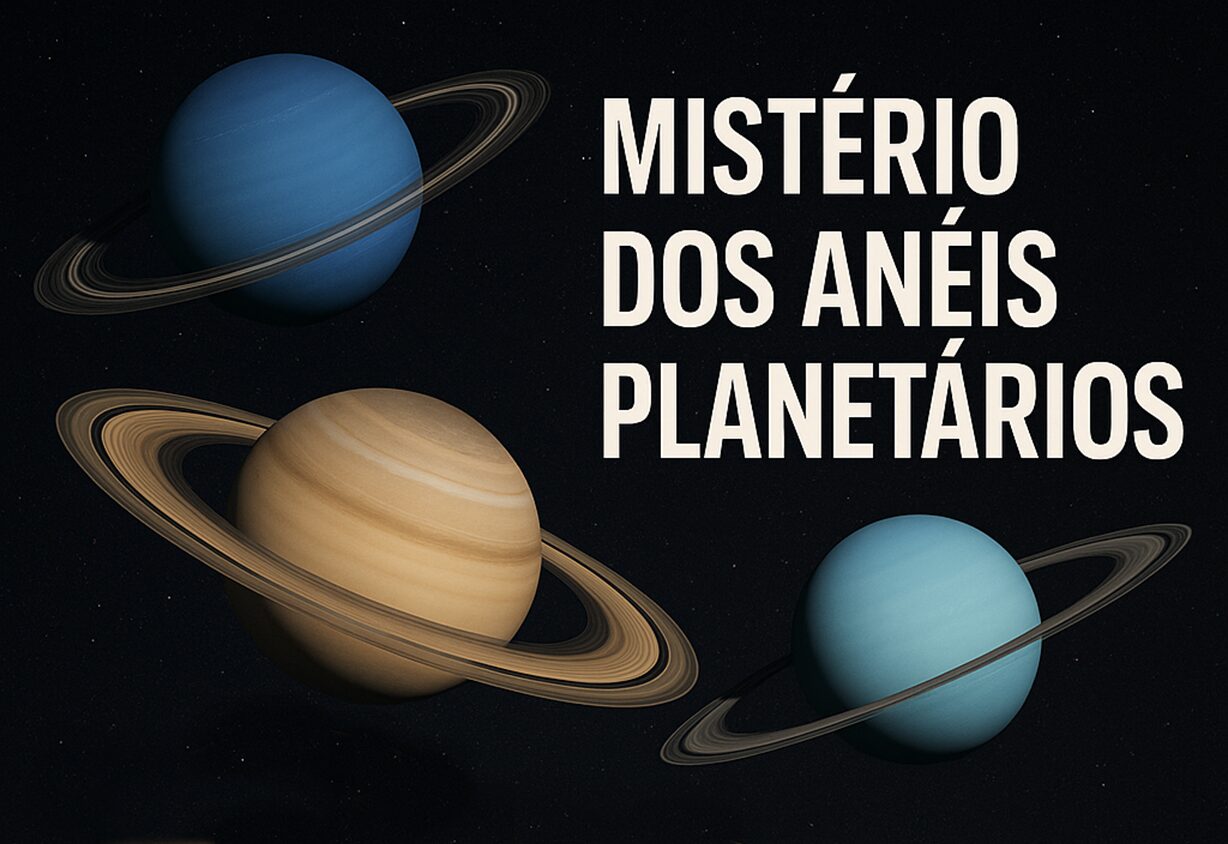
Aside From Saturn, Other Giant Planets In The Solar System Also Have Rings, With Varied Compositions And Origins Still Surrounded By Scientific Mysteries.
When it comes to planetary rings, the image that comes to mind is almost always the rings of Saturn.
The bright bands that surround it are symbols of beauty and mystery. But what few know is that it is not alone in this feature.
Other planets also have these structures, with different compositions and origins still surrounded by doubts.
-
Motorola launched the Signature with a gold seal from DxOMark, tying with the iPhone 17 Pro in camera performance, Snapdragon 8 Gen 5 that surpassed 3 million in benchmarks, and a zoom that impresses even at night.

-
Satellites reveal beneath the Sahara a giant river buried for thousands of kilometers: study shows that the largest hot desert on the planet was once traversed by a river system comparable to the largest on Earth.

-
Scientists have captured something never seen in space: newly born stars are creating gigantic rings of light a thousand times larger than the distance between the Earth and the Sun, and this changes everything we knew about stellar birth.

-
Geologists find traces of a continent that disappeared 155 million years ago after separating from Australia and reveal that it did not sink, but broke into fragments scattered across Southeast Asia.

Which Planets Have Rings?
Saturn may be the most famous, but all four giant planets in the solar system have rings. Jupiter, Uranus, and Neptune also boast these formations.
The difference lies in visibility. The rings of Jupiter, for example, are primarily composed of dust. That’s why they are thinner and harder to observe from Earth.
In addition to these planets, other structures in the solar system also have rings.
This is the case of the dwarf planet Haumea and the asteroid Chariklo. The visibility of these rings depends on the composition and location of the celestial bodies.
The cold of the outer solar system, for example, favors the presence of ice, which reflects light better and forms more visible rings.
Ring Composition Varies From Planet To Planet
According to William Saunders, a planetary scientist at NASA, the composition of the rings varies greatly.
Saturn’s rings are mostly ice. Jupiter’s contain dust, while those of Uranus and Neptune are a mixture of the two. This composition defines how visible they are.
Saunders further explains that if Earth had a ring, it wouldn’t be made of ice. Proximity to the Sun would prevent ice from remaining in space.
This climatic factor directly influences the structure of the rings.
Moons Also Influence The Rings
Another important factor is the presence of moons. In the case of Jupiter, for example, its large moons, like Ganymede and Callisto, interfere in the formation of large rings.
The gravity of these moons can destabilize the orbit of debris, preventing a larger ring from forming.
On the other hand, the rings of Uranus intrigue scientists. It is believed that they could only remain stable with the presence of small moons, known as shepherd moons.
But these moons have yet to be found, making the system of Uranus a great mystery for astronomers.
How Are The Rings Formed?
There are several ways a planet can acquire rings. One of them is through impacts. When an object collides with a planet, it may shatter and form a belt of debris around it.
Another possibility is the destruction of a moon. If it gets too close, the planet’s gravitational force might break it apart, creating a ring.
It is also possible for a planet to capture asteroids or other objects that cross its orbit. These bodies end up being incorporated into the ring system, adding to the existing debris.
Unresolved Mysteries
Even with all these theories, scientists still have unanswered questions. The exact origin of Saturn’s rings, for example, remains unknown. And the behavior of the rings of Uranus continues to confuse specialists.
Another point is the duration of these structures. Unlike a diamond ring, the rings of planets are not eternal.
Over time, the debris that comprises them falls into the atmospheres of the planets themselves. In the case of Saturn, this process has already begun, but it will take a long time before it loses its iconic ring.








-

-

2 pessoas reagiram a isso.