





 Portuguese
  English
  Spanish
  6 min of reading
  0 comments


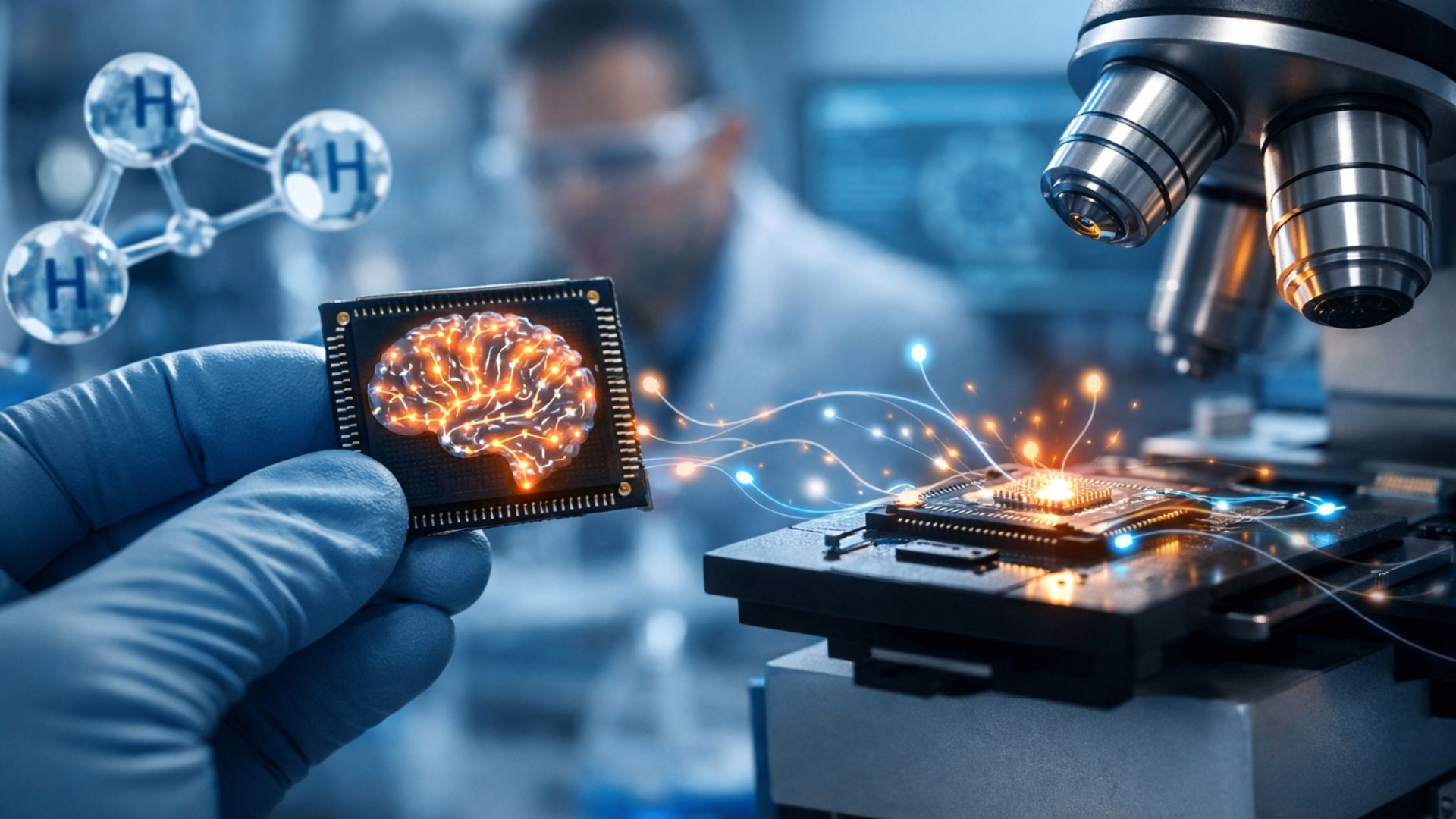
Researchers develop innovative technology that uses hydrogen in semiconductor to simulate functions of the human brain, allowing continuous learning, greater energy efficiency, and promising advances in modern artificial intelligence.
Scientists have taken an important step towards the future of artificial intelligence by developing an innovative semiconductor that uses hydrogen to mimic the functioning of the human brain. The device can learn and store information similarly to biological synapses, paving the way for a new generation of smart chips.
The study was conducted by engineers from the Daegu Gyeongbuk Institute of Science and Technology (DGIST) in South Korea and presents a groundbreaking model of a neuromorphic semiconductor with only two terminals. Unlike traditional systems, the component uses hydrogen atoms as the active element, allowing for greater energy efficiency and better performance.
Right from the start, what stands out is the potential of this technology. By integrating learning and memory in the same system, scientists bring computing closer to the actual functioning of the human brain, something that has been sought after by the industry for decades.
-
Scientists discover that humanity has exchanged one environmental disaster for another: the same chemicals that saved the ozone layer are now contaminating rivers, aquifers, and human blood with an eternal pollutant that is impossible to remove.

-
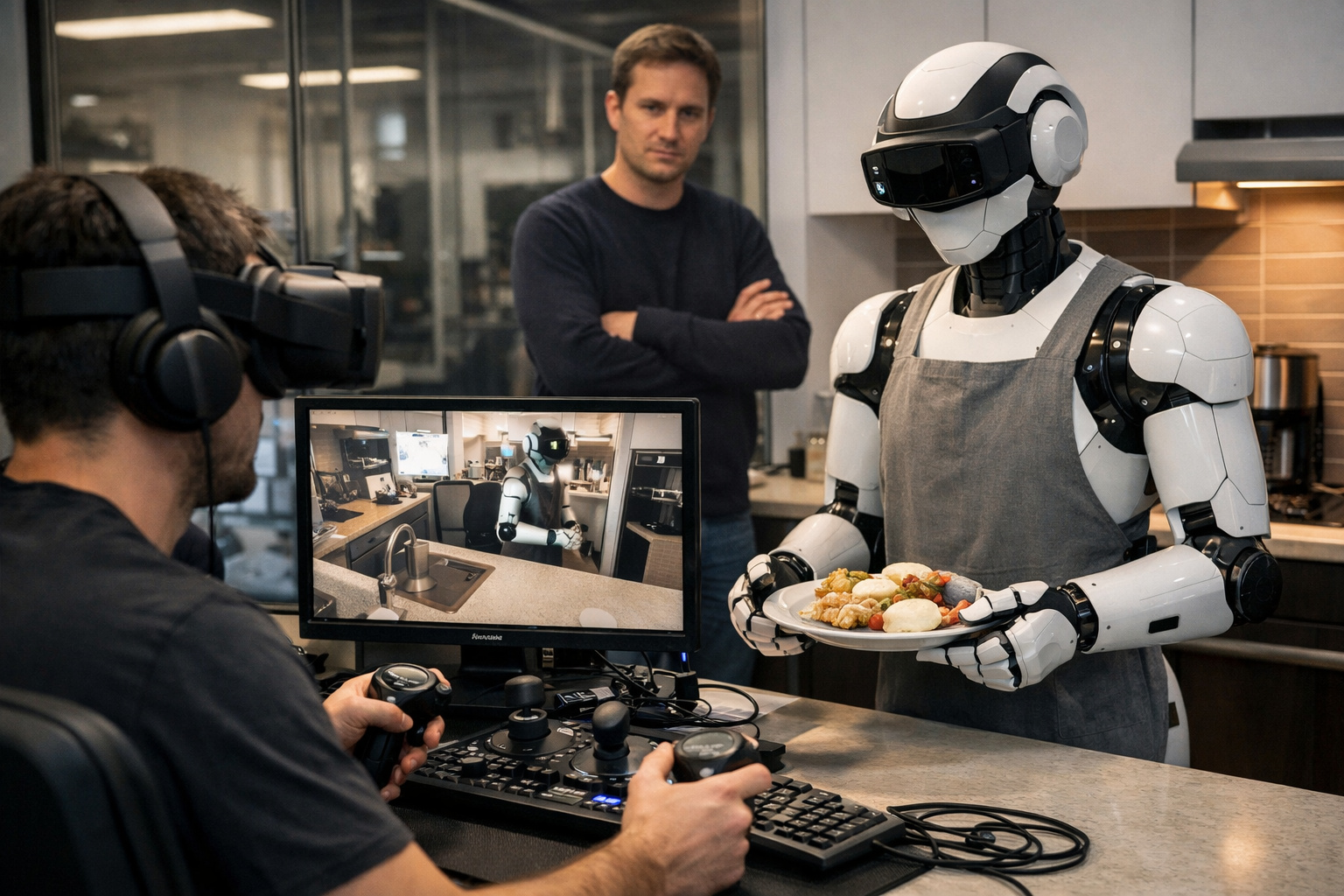
A startup backed by OpenAI has started selling a $20,000 robot to perform household tasks, but when the robot doesn’t know what to do, an employee puts on a virtual reality headset, sees the inside of the house through a camera, and operates each movement, and the CEO said that without this, he cannot improve the product.
-
The cell phone is present in 99.5% of Brazilian households and has already replaced the alarm clock, the camera, and the GPS; now it is starting to threaten the last device that resisted: the card machine, which is present in 19 million points of sale in the country.

-
A caliphate city a thousand years old may be hidden under a pasture in Spain where anyone would walk by without noticing anything, but LiDAR technology has revealed terraces, walls, and a planned urban layout beneath the surface.


How the hydrogen-based semiconductor replicates functions of the human brain
The difference of this semiconductor lies in how it manipulates hydrogen atoms. Through electrical signals, the device controls the movement of hydrogen ions (H+), gradually altering their electrical conductivity.
This behavior is essential for reproducing the functioning of the human brain. In biological synapses, the connections between neurons strengthen or weaken with use. In the semiconductor, this process occurs through continuous changes in conductivity.
Another relevant point is that scientists have managed to replace traditional mechanisms based on oxygen vacancies with a simpler and more efficient system using hydrogen. This increases the stability and uniformity of the device over time.
In practice, the semiconductor begins to “remember” patterns, which is fundamental for applications in artificial intelligence.
Scientists bet on in-memory computing to reduce energy consumption
One of the biggest challenges of modern computing lies in the separation between data processing and storage. This model requires that information be constantly transferred, generating high energy consumption and performance loss.
To solve this problem, scientists developed the semiconductor based on the concept of in-memory computing. This means that the device processes and stores data in the same location, eliminating the need for constant transfer.
This model directly mimics the human brain, which performs these functions in an integrated manner. As a result, the system becomes faster and more efficient.
Among the main observed benefits are:
- Significant reduction in energy consumption
- Increased processing speed
- Greater efficiency in learning tasks
- Reduction of computational bottlenecks
This approach positions scientists strategically in the race for more sustainable and powerful technologies.


Two-terminal structure revolutionizes modern semiconductor architecture
Another important highlight of the study is the structure of the device. While a conventional transistor has three terminals, this new semiconductor operates with only two.
This change brings relevant advantages to the industry. The simplified architecture allows for increased integration density, meaning more components can be inserted into a single chip.
Additionally, the manufacturing process becomes less complex, which could reduce costs in the future.
Among the direct impacts of this innovation are:
- More compact and efficient chips
- Greater processing capacity in less space
- Simplification in industrial production
- Scalability potential for large systems
This evolution reinforces the role of the semiconductor as a key component in the global technological transformation.
Consistent performance with more than 10,000 cycles reinforces practical viability
Tests conducted by scientists demonstrated that the semiconductor exhibits stable performance even after more than 10,000 repetitive operations. This number is important as it indicates reliability for use in real applications.
Moreover, the device managed to maintain its memory state intact even after long periods of inactivity. This behavior is similar to the human brain, which is capable of storing information for long periods.
Another relevant point is the capacity for continuous learning. The semiconductor can gradually adjust its conductivity, allowing it to simulate the strengthening of neural connections.
These results show that the technology is not just in the conceptual phase but already presents practical characteristics for future application.
Why hydrogen became central to the new semiconductor
The use of hydrogen represents a significant shift from conventional technologies. Instead of relying on structural defects to store data, the new semiconductor uses the controlled movement of ions.
This approach offers greater precision and stability, essential factors for the functioning of intelligent systems.
Hydrogen also allows for a quicker response to electrical stimuli, which is fundamental for mimicking the behavior of the human brain.
According to scientists, this new hydrogen-based resistive switching mechanism is completely different from existing solutions. This opens new possibilities for the development of more efficient hardware.
Real impacts on artificial intelligence and the future of computing
The creation of this semiconductor could significantly accelerate the advancement of artificial intelligence. By mimicking the human brain more accurately, systems gain a more efficient and adaptive learning capability.
This could impact various areas, such as:
- Image and voice recognition
- Autonomous systems
- Advanced robotics
- Natural language processing
Another important point is energy consumption. Currently, data centers and artificial intelligence systems demand large amounts of energy. With the new semiconductor, this scenario could change. Scientists believe this technology will be crucial for making artificial intelligence more sustainable and accessible.
Differences between traditional semiconductor and brain-inspired model
Traditional semiconductors still follow a rigid model, with a clear separation between memory and processing. This format limits efficiency and increases energy consumption.
On the other hand, the semiconductor developed by scientists breaks this logic. It integrates both functions into a single system, directly inspired by the human brain.
The main differences include:
- Integration between memory and processing
- Functioning inspired by biological synapses
- Greater energy efficiency
- Capacity for continuous learning
This change could completely redefine how computers are designed in the future.
Paths that this technology opens for next-generation smart chips
The advancement presented by scientists indicates that neuromorphic semiconductors are increasingly closer to commercial reality. The combination of hydrogen, simplified structure, and high efficiency creates a promising scenario.
In the future, these chips could be present in everyday devices, making technology smarter and more responsive.
Possible applications range from smartphones to complex industrial systems. The capacity for autonomous learning will be an important differentiator.
Furthermore, energy efficiency could help reduce environmental impacts, a topic increasingly relevant in the technology sector.
A new technological milestone that redefines the relationship between machines and the human brain
The development of this hydrogen-based semiconductor represents a solid advance in the attempt to bring machines closer to the functioning of the human brain. Scientists have managed to create a system that learns, remembers, and adapts efficiently.
With over 10,000 cycles of stable operation, a two-terminal structure, and in-memory computing capability, the technology shows real potential to transform artificial intelligence.
The use of hydrogen as a central element inaugurates a new approach in semiconductor design. This could directly influence the future of smart chips.
By integrating learning and processing, scientists not only improve the performance of machines but also redefine the limits of modern computing.








Seja o primeiro a reagir!