





 Portuguese
  English
  Spanish
  3 min of reading
  0 comments


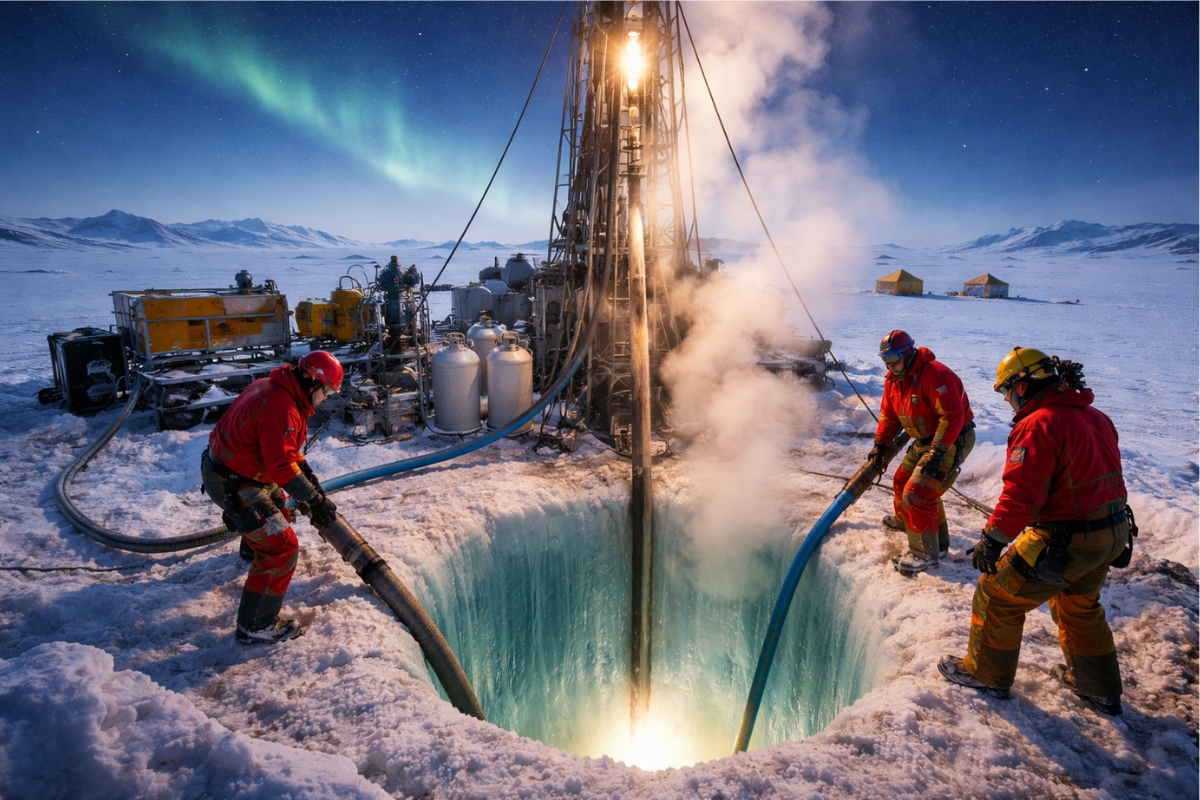
A project with 29 specialists drills through the Antarctic ice, finds fragments of organisms that depend on sunlight, and reveals that the region once had open sea before freezing again
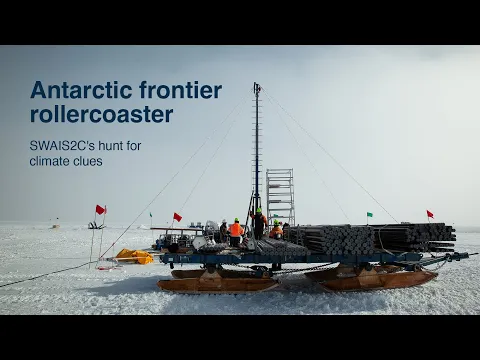
A historic drilling beneath the West Antarctic ice has revealed surprising evidence about Earth’s climatic past. Scientists managed to reach the bedrock at nearly 1,800 meters deep and extracted a geological core that records up to 23 million years of history.
The discovery is part of the international SWAIS2C project and could transform the way we understand the melting of polar ice caps. The recovered material provides direct clues about periods when the ocean was open where today there is a thick layer of ice.
An unprecedented climatic record
To reach the ancient bed, researchers initially drilled 523 meters of ice using a pressurized hot water system. They then descended more than 1,300 meters with technical equipment to recover 228 meters of sediments and rocks.
-
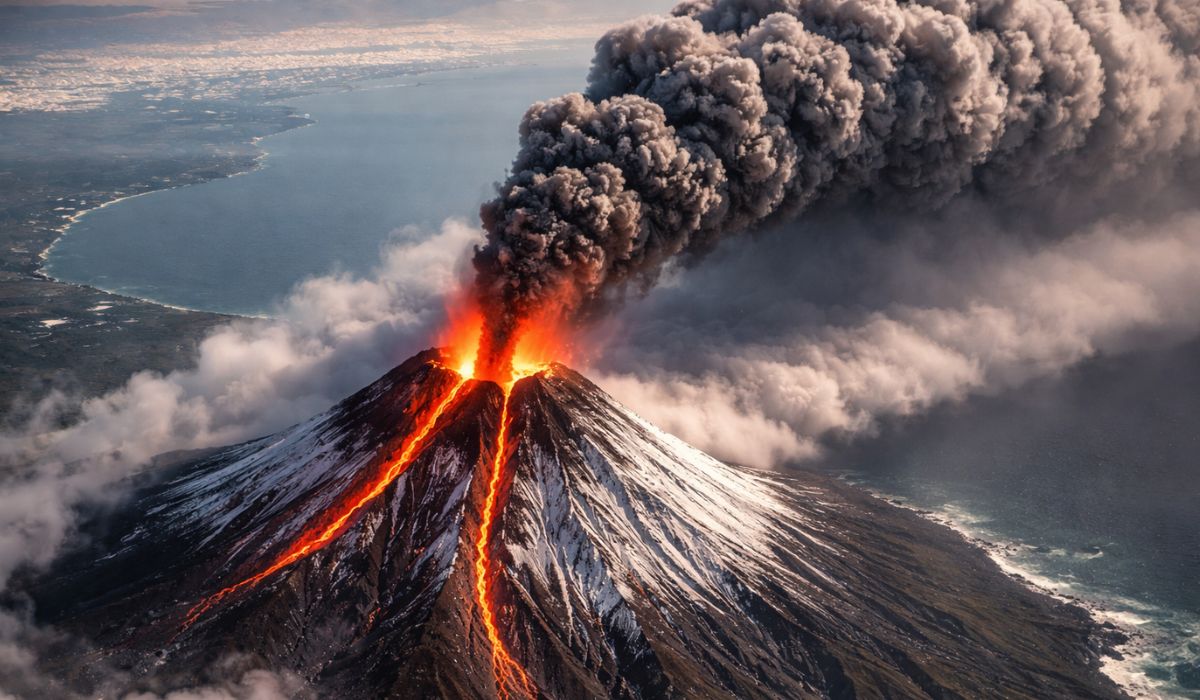
Seen from space, a colossal volcano nearly 5,000 meters high in Russia has released 1,600 km of smoke over the Pacific, forming “devil’s horns” of lava and revealing the brutal force of the Ring of Fire.
-
Expedition 501: Scientists drill into the ocean floor and discover a giant reserve of fresh water hidden beneath the sea, extracting nearly 50,000 liters and revealing an invisible system that could reshape the map of water scarcity.

-
Archaeologists find an intact tomb over 2,500 years old, with more than 100 preserved objects, weapons, jewelry, and human remains never touched.

-
Volcanic lava transforms into threads as fine as human hair that travel over 30 kilometers by wind and fall like cutting rain on roofs and backyards in Hawaii and Iceland.


Each layer removed acts as a time capsule. According to scientists, the sediments encompass periods when the global average temperature was more than 2 °C higher than pre-industrial levels, a scenario similar to what the planet may face in the coming decades.
This continuous record will enhance climate models and allow for more accurate predictions of the future behavior of the Antarctic ice sheet. It is the longest sediment core ever drilled beneath a glacier.

Evidence of open ocean beneath the ice
Preliminary analyses revealed everything from fine mud to compact rock fragments. Some of the material indicates stable subglacial conditions, but other layers brought an even more impactful discovery.
Fragments of shells and remains of marine organisms that depend on sunlight were identified among the sediments. This indicates that, at certain periods, there was open ocean where today there is more than 500 meters of ice.
The evidence suggests that the ice shelf in the region has significantly retreated in the past. This data reinforces the idea that West Antarctica is more sensitive to climate change than previously thought.

Direct impact on global sea level
West Antarctica contains enough ice to raise sea levels by four to five meters if complete melting occurs. Satellite observations already show accelerated mass loss in the region, increasing concern among the scientific community.
The new geological core, now being analyzed at Scott Base, will allow for more precise calculations of ocean temperatures during periods of ice retreat. This information is crucial for estimating the impact of global warming in the coming decades.
The discovery not only reveals a “hidden world” preserved for millions of years but also sends a clear warning about the planet’s future. The past of Antarctica may hold the key to understanding how far sea levels may rise this century.









Seja o primeiro a reagir!