





 English
  Francês
  Alemão
  Italiano
  Japonês
  Norueguês
  Portuguese
  Spanish
  5 min of reading
  0 comments


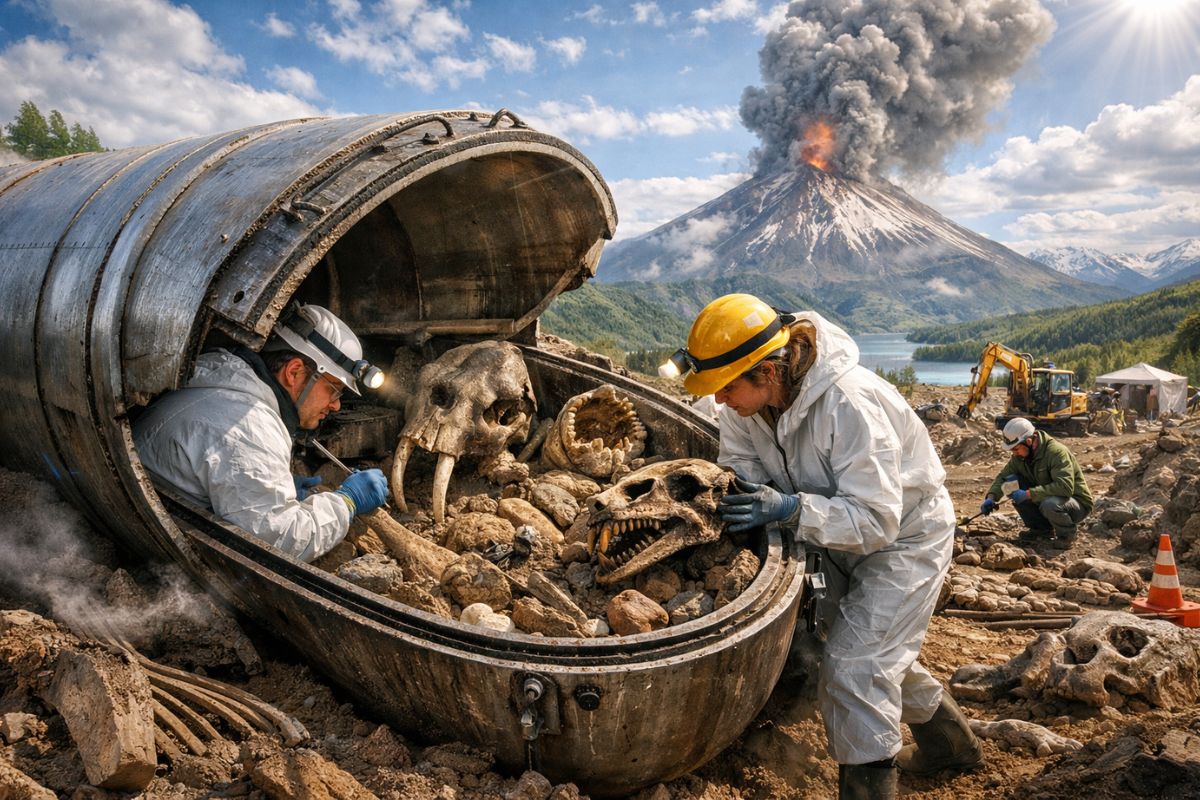
The capsule found in a cave in New Zealand preserved rare fossils and revealed that natural extinctions were already transforming the local fauna long before human arrival.
The capsule discovered by scientists in a cave near Waitomo, on New Zealand’s North Island, opened a new window into a nearly erased past of the country’s fossil record. The material contains fossils from 16 species and shows that the territory was already undergoing intense waves of disappearance and renewal around 1 million years ago.
What makes this capsule so important is the fact that it reveals that major ecological changes were already underway long before human presence. Volcanoes and rapid climate changes had already been reorganizing entire ecosystems, causing extinctions, species replacements, and profound transformations in the natural landscape of New Zealand.
Natural capsule preserved a lost chapter of history
The discovery was made inside a cave that functioned as a natural archive over thousands of centuries. There, researchers found fossils preserved in conditions that allowed them to reconstruct a very little-known period of New Zealand’s history. This time capsule revealed not only ancient remains but a complete portrait of a vanished ecosystem.
-
Explorers find Roman treasure trapped between rocks on the seabed for nearly 1,600 years and reveal a desperate attempt to hide 53 gold coins during the invasions of the Empire.

-
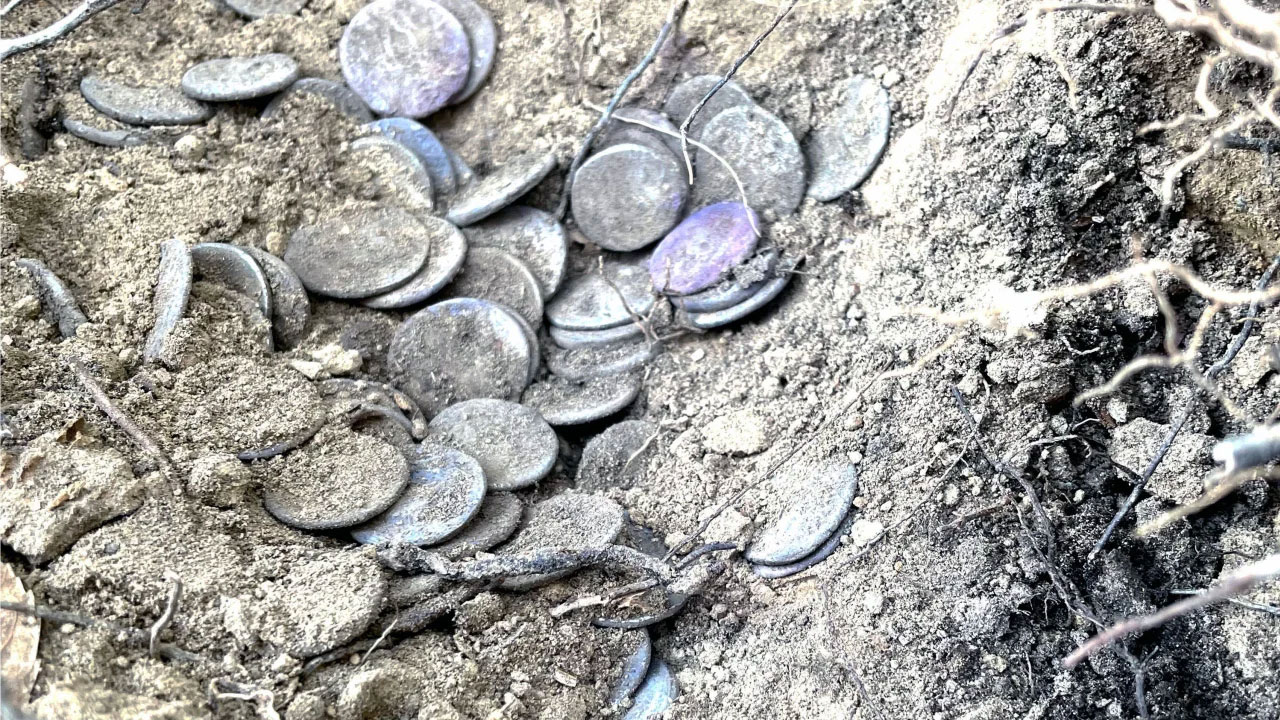
Archaeologists discover Roman vase buried for over 2,000 years with more than 175 intact gold and silver coins, revealing a desperate strategy to protect wealth during the collapse of the Empire.
-
With 241 meters, 48 thousand tons, and a structure designed to accompany aircraft carriers at sea, the Chinese ship that refuels fleets in motion was born to push Beijing away from the coast and has become the hidden gear of its naval projection.

-
“Discreet” city in the interior of SP stands out among the smartest in Brazil thanks to a national ranking.

Scientists emphasize that this collection helps fill a significant gap in the country’s fossil record. Before this, there was older information about local life, but a crucial piece was missing to understand what happened between these remote records and more recent periods. The capsule now serves as a bridge between worlds separated by millions of years.
Fossils show that nature was already causing major extinctions
For a long time, species loss in New Zealand was primarily associated with more recent human impact. The new research broadens this perspective by showing that extinctions had already been occurring long before. According to researchers, between 33% and 50% of species disappeared in the million years prior to human arrival in the territory.
This data significantly changes the understanding of the region’s natural history. The capsule shows that nature was already capable of imposing severe disruptions on its own, in cycles of destruction and recomposition of biodiversity that shaped New Zealand’s ecological profile long before any human interference.
Volcanoes and extreme climate reshaped biodiversity
Researchers point out that the extinctions recorded during this interval were driven by relatively rapid climate changes and catastrophic volcanic eruptions.
These events altered the environment abruptly and repeatedly, forcing entire populations to disappear, migrate, or adapt to new conditions.
Instead of a stable landscape, the discovery reveals a territory subjected to successive environmental shocks. Forests, open areas, and different types of habitats were being reorganized over time, which redefined which species could survive and which were eventually replaced by others more adapted to the new scenario.
Capsule helps prove that change was continuous
One of the strongest points of the discovery is that it reinforces the idea of constant transformation. The fossils found indicate that the fauna of New Zealand 1 million years ago was not the same as what would exist much later.
This shows that local biodiversity was not only affected by an isolated event but by a sequence of accumulated changes over time.
This capsule reveals a process of reinvention of wildlife, where ancient communities disappeared and new forms of ecological occupation emerged in response to pressures imposed by the environment. This picture broadens the notion that the natural history of the region was marked by instability, not permanence.
Volcanic ash was crucial for preserving and dating the material
Scientists were able to determine the age of the fossils because they were preserved between two distinct layers of volcanic ash inside the cave.
One of these layers is associated with an eruption about 1.55 million years ago, while the other refers to a massive event that occurred approximately 1 million years ago.
This geological framework provided precision to the analysis and strengthened the scientific value of the discovery. Without these ash layers, it would have been much more difficult to situate the capsule in time and understand its environmental context.
Moreover, researchers point out that part of this volcanic material remained protected in the caves, which helped preserve the fossils over an immense period.
Discovery also enhances the geological importance of the cave
The presence of the oldest ash layer also suggests that this site may be the oldest cave known on New Zealand’s North Island.
This means that the discovery goes beyond paleontology and also carries significant geological weight, as the site helps to understand not only the fauna of the past but also the formation and preservation of the local landscape.
Thus, the capsule ceases to be just a deposit of fossils and transforms into a landmark for studying the relationship between life, climate, and volcanic activity. It is this combination that makes the find so rare and valuable, as it allows for connecting biological changes and environmental changes within the same scientific narrative.
What this capsule changes in understanding the past
The main strength of the discovery lies in showing that the natural history of New Zealand is much older, more dynamic, and more violent than it seemed.
The extinction of species did not only begin when humans arrived. It was already part of a previous process driven by natural forces capable of reshaping the territory on a large scale.
By revealing this scenario, the capsule helps reposition the scientific debate on how New Zealand’s biodiversity was built.
It is not just about loss, but also about replacement, adaptation, and rebirth, in a sequence of profound transformations that shaped the ecological identity of the country over hundreds of thousands of years.
A discovery that reopens questions about the power of nature
More than presenting rare fossils, the discovery shows that Earth’s past was marked by periods of collapse and reinvention long before human presence. Volcanoes and climate changes were already acting as forces capable of dismantling entire ecosystems and making way for new cycles of life.
This capsule reveals that nature has always been more unstable and powerful than we often imagine. And you, do you think discoveries like this change the way we understand extinctions and the impact of natural events on the history of life?






Seja o primeiro a reagir!