





 Portuguese
  English
  Spanish
  5 min of reading
  0 comments


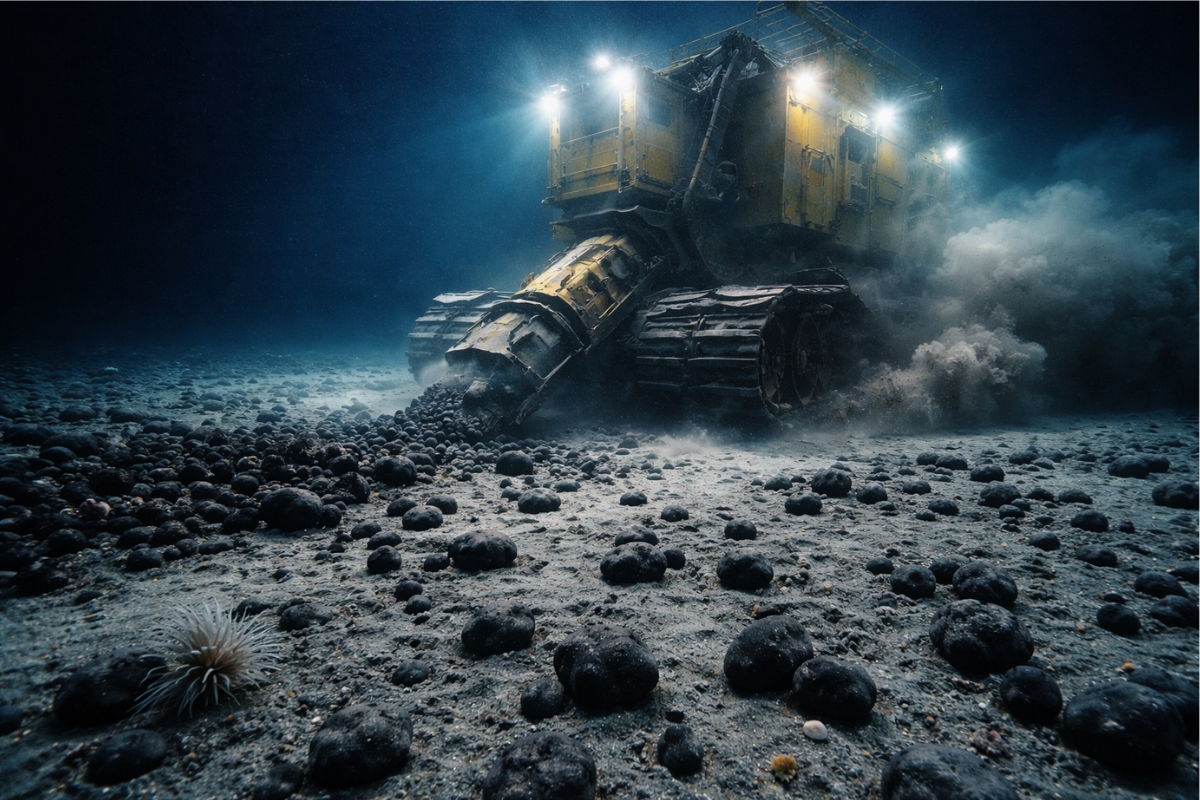
An industrial test at 4,300 meters in the Pacific used a machine to collect polymetallic nodules and recorded a 32% decline in species diversity, raising the alarm that deep-sea mining could leave scars for decades
Deep-sea mining may be on the verge of becoming “the next big environmental mistake,” and a real test on the Pacific floor has just put numbers to the warning.
Imagine a machine the size of a truck working at 4,300 meters deep, in total darkness, sucking rich metal stones from the sediment used in the energy transition. It sounds like science fiction, but it really happened. And what appeared after the test left researchers on high alert.
An industrial trial conducted in the Clarion-Clipperton Zone in the Pacific (between Mexico and Hawaii) provided one of the first quantitative measurements of what happens when a “commercial-scale” mining operation takes action in the deep ocean. The most striking result: species diversity dropped by about 32% within the marks left by the machine.
-
A “silent skill” is allowing Brazilians to earn up to R$ 22,000 per month without a degree and become indispensable for companies that rely on millions of data to survive.

-
Researchers at the Toyota Research Institute found that if a human uses robotic arms to flip a pancake 300 times in an afternoon, the robot learns to do it on its own the next morning, and this is currently the most promising method to solve the biggest bottleneck in modern robotics.

-
Goodbye iron: a common item in households is starting to lose space to technology that smooths clothes in minutes without an ironing board and with less energy consumption.

-
Antarctica reveals an unusual clue high in the Hudson Mountains, and what appeared to be just an isolated rock began to expose a secret hidden under the ice for ages.
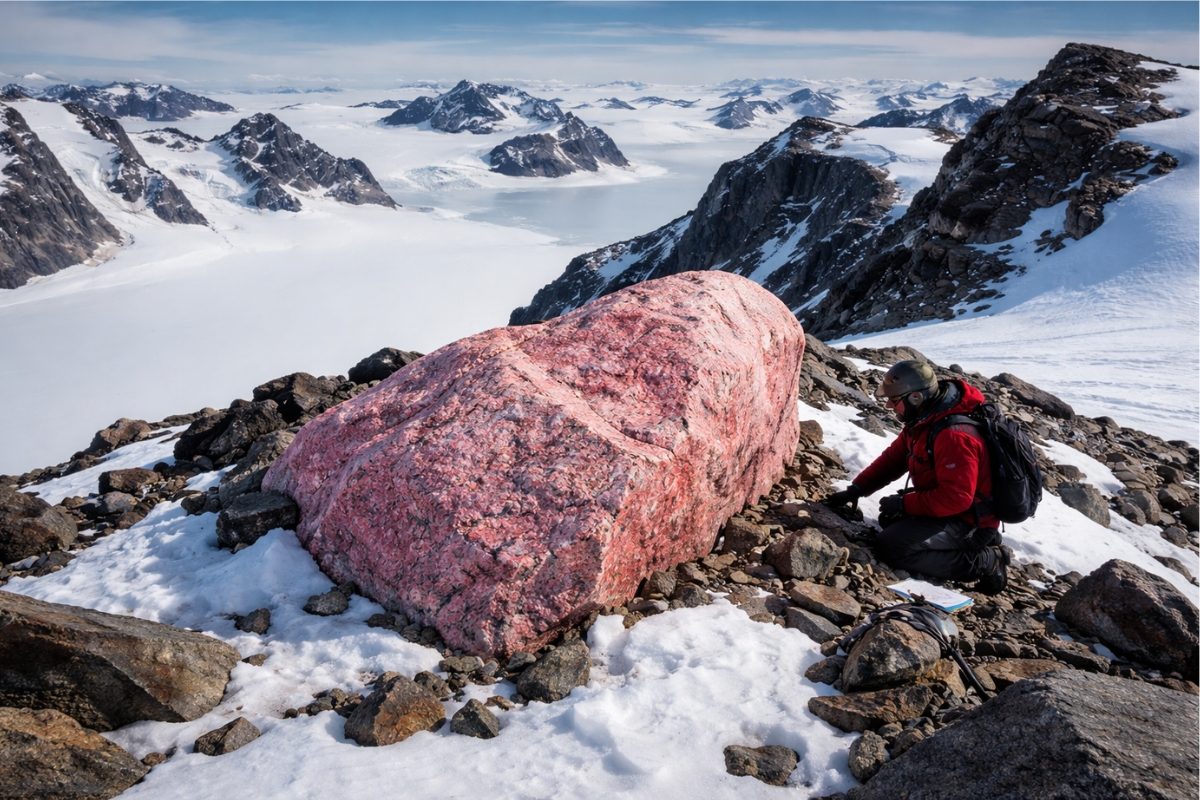

And this, according to scientists, is just the beginning of the story.
What exactly was tested?
The study was conducted by an international consortium led by researchers from the Natural History Museum in London. They monitored, for five years, the changes in life on the seabed before and after the use of an industrial collector that removed polymetallic nodules, formations rich in metals such as nickel, cobalt, and manganese.
In just a few hours of operation, the machine removed approximately 3,300 tons of these nodules.
To separate the real impact from what would be “natural variation” of the ecosystem, the researchers applied a statistical method considered the gold standard in environmental studies, comparing affected areas and nearby control areas at different times.
What they found in the sediment

b, Summary of the samples collected at each site during each period, with the numbers indicating the number of box corer samples/total number of macrofauna individuals.
c–e, Examples of photographs of the seabed at each level of impact: unimpacted seabed (c); mining trails (d); and area impacted by the sediment plume (e).
In the laboratories, more than 4,300 organisms (larger than 0.25 mm) were identified, grouped into 788 species, from worms and small crustaceans to mollusks buried in the upper layer of the seabed.
This layer is precisely what the machine disturbs when it sucks up the nodules.
Within the trails opened by the equipment:
- diversity fell by around 32%
- animal density also significantly decreased
And even where the machine did not “pass over,” the cloud of sediment raised by the activity was already enough to alter which species dominated that environment.
The detail that left scientists even more concerned
The study also recorded little-known fauna, including a solitary coral attached to the nodules, described as a new species for science, as well as small sea spiders and other rarely collected groups.
And here comes the critical point: many species appear in irregular patterns, on scales of a few meters. In other words, the abyssal floor may be much richer and more fragmented than current maps suggest, making any attempt at “restoration” even more unlikely after the nodules are removed.
The marks may last decades
Even without mining, researchers observed natural changes in community composition over time, likely linked to the amount of organic matter that reaches from the surface.
But comparisons with historical disturbance tests in other oceanic regions show a frightening fact: the physical marks of machinery remain visible decades later. And, although some mobile groups may return, others simply do not come back, not even in the medium term.

Why does this become a global debate now?
The study comes at a time when the International Seabed Authority (linked to the UN) is negotiating rules that could allow or curb commercial mining in international waters. For years, a “Mining Code” has been discussed with environmental standards, requirements for impact studies, and recovery monitoring.
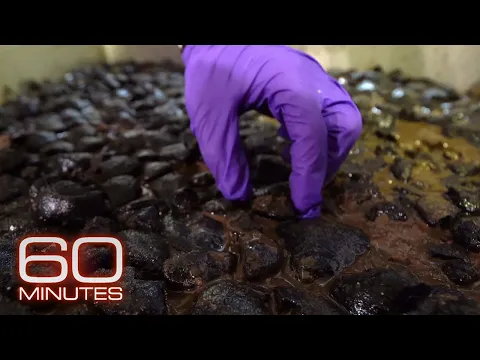
The problem is that polymetallic nodules grow millimeters over millions of years. In practice, removing these nodules does not mean just removing “a mineral”: it is eliminating a non-renewable resource on a human scale and also the physical support of much of the local life.
Moratorium: the word that grows among scientists
For this reason, an increasing part of the scientific community advocates for a global moratorium, at least until there is sufficient information about accumulated impacts and ecological limits that, once exceeded, can make the damage irreversible.
Recent research argues that any rule should impose maximum limits on biodiversity loss and habitat alteration, below which recovery would still be possible.
What happens now?
Submarine mining directly intersects with two topics that already dominate international negotiations: biodiversity crisis and climate change, in addition to the advancement of treaties to expand marine protected areas in the high seas.
While governments, scientific organizations, and NGOs push for safeguards, other countries and companies see these resources as a strategic piece for the energy transition economy.
But, with real data from the seabed in hand, the question that becomes harder to ignore is:
Is the planet ready to open this new frontier, or are we about to repeat, on an unprecedented scale, a mistake that cannot be undone?
(The study was published in the journal Nature Ecology & Evolution*.)*







Seja o primeiro a reagir!