





 Portuguese
  English
  Spanish
  3 min of reading
  0 comments


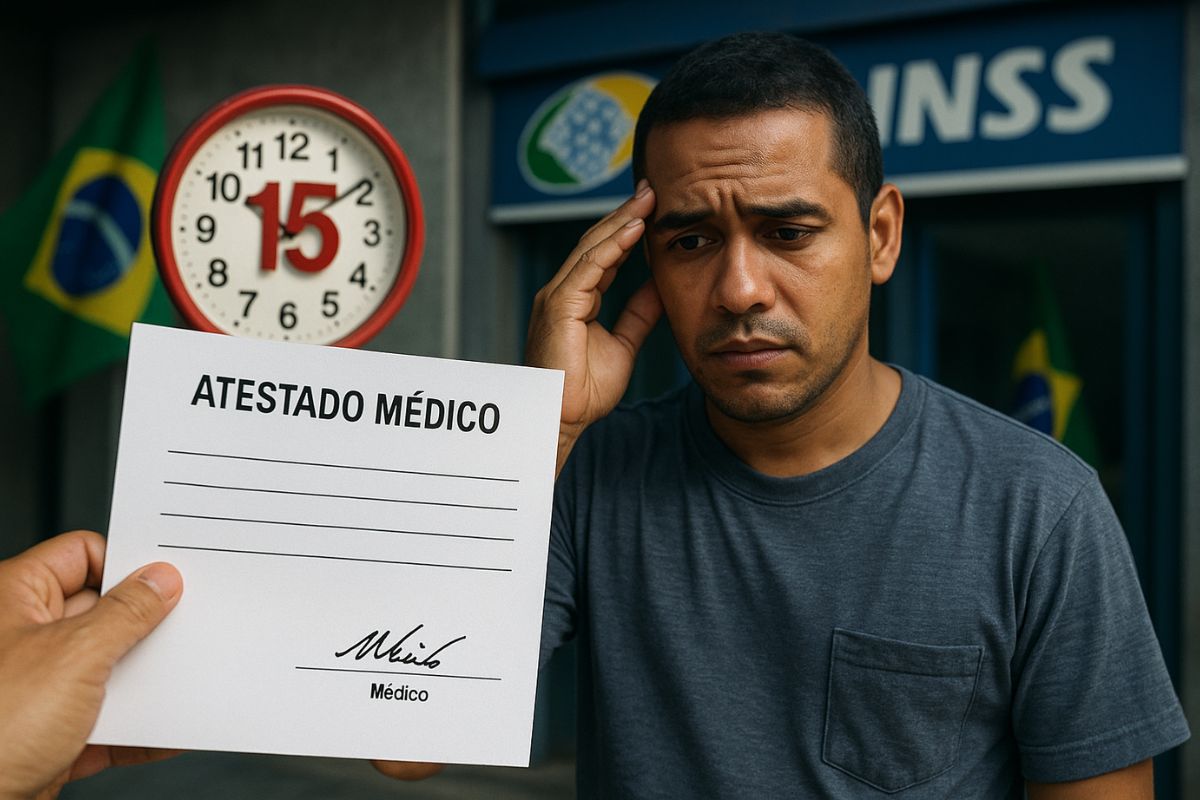
Medical Certificate Over 15 Days: Employee Must Go to INSS, Has Right to 1 Year Stability and Can Sue Company If CAT Is Not Opened.
The question about the limit of medical certificates is one of the most common among Brazilian workers. According to Magalhães & Moreno Lawyers, if the total days of absence exceed 15 days within 60 days, the employee must be referred to INSS, which will take over the payment of the benefit. This rule applies even when the CIDs are not identical, but relate to the same clinical condition, such as different diagnoses of an injury to the same knee.
In practice, the first 15 days are paid by the company, but starting from the 16th day, the benefit is funded by INSS, following a medical examination.
The measure aims to prevent abuses and ensure that cases of incapacity are directly monitored by Social Security.
-
Piauí will produce a new fuel that replaces diesel without needing to change anything in the truck’s engine and reduces pollutant gas emissions by half: truck drivers from all over the Northeast are already celebrating the news that will arrive later this decade.

-
A new Brazilian shopping center worth R$ 400 million will be built in an area equivalent to more than 4 football fields, featuring 90 stores, 5 cinemas, a supermarket, a college, and parking for 1,700 cars, potentially generating 3,000 jobs.

-
Larger than entire cities in Brazil: BYD is building a 4.6 km² complex in Bahia with a capacity for 600,000 vehicles per year, but the discovery of 163 workers in conditions analogous to slavery has shaken the entire project.

-
With an investment of R$ 612 million, a capacity to process 1.2 million liters of milk per day, Piracanjuba inaugurates a mega cheese factory that increases national production, reduces dependence on imports, and repositions Brazil on the global dairy map.


Who Must Refer the Employee to INSS
According to Magalhães & Moreno Lawyers, the company is obligated to refer the employee to INSS when the total of medical certificates reaches the legal limit.
During the first 15 days, the absence is treated as regular salary; after that, the responsibility shifts to the Social Security institute.
When it comes to completely different illnesses, such as flu and fracture, the days do not accumulate.
But if the certificates are related to the same issue, even with different codes, they must be counted together to determine temporary incapacity.
How Much Contribution Time Guarantees the Right
The rule applies to both those who are employed and those who are unemployed, as long as they maintain their insured status.
According to Magalhães & Moreno Lawyers, after dismissal, the worker can request assistance for up to 12 months. This period can extend to 24 months for those who have more than 10 years of contribution to INSS.
This means that, even outside of the formal labor market, the insured can apply for the benefit if they become incapacitated for work within the coverage period.
Where the Rule Changes: Occupational Disease or Work Accident

If the medical certificates over 15 days are linked to an occupational disease or work accident, the company must issue the CAT (Communication of Work Accident).
In these cases, the employee gains the right to 12 months of stability after returning.
Magalhães & Moreno Lawyers note that many companies try to “resolve internally,” paying all days without referring to INSS to avoid this stability.
This practice harms the worker, who loses legal guarantees such as FGTS deposits and compensations in the event of dismissal.
Therefore, specialists recommend that the employee keep evidence, such as conversations or documents, and demand the issuance of the CAT to safeguard their rights in any labor action.
How to Request the Benefit from INSS
The request can be made simply:
- Through the Meu INSS app or website
- By phone at 135
- Or via direct referral from the company
The employee must present all medical certificates, reports, and tests that prove the incapacity.
The INSS examination will be responsible for confirming the condition and authorizing the payment of assistance for temporary incapacity.
The medical certificates that exceed 15 days in 60 days cannot be managed solely by the company.
The law is clear: the worker must be referred to INSS, ensuring social security coverage and, in the case of occupational diseases, 12 months of stability after returning.
And you, have you ever gone through a situation where the medical certificates exceeded the legal limit? Did your company follow the rule or try to resolve it without referring to INSS?
Leave your experience in the comments—we want to hear from those who live this in practice.










-

-

-

-

9 pessoas reagiram a isso.