





 Portuguese
  English
  Spanish
  3 min of reading
  0 comments



Everyone With a Car Will Have to Pay SPVAT in 2025: Understand the New Mandatory Tax
Starting in 2025, drivers across Brazil will have a new obligation to the government: SPVAT. The new mandatory tax comes to replace the discontinued DPVAT, and it promises to impact all owners of land vehicles.
President Lula signed into law, in May 2024, the legislation that brought back mandatory insurance for victims of traffic accidents, now called SPVAT (Mandatory Insurance for the Protection of Traffic Accident Victims). But what actually changes with this new mandatory tax?
What Is SPVAT?
The SPVAT is a reissue of the old DPVAT, that mandatory insurance that everyone complained about paying along with the IPVA, but which had the crucial function of protecting victims of traffic accidents. The difference now is that, besides resurfacing with a more modern name, SPVAT remains mandatory and will be charged starting in 2025.
-
OMODA & JAECOO grows in Europe in 2026 with an integrated strategy of sales, innovation, local production, and technological advancement in the United Kingdom, Italy, and Spain.

-
OMODA & JAECOO expands after-sales service in Brazil with competitive maintenance, a 7-year warranty, and high availability of parts for technological SUVs.

-
OMODA & JAECOO appoints Alessandra Souza as executive marketing director in Brazil and accelerates brand expansion with a focus on innovation, networking, and hybrid portfolio.

-
Jaecoo 7 with super hybrid SHS system exceeds 1,200 km of combined range with a 1.5 turbo engine, high-density battery, and intelligent energy management.

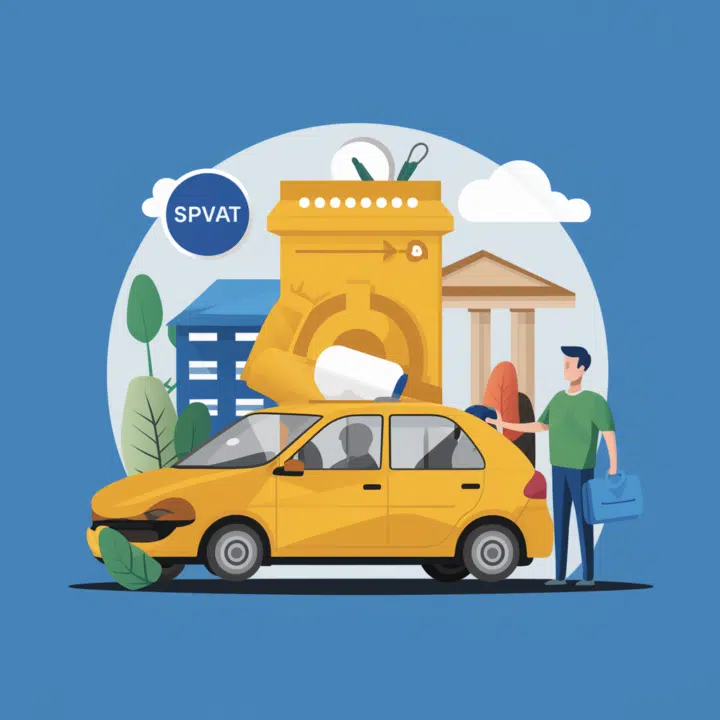
The new law was enacted to ensure that anyone involved in traffic accidents — whether driver, passenger, or pedestrian — has medical coverage, compensation in case of disability or death, and assistance for professional rehabilitation. All of this regardless of who caused the accident. And yes, even vehicles without paid insurance will be covered by SPVAT, making the system more inclusive.
Who Will Be Affected by the New Mandatory Tax?
All owners of land vehicles will have to pay SPVAT annually. Cars, motorcycles, trucks… there will be no escape! If you own a vehicle, you will have to shell out between R$ 50 and R$ 60 per year, according to preliminary estimates.
It’s important to remember that non-payment of SPVAT will prevent vehicle licensing. And if you try to drive around without licensing your car? Well, get ready for a serious infraction, with a fine of R$ 293.47, 7 points on your license, and possible vehicle seizure. An extra headache that, let’s be honest, no one wants.
How to Apply for SPVAT Coverage?
If, unfortunately, you or someone you know is involved in a traffic accident, applying for SPVAT compensation will be relatively simple. You will only need to prove the accident and the damages incurred. Coverage will include everything from medical assistance and physiotherapy to funeral services, if necessary. The deadline to apply for the benefit will be up to three years after the accident or three years after the victim’s death.
When Will It Start Being Collected?
Although the law has already been enacted, some details regarding the regulation of SPVAT are still pending. The expectation is that the new mandatory tax will start being collected at the beginning of 2025, but the Superintendence of Private Insurance (Susep) still needs to finalize the collection system and define specific guidelines.
In the meantime, drivers should stay alert to the changes and the implementation timeline since SPVAT will be essential for vehicle licensing in the future. Those who are not up to date with the new mandatory tax will face problems driving on public roads and, of course, will be subject to penalties outlined in the Traffic Code.
SPVAT Comes to Replace the Extinct DPVAT
SPVAT arrives to replace the extinguished DPVAT, but with the same mission: to protect victims of traffic accidents throughout Brazil. Starting in 2025, all owners of land vehicles will be required to pay this new mandatory tax, and those who do not pay will not be able to license their vehicles. Keep an eye on the changes and get ready to include SPVAT in your annual expenses starting next year!
And you, what do you think about this new regulation?










Seja o primeiro a reagir!