





 Portuguese
  English
  Spanish
  5 min of reading
  0 comments


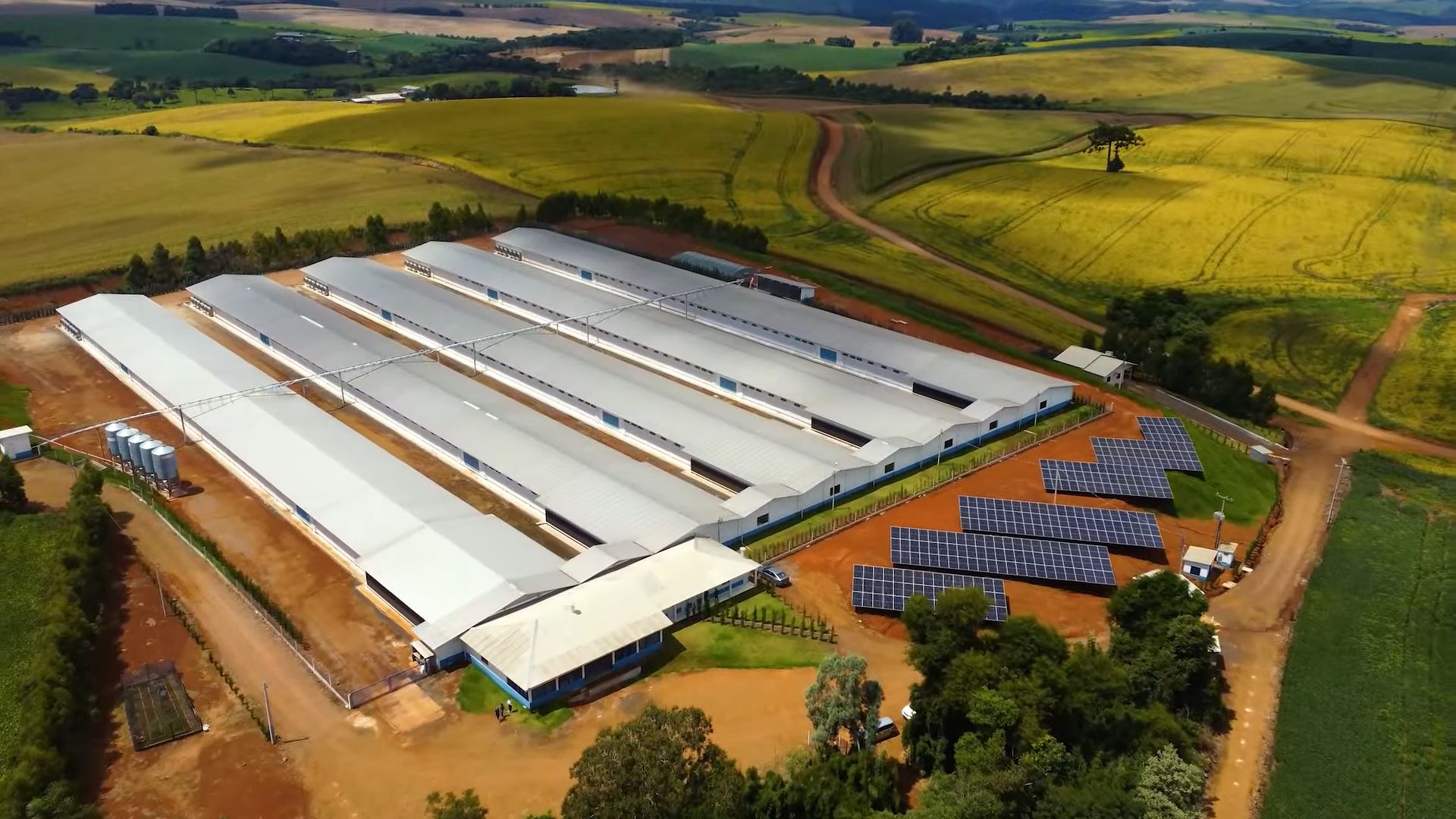
With Technical Support from JBS, Seara Accelerates the Use of Solar Energy and Biodigesters on Integrated Farms, Reducing Costs in Agribusiness and Strengthening Sustainable Practices in Brazil
In 2025, Seara, a company of JBS, achieved a significant milestone in its sustainability strategy by recording that about 75% of the integrated poultry and pig farms across Brazil already utilize clean and renewable energy sources. According to a statement made by JBS itself this Monday (12), the progress is the result of continuous investments in solar energy and biodigesters, combined with technical support provided to integrated producers.
Sustainability and Innovation in Seara’s Agribusiness Strategy
The numbers highlight the scale of this transformation. In poultry production, more than 73% of the farms already operate with solar energy, spread across ten Brazilian states and the Federal District. States such as Bahia and Paraná lead adoption, with 82% of the farms, followed by Mato Grosso do Sul (81%) and Minas Gerais (77%). This data consolidates renewable energy as a strategic pillar of modern agribusiness.
Seara’s journey towards adopting renewable sources reflects a structural change in the Brazilian agribusiness. Six years ago, only 5.6% of integrated properties utilized solar energy. Since then, growth has been approximately 1,208%, demonstrating the acceleration of the energy transition in the field.
-
Renewable energy advances over protected areas in Brazil, and a survey by the Energy Transition Observatory reveals silent impacts that challenge environmental conservation and pressure sensitive traditional territories.

-
Rio Grande do Sul accelerates energy transition: State invests in renewable technologies and consolidates decarbonization strategies and pathways to attract billions in new industrial investments.

-
With 160,000 m² of collectors, an area larger than 20 football fields, Silkeborg, in Denmark, hosts a solar thermal plant that heats 19,500 homes and could become the largest solar heating plant in the world.

-
A study reveals the expansion of renewable energy procurement in Brazil and shows how companies are taking advantage of opportunities to reduce expenses, ensure energy efficiency, and strengthen strategic environmental commitments.


This advancement does not occur in isolation. It is directly linked to a strategy that combines environmental sustainability, operational efficiency, and economic viability. Clean energy has ceased to be merely an environmental initiative and has become part of the rural business model, bringing concrete benefits to producers and the entire production chain.
Solar Energy on Farms and the Role of Seara and JBS in the Energy Transition
Solar energy has become one of the main vectors of modernization for farms integrated with JBS, through Seara. The photovoltaic systems installed on the properties capture solar radiation and convert it into electric energy, used directly in the operations of the aviaries.
This electricity powers essential systems, such as climate control of the barns, automation of processes, feed distribution, egg collection, and environmental control. The reliability of energy directly impacts animal welfare and productivity, which are key factors for the quality of the food produced.
Additionally, self-generation reduces dependence on utilities and ensures greater cost predictability, a relevant competitive advantage in Brazilian agribusiness.
Growth of Solar Energy and Economic Impact on Rural Properties
In just the past year, the farms integrated with Seara generated 215.4 million kWh of solar energy. This volume would be sufficient to supply, for a year, a city of approximately 94,400 inhabitants. This data reinforces the scale and relevance of distributed generation in rural areas.
From an economic perspective, the benefits are direct. With reduced electricity costs, producers can allocate resources to automation and operational improvements. Solar energy transforms one of the main costs of the activity into a strategic advantage, strengthening the financial sustainability of the properties.
Biodigesters Enhance Seara’s Energy Efficiency
In addition to photovoltaic energy, Seara, in line with JBS directives, is also consistently advancing in the adoption of biodigesters in pig farming. Currently, 46% of integrated pig properties with potential for the technology already have biodigesters, with greater concentration in the Midwest region.
Biodigesters function as closed systems for treating waste. In this process, bacteria transform organic matter into biogas and biofertilizer. Biogas, rich in methane, is used to generate electric energy, reducing greenhouse gas emissions and strengthening the sector’s environmental commitment.
Cost Reduction and Energy Self-Sufficiency in the Field
The energy generated by biodigesters is crucial for meeting the electrical demands of pig farming, especially in systems that require strict temperature control to ensure animal welfare. As a result, many properties achieve energy self-sufficiency, drastically reducing or even eliminating their electricity bills.
On average, savings on electric energy reach 62%. This percentage represents a structural change in cost management in agribusiness, allowing greater financial predictability and increased profit margins.
Case Study Shows the Results of Renewable Energy
In the municipality of Seara, Santa Catarina, integrated producer Rodrigo Bisollo exemplifies the practical impacts of these initiatives. Responsible for the annual production of about 160,000 piglets, he used to face monthly costs of approximately R$ 70,000 in electricity before adopting biodigesters.
With the implementation of the system, the reality changed completely. The electricity bill was eliminated, and the initiative began to contribute around 3.5% to the property’s revenue. The structure is complemented by a solar energy system, which enhances self-generation and guarantees energy self-sufficiency.
Circular Economy and Environmental Gains in Sustainable Agribusiness
In addition to generating electric energy, biodigesters allow the reuse of engine heat, used for heating water for sanitary processes and operational activities. This integration enhances the energy efficiency of the farms.
The solid waste resulting from the process is reused as biofertilizer and applied to crops. Thus, a sustainable production cycle is established, aligned with the principles of the circular economy. This model reduces environmental impacts and strengthens responsible practices in Brazilian agribusiness.
Commitment of Seara and JBS to Integrated Producers
According to Vamiré Luiz Sens Júnior, executive manager of Livestock at Seara, the adoption of renewable sources is economically sustainable and strategic. The reduction of costs increases profit margins and improves the quality of life in the field, in addition to enabling investments in technology and automation.
JBS emphasizes that, in addition to technical support, it maintains policies for recognizing good sustainable practices, encouraging the continuous adoption of innovative solutions. The combination of technology, productive efficiency, and environmental responsibility strengthens rural development and increases the attractiveness of the activity for new generations.
A New Energy Standard for Brazilian Agribusiness
Seara’s advancement in 2025 shows that sustainability has ceased to be mere discourse and has consolidated as a practice in agribusiness. The integration of solar energy, biodigesters, and efficient management creates a more competitive, resilient production model that aligns with environmental demands.
By promoting cost reduction, value generation, and mitigation of environmental impacts, JBS reinforces its commitment to increasingly responsible production. The result is a new energy standard in Brazilian agriculture, capable of reconciling productivity, innovation, and sustainability in a concrete and lasting way.






Seja o primeiro a reagir!