





 English
  Francês
  Alemão
  Italiano
  Japonês
  Norueguês
  Portuguese
  Spanish
  2 min of reading


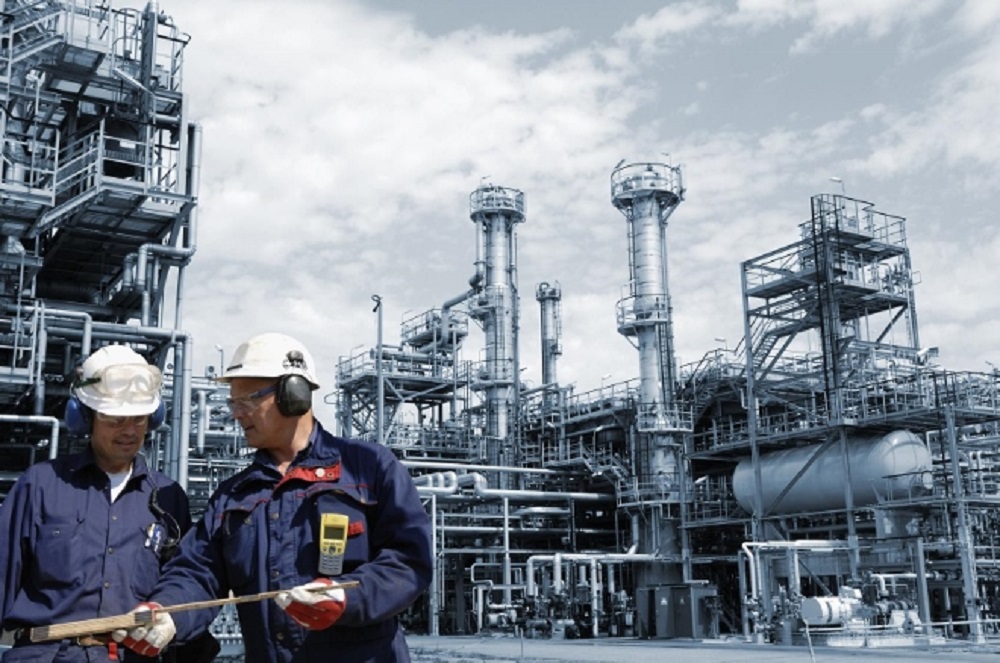
Annual Industrial Survey Released Last Thursday (06/06) Shows Oil Industry as Leader in Best Salaries, Followed by Mining Sector
IBGE research indicates that the oil extraction sector had the highest salaries in 2017. The sector paid seven times more than the average salaries in other industrial activities.
The Annual Industrial Survey also showed a decline in the average salaries across the industry of 12.8% over a decade, but it also indicated that the income of workers in the oil and gas sector rose by 76.1%.
Regarding the average salaries across sectors, oil and gas companies paid average salaries equivalent to 21.3 minimum wages, while the rest of the industry paid an average of 3.2 minimum wages.
The survey ranked the mineral extraction industry second, with an average of 9.6 minimum wages in 2017, and third, the manufacturing of coke, petroleum derivatives, and biofuels, with 8.8 minimum wages.
-
Government unlocks R$ 554 million for a highway that has been requested for decades and accelerates the duplication of BR.
-
Without bricks, without cement, and without endless construction: the cardboard house that is assembled in modules and can be moved.

-
Billions of barrels on the equatorial margin could lead Amapá to double its oil production in Brazil — the state aims to enter the route of companies in the Campos Basin, attract investments, and boost jobs and businesses in the oil and gas sector.
-
Without bricks, without cement, and without endless construction: the cardboard house that is assembled in modules and can be moved.

When releasing the survey, IBGE emphasized the importance of the oil and gas industry in the national scenario, as it represents 5.4% of the revenue of the Brazilian industry.
The survey compared the results of 2017 with those of 2008 and the oil industry was the only one with job growth, around 44%.
However, the extraction industry employs a small number of workers; in 2017 there were 192,031 workers, compared to the manufacturing industries that employ 7.5 million people.
In the manufacturing industry, the largest number of jobs comes from food manufacturing (23.3%), followed by clothing and footwear manufacturing (8.2%).
Growth of the Oil Sector
The 44% growth in employment in the oil and gas sector is proportional to the growth of national production, between 2008 and 2017, which increased from 1.8 million barrels per day to 2.6 million barrels per day due to the discovery of colossal pre-salt fields.
An even greater growth of the oil and gas sector is expected, as after three years without area offers, we already have 3 oil auctions scheduled for 2019, and the idea of ANP is to hold at least 3 auctions per year, which will attract significant foreign investment to the sector.








Seja o primeiro a reagir!