





 English
  Francês
  Alemão
  Italiano
  Japonês
  Norueguês
  Portuguese
  Spanish
  6 min of reading
  0 comments


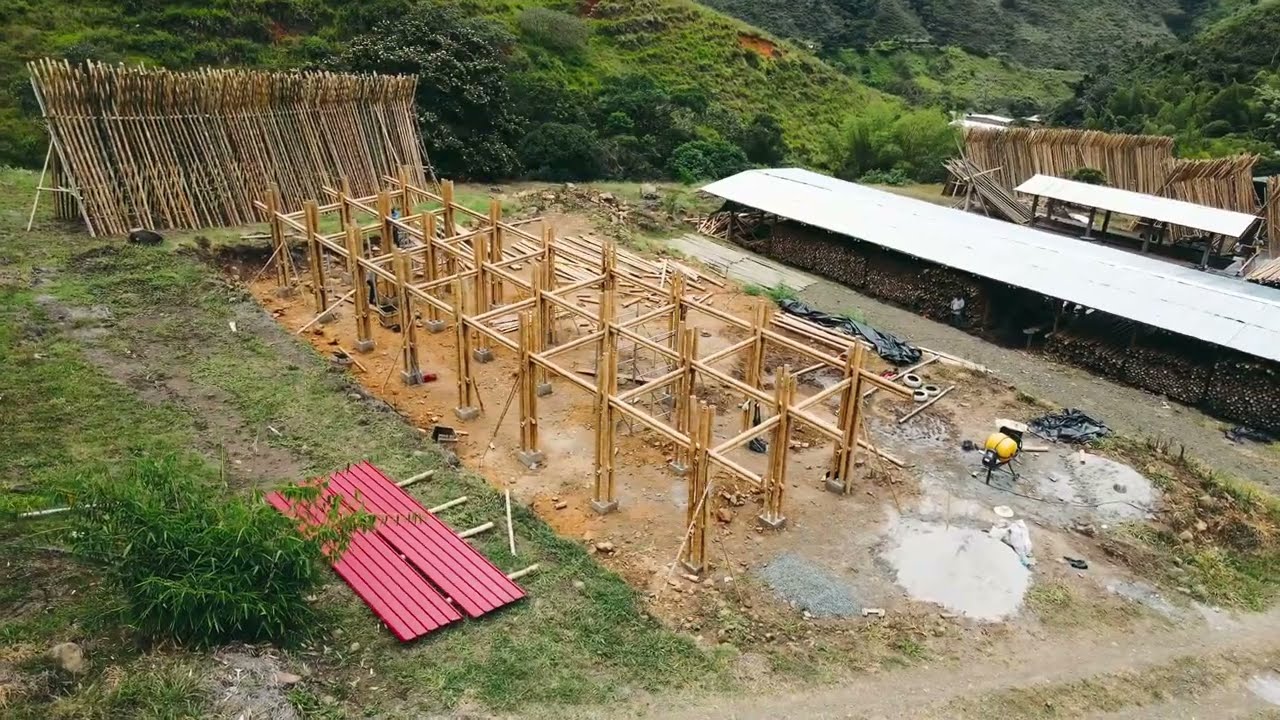
After The 6.2 Magnitude Earthquake In 1999, Bamboo Construction Survived In Colombia And Led The Country To Include The Material In The National Seismic Code As Official Structure Alongside Concrete And Steel.
In 1999, a 6.2 magnitude earthquake on the Richter scale devastated Colombia’s coffee region. Concrete buildings collapsed. Brick houses turned to rubble. Bamboo constructions stood firm. The phenomenon was so perplexing to Colombian engineers that, in the following years, the country did what no other had done before: it included bamboo in its national seismic code as an official structural material, with calculation standards as rigorous as those for reinforced concrete and steel. This decision was not sentimental. It was technical.
The Plant That Physics Favors
Bamboo is not a tree. It is a grass — from the same family as wheat and sugarcane — and this difference changes everything. When a tree is cut, it needs to be replanted.
When a bamboo stalk is cut, the underground root system automatically starts generating new shoots without human intervention. The same area of land can be harvested indefinitely.
-
For 45 years, Spain and Morocco have been trying to connect Europe to Africa through a project of just 14 kilometers in the Strait of Gibraltar, and an active tectonic fault on the seabed continues to make the project nearly impossible.

-
Goodbye expensive water tank: residents replace traditional system with a cheaper and more efficient solution that reduces water consumption and reuses rainwater.
-
Mexico is building a 300-kilometer railway corridor that connects the Pacific to the Atlantic in just seven hours and wants to compete directly with the Panama Canal, which is already facing water scarcity issues.
-
The largest tunnel module factory in the world was built from scratch on a beach in Denmark to produce 89 concrete blocks and will be demolished after the project: each structure weighs up to 10 times the Eiffel Tower and will be installed on the bottom of the Baltic Sea with an accuracy of 12 millimeters in a tunnel that will halve the travel time between Hamburg and Copenhagen.

Growth Rate And Use In Construction
The growth rate is the hardest fact to believe: some Asian species grow up to 91 centimeters in 24 hours, which earned bamboo the official title of fastest-growing plant on the planet, recognized by the Guinness Book.
The species Guadua angustifolia, native to Colombia and considered the most resistant for structural use in the Americas, grows 12 centimeters per day and reaches full structural maturity in three to five years — while a tree used in construction takes thirty to fifty years to reach the same stage.
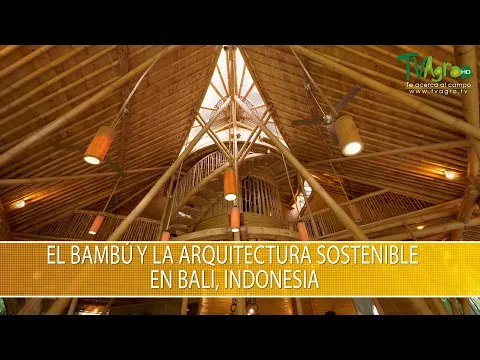

The reason bamboo is so resilient is related to its geometry. The stalk is hollow and cylindrical, with walls that increase in thickness at the base. This shape distributes compression and tension forces just as engineers do with steel pipes.
Cellulose fibers run longitudinally along the stalk, where the actual stress takes place. The result is a strength-to-weight ratio three to four times greater than that of steel when measured per unit of mass.
No Debris, No Emission, No Waste
Conventional construction is one of the most polluting activities on the planet. Producing a ton of cement generates approximately 900 kilograms of CO₂.
The industry is responsible for almost 40% of global greenhouse gas emissions. And at the end of a conventional building’s life cycle, tons of concrete, steel, and synthetic materials turn into waste that doesn’t decompose.

Bamboo operates in the opposite way in all these aspects. During its growth, one hectare of bamboo absorbs an average of 17 tons of CO₂ per year — almost three times more than one hectare of conventional mature forest, which sequesters an average of 6.4 tons.
When the stalk is processed into construction material, the carbon captured during growth remains locked in the building’s structure throughout its useful life. And when the building is demolished, the material returns to the soil without leaving toxic waste.
There Is No Debris. There Is No Slag. There Are No Industrial Byproducts That Need Landfilling.
From Stalk To Panel: How It Works In Practice Building With Bamboo
The biggest historical obstacle to using bamboo at scale was the variability of the raw material. Each stalk has slightly different diameters, making it impossible to construct standardized structures with natural poles. The solution came from materials laboratories: structural laminated bamboo.
The process is straightforward. The stalk is cut into strips, which undergo drying and thermal treatment to eliminate sugars and prevent insect attack. The strips are then pressed with adhesives into blocks or panels of fixed and predictable dimensions.
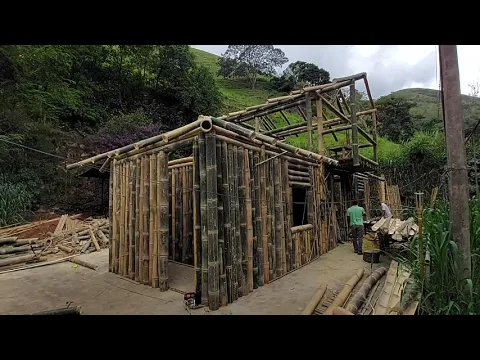
The result behaves like engineered hardwood, with measurable and reproducible compressive strength. Laboratory-produced samples reached up to 26 megapascals of compressive strength — in the same range as conventional reinforced concrete.
In California, the company BamCore developed a system of structural bamboo panels for buildings of up to five stories, with official certification for sustainable construction.
In China, the Ninghai Bamboo Tower — with seven stories built of engineered bamboo — became the tallest multi-story bamboo building ever erected.
In Bali, Indonesia, the architecture studio IBUKU built in 2021 the largest bamboo arch in the world: a 45-meter high roof without walls for the Green School gymnasium, which won the highest award from the Institution of Structural Engineers in 2022.
The Architect Who Turned Bamboo Into Vegetal Steel
The Colombian Simón Vélez was ignored by the architectural academic community for decades when he began experimenting with Guadua in the 1980s. The material was associated with poverty — something that the wealthier discarded as soon as concrete became accessible. Vélez saw something else: a plant fiber with extraordinary tensile strength and a joint problem that no one had satisfactorily solved.

The solution he developed was ingeniously simple. By injecting liquid cement into the nodes of the stalks before inserting metal connectors, he created a joint point that efficiently transferred load without cracking the bamboo.
The technique transformed the material into a structural element capable of bearing loads equivalent to steel in beams and columns. Vélez applied it at scale when designing the ZERi Pavilion for the 2000 Hannover Expo: 2,000 square meters entirely in bamboo, first erected in Colombia and later reassembled in Germany, where it received 6.4 million visitors.
The pavilion underwent structural testing in partnership with German universities and paved the way for bamboo to be seen as more than just a precarious alternative, but as a legitimate engineering material.
The Limits That Need To Be Said
Bamboo does not solve everything. The untreated natural material lasts from two to six years in indoor environments and less than a year when exposed to soil moisture.
Degradation by fungi and termites is a real threat that requires proper treatment — usually immersion in borax — and an architectural design that keeps the material permanently dry and elevated from the ground.
Engineered laminated bamboo resolves many of these issues, but the manufacturing process consumes energy for drying and pressing. The environmental advantage exists, but it depends on the production conditions and the energy source used. Life cycle studies confirm that the total impact is still significantly lower than that of concrete or steel, but it is not zero.
From a structural perspective, bamboo does not compete with steel in high-load applications. The lack of standardized norms in most countries still limits its use to regions with construction traditions or specific regulation.
In Brazil, research has been conducted for more than forty years at PUC-Rio, but the material is still not part of the national building code.
What Colombia Has Already Understood
The inclusion of Guadua bamboo in the Colombian seismic code NSR-10 was not a symbolic gesture. It was the direct consequence of buildings that survived an earthquake while concrete ones did not.
Today, bridges, commercial buildings, and residences are designed with Guadua following the same structural calculation requirements applied to reinforced concrete. The Colombian code is considered the most rigorous and comprehensive in the world for this material.

The world produces 26 billion tons of concrete per year. The construction industry is responsible for almost 40% of global CO₂ emissions.
In this context, a grass that grows nearly one meter per day, does not need to be replanted, sequesters carbon throughout its growth, reaches structural strength in three to five years, and does not generate waste at the end of its useful life is not a niche curiosity. It is a response that some countries have already begun to take seriously and that others are still waiting to discover.










-

-

-

-

-

-

13 pessoas reagiram a isso.