





 Portuguese
  English
  Spanish
  8 min of reading
  0 comments


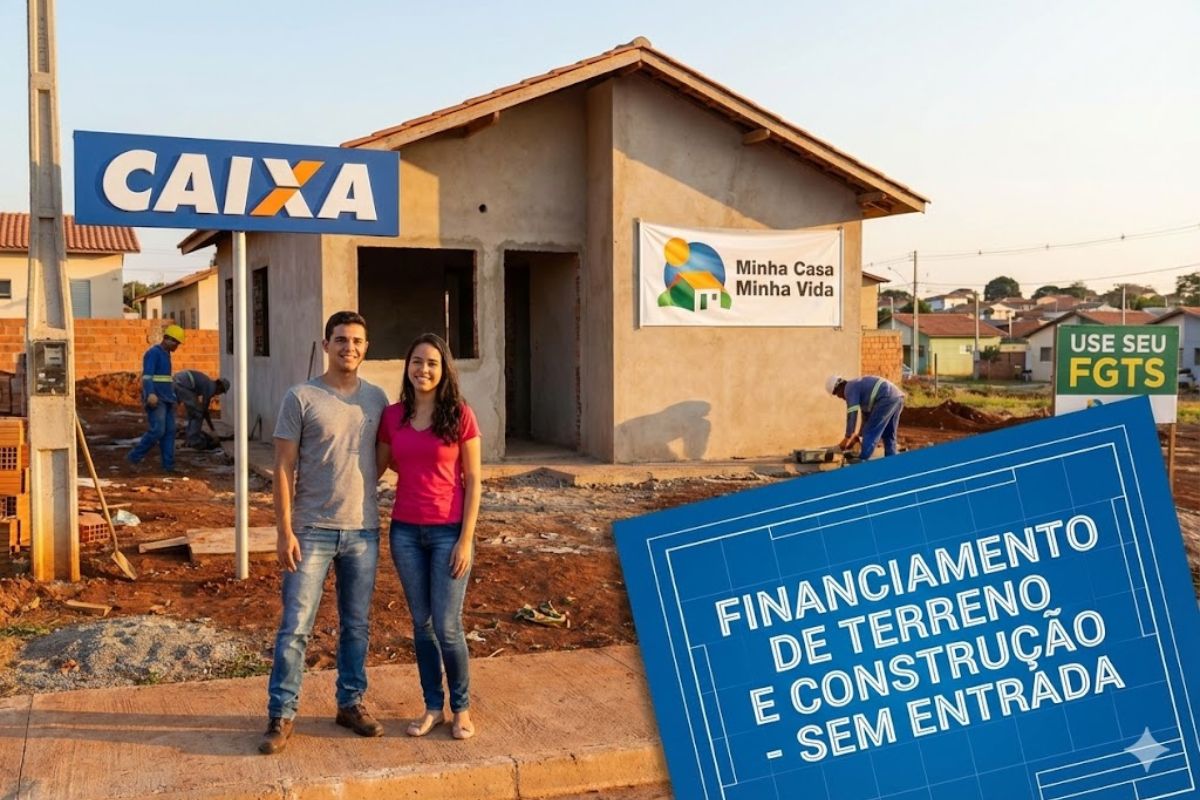
Without Savings, Understanding How to Finance Land and Construction Through Caixa with Financed Construction Is the First Step to Use Minha Casa Minha Vida, Combining Construction on Own Land, Contributing Only 20 Percent and Avoiding Stalled Projects with Technical Planning from the Start of the Project Approved by the Bank.
In 2024, with real estate prices rising and the construction sector pressured, many people find out that it is possible to finance land and construction through Caixa using financed construction, combining the Minha Casa Minha Vida program and credit planning, instead of merely relying on their own savings and risking starting the project without financial support.
The logic of the 80 percent bank and 20 percent client model changes the construction culture: first, the credit is approved, it is determined whether it will be construction on own land or land acquisition and construction, and only then the house is designed, precisely to avoid unrealistic projects and stalled constructions a few months after the start, when the money runs out.
Why Start with Credit Before the Land
The starting point of financed construction is simple and technical: before looking for land, the future owner needs to know how much the bank is willing to release in financing.
-
Unemployment rises again to 5.8% at the beginning of 2026, raising alarms about the end of temporary positions and its impact on the Brazilian job market.

-
Document organization can cut invisible costs in small businesses, a simple step that prevents waste, rework, and losses in daily operations.

-
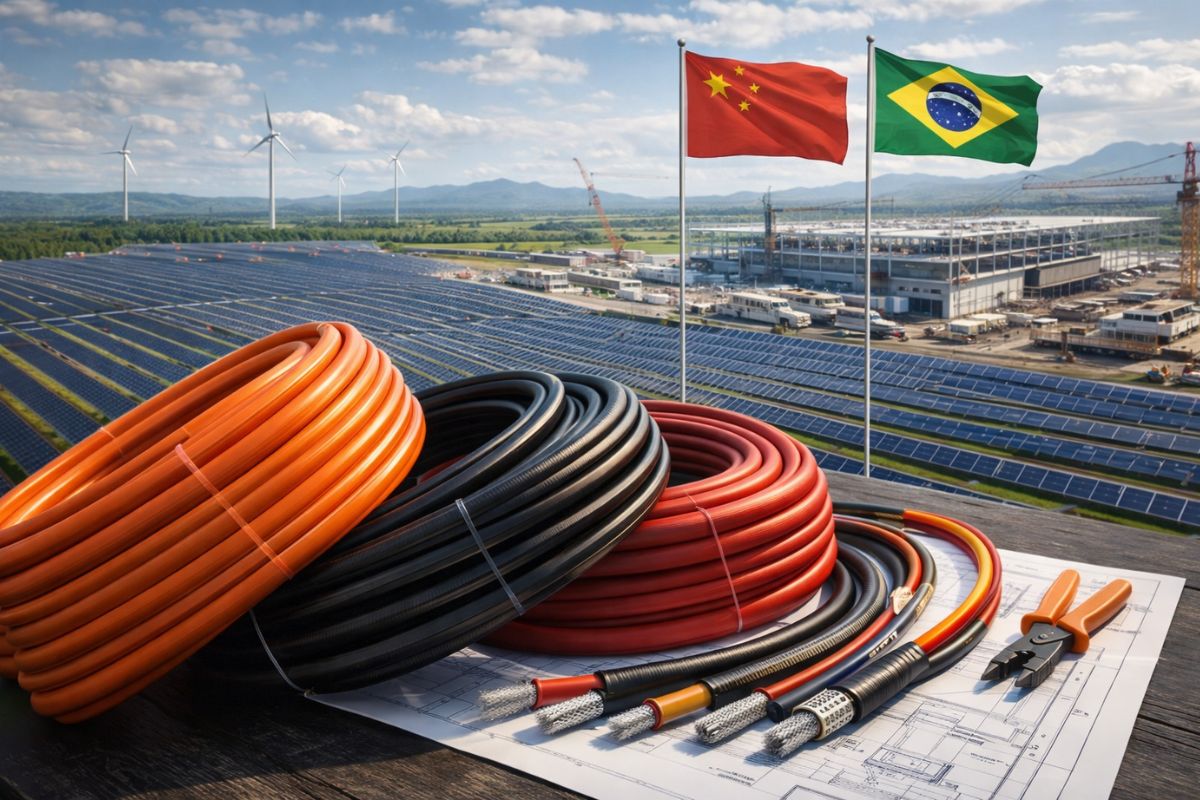
Chinese giant worth nearly R$ 4 billion that manufactures cables for electric cars, solar energy, and robotics wants to open a factory in SC.
-
Many employers do not know, but the law guarantees domestic workers a 25% increase in salary during trips, 50% for overtime, 20% for night shifts, and 17 additional benefits that can lead to labor lawsuits if not paid.


At Caixa, the analysis considers family income and the limit for loan repayment, generally up to around 30 percent of gross monthly income, which defines the actual investment ceiling.
This maximum amount encompasses everything the bank sees as real estate, that is, the sum of land plus construction costs.
When the client tries to finance land and construction through Caixa without this prior diagnosis, the risk is designing a house larger than the budget can accommodate, exceeding the cost and generating stalled projects due to lack of funds.
Financed construction reverses the logic: first comes the financial limit, then the architectural dream adapts to it.
By knowing that, for example, the combination of land plus house must fit within 300 thousand reais, the buyer can look for compatible lots, size the house, specify finishes, and organize a timeline without surprises.
This financial discipline is a direct antidote against stalled projects and against the habit of starting construction while relying solely on money that does not yet exist.
Options to Finance Land and Construction through Caixa
Those who decide to finance land and construction through Caixa find two main options within financed construction.
The first is financing for land acquisition and construction, designed for those who do not yet have a lot.
In this format, a single credit process covers the purchase of the land and the construction of the house, binding everything in the same contract.
The second option is construction on own land, aimed at those who already have a regularized lot and want to finance only the construction.
In both cases, Caixa plays the role of the main bank for financed construction at a national level, with specific interest rates and rules for this type of operation.
Choosing correctly between land acquisition and construction and construction on own land avoids reworking projects, documentation, and delays in the release of financing.
In practice, the choice of option impacts the entire workflow: analysis deadlines, types of property assessments, documentation requirements, and how the bank calculates credit limits.
Therefore, before proceeding, it is essential to align with the Caixa correspondent which option best translates the family’s plan and which structure of financed construction makes the most sense not to pressure the monthly budget.
Minha Casa Minha Vida within Financed Construction


Within this structure of financed construction, the Minha Casa Minha Vida program opens a significant avenue for families with gross income of up to 8 thousand reais and properties of up to 350 thousand reais.
The same program that finances ready-made houses can also be used to finance land and construction through Caixa, including for projects that have not yet started, as long as the total amount fits within the program’s ceiling.
This means that by fitting the project within 350 thousand reais, the client can access subsidies, reduced interest rates, and softer entry conditions, reinforcing cash flow security.
Using Minha Casa Minha Vida in construction on own land or in land acquisition and construction, when possible, reduces the burden of the installment and decreases the risk of stalled projects due to lack of money along the way.
For those with an income of around 5 thousand reais, for example, the combination of Minha Casa Minha Vida with financed construction allows for financing amounts close to or above 200 thousand reais, making it feasible to build a well-sized house within the limit, without depending on improvisation or last-minute loans.
Understanding the 80 Percent from the Bank and the 20 Percent Down Payment
From Caixa’s perspective, the property is always the sum of the value of the land plus the construction costs.
If the land is worth 100 thousand reais and the construction is budgeted at 400 thousand reais, the total property value is 500 thousand reais.
If the buyer’s income can handle it, the bank finances up to 80 percent of this amount, that is, 400 thousand reais, and the client needs to contribute the remaining 20 percent.
In the case of land acquisition and construction, when financing land and construction through Caixa, the buyer signs a purchase and sale promise contract with the landowner, agreeing that 20 percent of the value will be paid as a down payment and the remaining 80 percent will come from the financing after the signing of the definitive contract.
This 80 percent bank and 20 percent client structure is the foundation of financed construction and needs to be planned in the budget from the start.
In many cases, the seller accepts to parcel the 20 percent down payment over a few months until the credit is released.
At the same time, the consumer needs to consider additional costs such as transfer tax or ITBI, which usually varies between 0.5 and 3 percent of the land value, as well as notary and registration fees. Ignoring these items is a shortcut to exceeding the budget and seeing stalled projects due to lack of resources for documentation.
Projects, City Hall and Legal Security Before Construction
After credit is approved and the land is chosen, the technical project stage begins.
The client hires an architect and an engineer to develop architectural, structural, electrical, and plumbing projects, all necessary for construction on own land or for land acquisition and construction.
These initial expenses come out of the client’s pocket and are only reimbursed later by the financing, which requires planned reserves.
Once the projects are completed, they must be approved by the city hall, obtain a construction permit, and then send the documentation to Caixa.
Only after the bank’s approval and the signing of the financing contract is the document taken to the notary for registration in the land registry.
At this point, the property becomes the buyer’s ownership but remains encumbered to Caixa as credit collateral.
This sequence applies to both those who choose construction on own land and those who opt to finance land and construction through Caixa.
Skipping steps, starting construction without a permit or registration and trying to fit everything in later is one of the quickest ways to block the release of funds, generate fines, and turn the construction site into another statistic of stalled projects.
Release of Funds in Stages and Construction Interest
Another central point of financed construction is how the money reaches the client. Caixa does not release the entire amount at once.
The amount is divided into stages, associated with the physical schedule of the construction.
The client executes, for example, 15 percent of the project in the first month, and then the bank reimburses 15 percent of the financing amount after inspection.
During the construction, the full installment of the financing is not paid.
Only the so-called construction interest is paid, calculated on the amounts already released.
If the annual reference rate in a standard loan outside Minha Casa Minha Vida is around 10.5 percent per year, the practical effect of these construction interest, being charged on gradually released amounts, can equivalent to something close to 7 or 8 percent during the period.
Furthermore, although many contracts are signed with terms of 30 or 35 years, the average payoff period of Caixa financing is around 7 years, whether because the property is sold or because the client pays it off early.
This behavior reinforces the logic that, many times, it is more rational to finance land and construction through Caixa rather than depleting all reserves, keeping part of the money invested while the house is built with controlled construction interest.
How to Avoid Stalled Projects with Project Planning
In day-to-day life, the most common mistake is taking the reverse route of financed construction: buying land without knowing the credit limit, designing a high-standard project, and only later discovering that the real cost of the construction is two to three times higher than imagined.
In these situations, the budget exceeds, and stalled projects multiply.
By following the correct flow, the client first discovers how much they can finance land and construction through Caixa, chooses between land acquisition and construction or construction on own land, sizes the property within this ceiling and only then closes with the contractor and begins to build the house.
When the project arises from the credit limit and the 20 percent down payment, the risk of seeing the structure finished and the finishes abandoned due to lack of money drastically decreases.
The appropriate combination of Minha Casa Minha Vida, financed construction, reserve for the 20 percent down payment, and detailed planning of schedule, materials, and labor is what turns the dream of homeownership into concrete reality, without improvisation.
More than a line of credit, financing land and construction through Caixa is a risk management tool that requires discipline, information, and attention to the details of the contract to avoid stalled projects.
By putting on paper income, credit limit, land value, house size, and indirect costs, the future owner starts making decisions based on real numbers, and not just the desire to build.
This prior planning, combined with the correct use of financed construction and Minha Casa Minha Vida, is what allows transforming an empty lot into property without compromising the entire family budget.
After understanding how financed construction works, do you feel more secure to finance land and construction through Caixa or are you still hesitant to enter a long-term contract fearing it will end in stalled projects?










-

Uma pessoa reagiu a isso.