





 Portuguese
  English
  Spanish
  5 min of reading
  0 comments


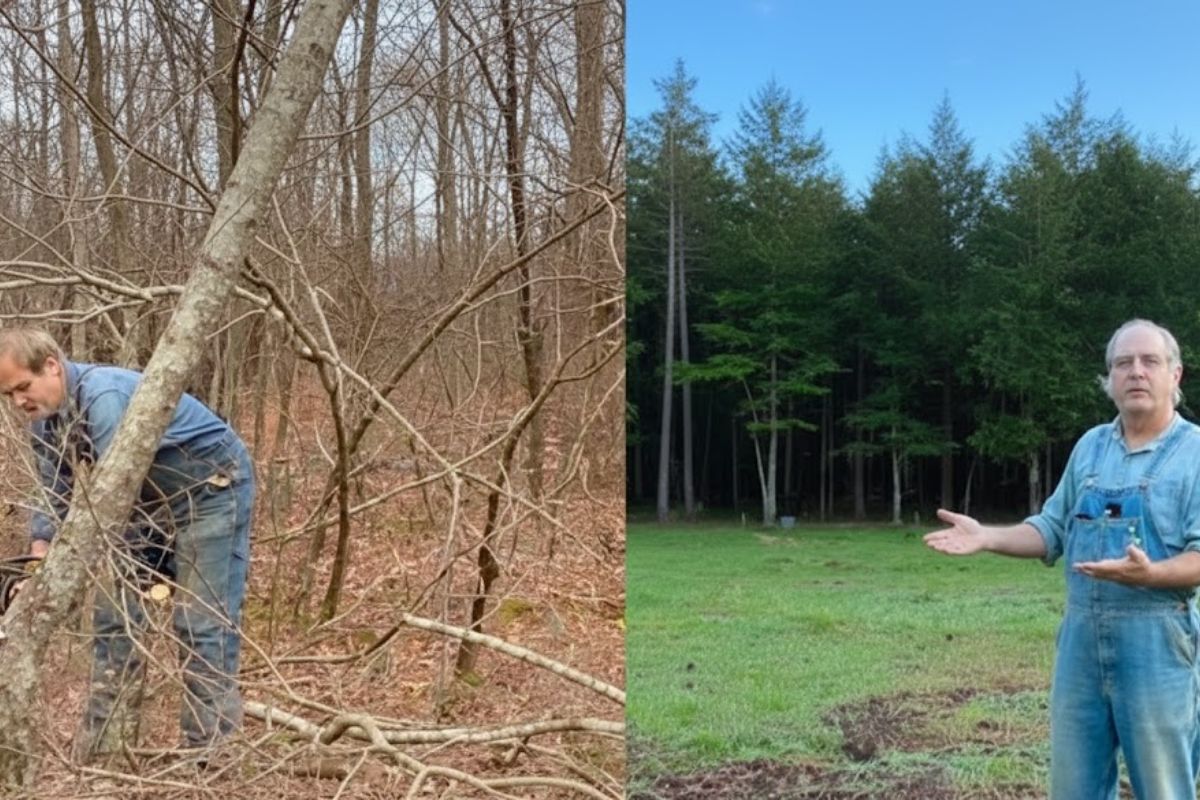
On a North American farm, producer Paul Mack swapped heavy machines for cattle, electric fencing, and progressive management to open clearings, take down brambles, and accelerate productive pasture. The rotation of paddocks, the use of hay, and the control of invaders continuously defined the rhythm there.
The starting point was a dense forest area, with young vegetation, vines, and thorns that limited visibility to a few meters. To achieve a productive pasture without spending on expensive tractors, the producer began with what was inevitable, a strip of about 9 meters to install the power line, and gradually expanded the deforestation in a methodical way.
The strategy combines cattle, electric fencing, and gradual management, but without romanticizing the effort. The process took years, required daily discipline, and technical choices, such as where to leave trees to reduce erosion, when to contain weeds, and how to use rotation to transform the initial opening into a stable productive pasture.
The Cost of Opening and Why to Do It Slowly

The producer did not start with a “big cleaning,” but with a practical restriction, the passage of infrastructure.
-
A couple buys an old chalet, breaks the kitchen floor for renovation, and finds over a thousand coins of gold and silver hidden since the English Civil War over 4 centuries ago.

-
Rigid bags with their days numbered: new trend prioritizes comfort in 2026.

-
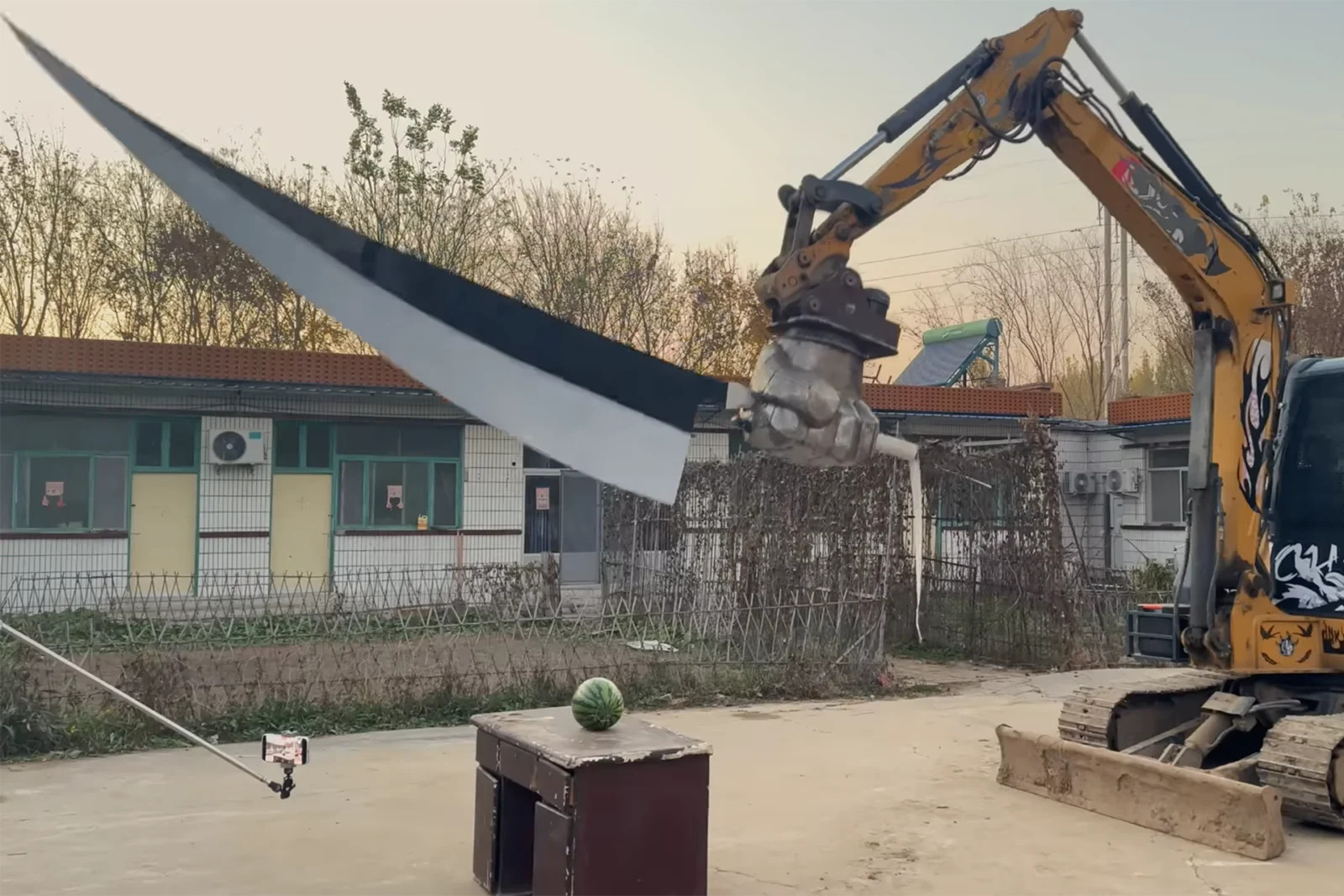
YouTuber creates an excavator equipped with a giant 4.5-meter sword to challenge his brother to a rematch, and the invention quickly goes viral on social media.
-
The U.S. Army surprises the world by presenting the UH-60MX Black Hawk helicopter capable of flying without pilots, controlled by a tablet, featuring the MATRIX system, smart sensors, and full autonomy in real combat and rescue missions.


This detail explains the reason for the gradual path; by opening a strip of approximately 9 meters, he was able to see the terrain, organize access, and create an axis to expand the productive pasture without going into debt.
The financial logic appears directly. Heavy machines deliver speed, but come at a high cost and concentrate risk.
When cash is tight, management becomes the investment tool, with small victories accumulated, control over what has been opened, and corrections before mistakes become too big.
Cattle and Electric Fencing as Cleaning Tools

The first field step was to fence.
Using lightweight wire, for example, gauge 17, simple insulators, and support points on trees, the producer set up a temporary electric fence and began to rotate the cattle in the still wooded area, defining where the animals would enter and for how long.
The practical effect is not a “miracle”; it is animal behavior.
The cattle consume leaves, knock down brambles, and reduce the strength of thorns as they move, creating natural corridors for human work.
With the electric fencing, management gains predictability because the impact of grazing is concentrated, and rotation prevents the same area from being pressured until it turns into bare soil.
Strategic Cut, Visible Stumps, and Erosion Under Control

Instead of clearing everything close to the ground, the producer made an unusual choice for smaller trees: to cut at knee height and keep high stumps.
The aim is simple: to make the risk visible, avoid collisions with tools, and wait for natural decomposition, which, according to reports, can take 2 to 3 years for the stump to weaken enough to be removed.
There is a soil component in this detail.
In lower and wetter areas, he preserved trees, large or small, to hold water, reduce erosion, and provide shade.
The productive pasture depends on stability, not just on “open area”, and the combination of selective cutting and targeted preservation improves the terrain’s resistance during rains.
Hay, Seeds, and Management in the First, Second, and Third Year

While the grass is not yet able to sustain the herd, the producer distributed hay at different points, sometimes with protective rings, to feed the cattle while simultaneously “seeding” the future.
Part of the seeds falls from the hay and helps to initiate the plant cover in the clearings, reducing the need to purchase large volumes of seeds.
The report emphasizes that native grasses tend to sprout when light reaches the soil and temperatures rise.
Nonetheless, the beginning is dominated by broadleaf and invasive plants; therefore, management changes according to the phase.
In the first year, the explosion of weeds is the norm; in the second, it decreases; in the third, the desired grass appears more strongly, provided that mowing and containment occur before seed production.
Controlled Fire, Residues, and the Limit Between Solution and Risk
Some of the woody material becomes firewood, and the rest accumulates in piles of residues.
At this point, the producer mentions controlled fire as a way to reduce volume and end cleaning cycles, but this is not an automatic shortcut.
Burning only makes sense when it is legalized, planned, and monitored, as the environmental and human risk is high, and responsibility does not belong to improvisation.
The technical outcome, when done within local rules, is to clear space, reduce shelter for unwanted plants, and organize the area for the next stage of management.
Even so, controlled fire does not replace what sustains the productive pasture, which is continuous plant cover, protected soil, and well-executed rotation.
Rotation, Smaller Paddocks, and the Consolidation of the Productive Pasture
The consolidation phase requires subdivision.
The producer describes the division of the pasture into smaller sections, like half an acre or a quarter-acre, to intensify grazing for a short period and quickly move the cattle, repeating the cycle.
This is the point where rotation stops being theory and becomes daily metrics: time of stay, height of forage, and recovery.
The logic is physiological. When the plant is grazed or cut, it reacts by producing new leaves and reinforcing roots, and this well-conducted cycle increases productivity.
Without rotation, management loses efficiency, and the productive pasture becomes a contest for weak regrowth, with more invaders and less resilience, especially in the early years.
The described transformation does not depend on expensive tractors, but it is also not instantaneous.
It combines cattle, electric fencing, management in stages, and rotation to reduce cost, control risk, and build a productive pasture that can endure weather, trampling, and yearly variations.
If you had to start tomorrow, what would your real priority be: setting up a simple electric fence, organizing the rotation of the cattle, or deciding where not to disturb to protect the soil and ensure a more stable productive pasture over time?







-

-

-

-

-

-

14 pessoas reagiram a isso.