





 Portuguese
  English
  Spanish
  5 min of reading
  0 comments


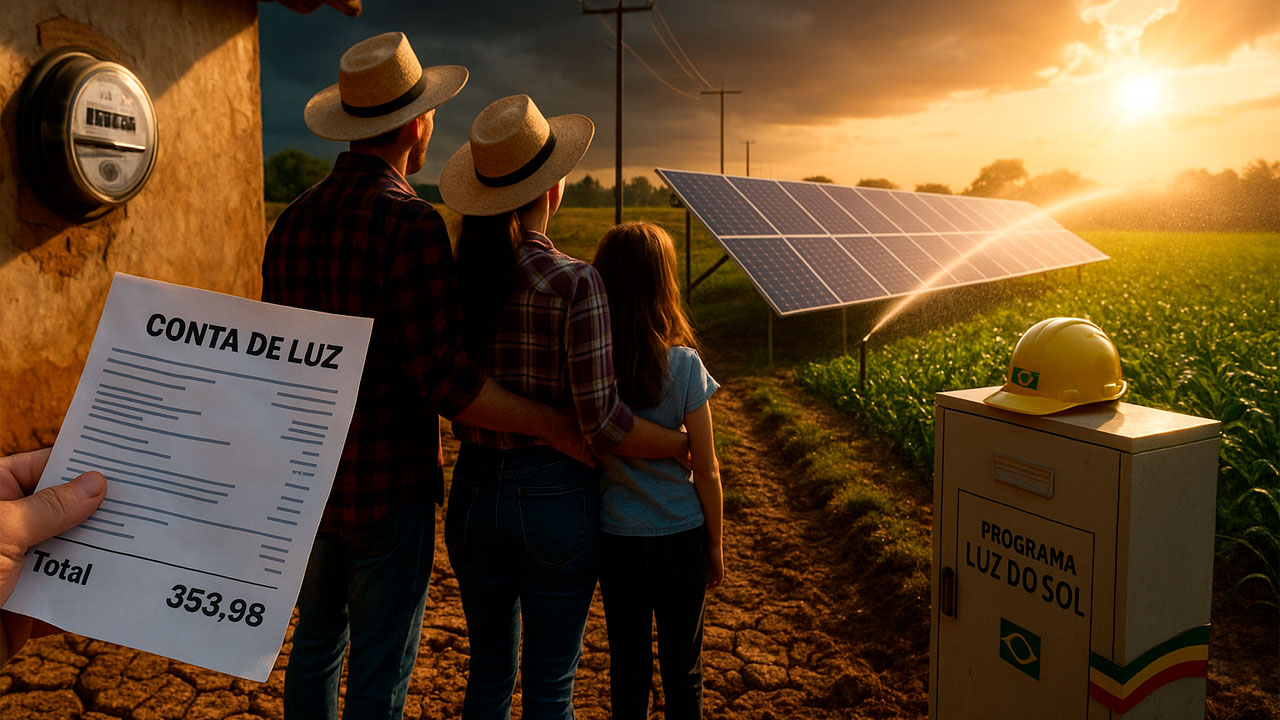
The Mines and Energy Commission Approves the Light of the Sun Program to Provide Solar Energy to Family Farmers and Those Registered in CadÚnico, with Resources from Lotteries, Bets, and ENBPar. The Proposal Goes to CFT and CCJ in a Conclusive Nature.
The Mines and Energy Commission of the Chamber of Deputies approved, on September 15, the Light of the Sun Program, which creates a permanent mechanism to encourage the installation of photovoltaic systems by family farmers and beneficiaries of CadÚnico.
The measure aims to reduce the electricity bill in rural areas, increase clean energy, and strengthen agricultural production. According to Agência Câmara, the proposal will still be analyzed by the Finance and Taxation and Constitution and Justice committees, in a conclusive nature.
The approved text is a substitute from deputy Otto Alencar Filho that combines four attached projects, including PL 2953/22. The report details the governance, funding sources, and objectives of the program, which can reach both those who install panels on their own property and remote shared models.
-
Unemployment rises again to 5.8% at the beginning of 2026, raising alarms about the end of temporary positions and its impact on the Brazilian job market.

-
Document organization can cut invisible costs in small businesses, a simple step that prevents waste, rework, and losses in daily operations.

-
Chinese giant worth nearly R$ 4 billion that manufactures cables for electric cars, solar energy, and robotics wants to open a factory in SC.
-
Many employers do not know, but the law guarantees domestic workers a 25% increase in salary during trips, 50% for overtime, 20% for night shifts, and 17 additional benefits that can lead to labor lawsuits if not paid.


In practice, the program seeks to tackle three problems at once: high energy costs, lack of affordable credit, and the need for decarbonization in food production. Brazil has millions of distributed generation systems, but the rural class still has a smaller number of plants, which explains the effort to democratize access to solar energy in rural areas.
The legislative advancement occurs at a time of strong expansion of distributed generation. Data from ANEEL indicates that, by July 31, 2025, the country had 3.77 million systems connected, totaling 42.3 GW of installed capacity, with solar leading the expansion. This shows the need for specific policies that reach small producers and low-income families.
What Exactly Was Approved by the Commission
The Light of the Sun creates a federal program to finance the purchase and installation of solar photovoltaic systems by family farmers and registered holders in CadÚnico. The goal is to lower electricity bills, encourage sustainable irrigation, and provide predictability for those who produce food in the country.
The proposal applies to both local systems and remote shared plants, a model that allows the generation to be shared among several consumers, including family farming cooperatives. This paves the way for scalable solutions where the roof is not sufficient or the local grid imposes technical limitations.
The text lists goals such as expanding credit, promoting energy efficiency, and involving rural extension workers in implementation and training. The detailing of operational rules will be left for subsequent regulation, which will define requirements for national content, monitoring criteria, and result evaluation.
Where the Money for the Light of the Sun Program Will Come From: ENBPar, Lotteries, and 2% of Bets
The program will be funded by a basket of sources. It will include federal budget resources allocated to ENBPar, loans from public and private banks, and funds from existing programs for energy efficiency (PEE) and social renewable energy (PERS). ENBPar will be responsible for the financial and operational management of the program, according to the substitute.
A novelty is to allocate 2% of the revenue from fixed quota bets — the so-called bets — to Light of the Sun. This percentage comes from the portion currently dedicated to the Ministry of Tourism, which will now account for 20.4% of the revenue. This measure amends Law 13.756/2018, which governs the allocation of lottery funds.
The approved text also authorizes specific financing lines from banks and funds, whether public or private, which should reduce interest rates and terms for acquiring solar kits. The expectation, according to the rapporteur, is to unlock projects in the field and generate savings for agricultural production.
Who Will Benefit and How It Will Work
Priority will be given to family farmers and rural family entrepreneurs defined by the legislation, as well as those registered in CadÚnico. Access may occur through direct financing, partnerships with educational and research institutions, and support from rural extension workers, responsible for guiding projects and integrating local actors.
The substitute provides for technical training, mechanisms for control and oversight, and indicators to evaluate implementation. It also allows for minimum requirements of national content for equipment and services, which may stimulate the productive chain of the solar sector in the country.
Although the details of qualification and credit depend on regulation, the proposal adds to a market that is already growing rapidly. Only in 2025, distributed generation exceeded 5 GW of accumulated growth as of August, signaling that there is pent-up demand and room for expansion in the rural sector.
Importance for the Field and for the Electricity Bill
Family farming accounts for a large part of the country’s food and faces increasing energy costs, especially in irrigation and processing. By reducing energy costs with solar photovoltaics, the program tends to improve competitiveness and resilience to climate change, assesses the rapporteur in the justification.
In the national scenario, the rural class represents about 9% of the distributed generation plants in operation, a proportion smaller than the residential. Bringing renewable energy to the fields has the potential to reverse access inequalities and reduce emissions, while ensuring supply security.
According to ANEEL, the advancement of micro and mini-generation has been driven by solar. With 3.77 million systems and 42.3 GW of capacity by July, there is an installed base to accelerate projects for cooperatives and rural consortia as soon as new lines of credit and subsidies come into force.
Do you support using 2% of bets to finance solar energy in the fields or would you prefer keeping these resources for tourism and seeking another source for the program? Comment on how this change could affect your region and whether Light of the Sun should prioritize rural cooperatives or individual installations.










Seja o primeiro a reagir!