





 English
  Francês
  Alemão
  Italiano
  Japonês
  Norueguês
  Portuguese
  Spanish
  9 min of reading


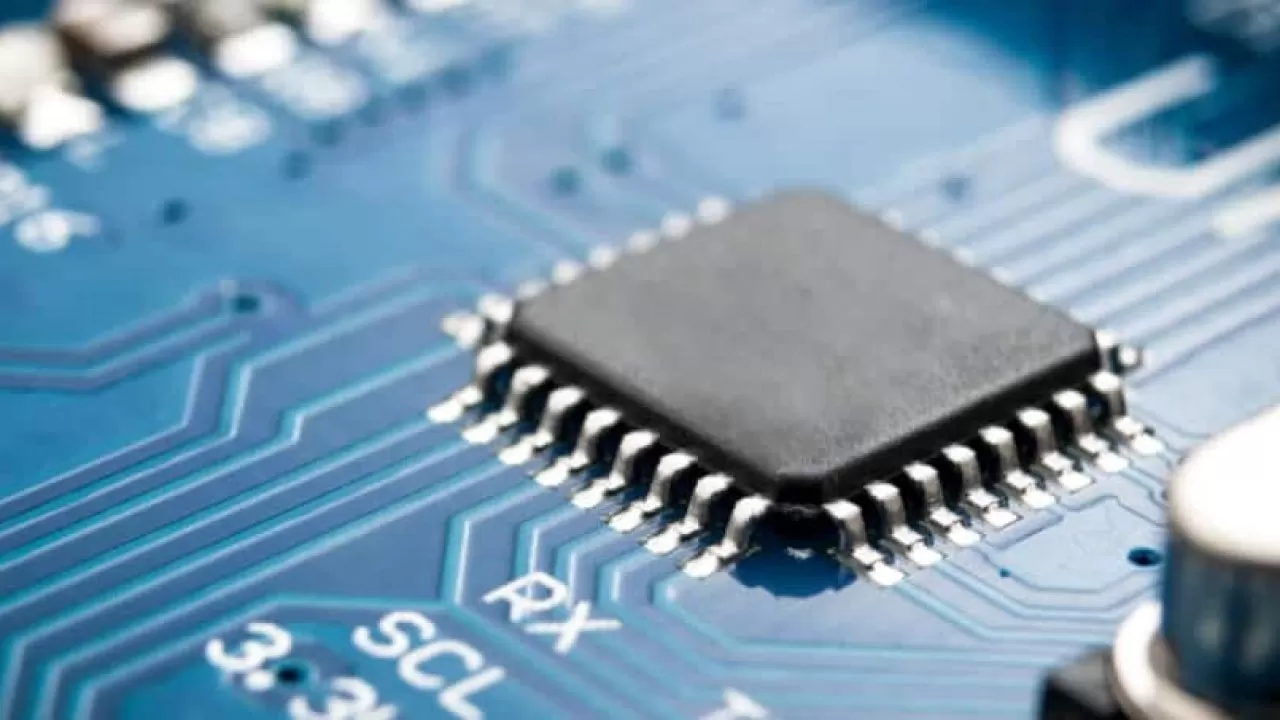
Understanding The Importance Of Semiconductors And All The Implications Of The Latest Crises Related Will Help You Understand The World Better!
Semiconductors have become a hot topic in various circles due to the severe difficulties the world is facing with the so-called chip crisis. Surprisingly, this crisis has been taking up an increasingly larger space in economic and political news.
For this reason, considering all the issues, we decided to create a small dossier for you, bringing the main information about this situation.
In this article, you will understand what semiconductors are, how a microchip is produced, the difficulties of advancements in these industries, and the political and economic consequences that are unfolding from this problem.
-
Unemployment rises again to 5.8% at the beginning of 2026, raising alarms about the end of temporary positions and its impact on the Brazilian job market.

-
Document organization can cut invisible costs in small businesses, a simple step that prevents waste, rework, and losses in daily operations.

-
Chinese giant worth nearly R$ 4 billion that manufactures cables for electric cars, solar energy, and robotics wants to open a factory in SC.

-
Many employers do not know, but the law guarantees domestic workers a 25% increase in salary during trips, 50% for overtime, 20% for night shifts, and 17 additional benefits that can lead to labor lawsuits if not paid.


Our intention here is to bring information in the most unbiased way possible. We will not take sides or make value judgments about any ideology. The goal is to present the facts and let you make your own moral decisions.
What Are Semiconductors?
Semiconductors are components that have a partial conduction of electric energy, and therefore can be used within microelectronics.
The main semiconductor used is silicon, which has become a reference when talking about technology companies, such as in “Silicon Valley” in the United States, where major technology companies have developed and are headquartered.
Due to their significant importance in the microelectronics market, semiconductors and microchips have been causing various disputes and are considered by some experts as the “new oil.”
The key issue regarding semiconductors is that, unlike oil, which has a comparatively simple processing that can be enriched in various places around the world, microchips are in a completely different situation, which we will explore further ahead.
As you will also see in our next topic, building a microchip factory is expensive, and its implementation is difficult and time-consuming.
Especially when we talk about the latest chips, whose fabrication is still extremely limited and is in the hands of very few entrepreneurs.
With companies located in the United States, China, Taiwan, and Europe, it’s not as if there is a very broad market with plenty of competition in the microchip world. In fact, what we are seeing is quite the opposite; the scarcity of chips is causing increases in the prices of electronic products at a time when the world needed them most, during the Covid-19 pandemic.
Before delving into the social, economic, and political aspects of semiconductors and the chip crisis, we want to show you how complex the production of a microchip can be.
What Is A Microchip Fab Like?


Microchip factories, generally called fabs or foundries, transform raw semiconductors into true micro pieces of technological art.
They operate in a very complex manner, with an incredible series of details in their construction, to have an environment as free from interference as possible, because with the size of the microchips being produced decreasing more and more, things that are irrelevant in other factories, such as dust, become a terrible adversary for the quality and precision of the product.
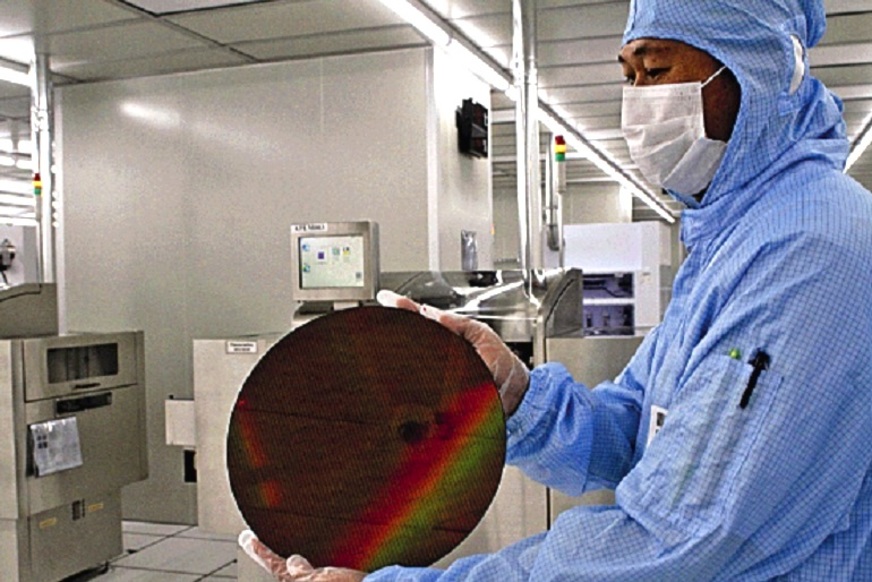
The production of microchips is done without any human manipulation and initially starts with the production of the wafer, which is the nickname for the silicon slab where the chip is “written.”
The process begins with the creation of a silicon crystal by melting sand. This crystal is then “sliced,” similar to a salami or sausage, and the slices are called wafers.
The process of inscribing the microchip is done through the initiation of chemical baths and a process called photolithography, which involves infrared light, photoresist products, and the result is the drawing of the circuit.
After that, it’s important to note that this explanation is tremendously simplified; the wafer is again cut into the shape of microchips (each wafer can have hundreds or even thousands of microchips) and then covered with a protective layer of plastic.
There is a considerable loss of chips in this process, but until now this has been the only developed way to produce chips with the necessary size for practically all technologies of today’s world.
It’s also important to point out that the foundry has 4 floors, and only on one of them are 2 microchips actually manufactured.
The environment inside these factories is controlled, and each floor has gridded flooring, so there is no accumulation of dust and dirt. Employees circulate in special clothing, with only their eyes exposed.
The air conditioning of the fab is designed so that all the dust descends to the ground floor, where only maintenance and transport of already finished microchips is done.
It’s also worth noting that the production capacity of each of these factories is not very large, and most factories in the world are working at full capacity.
As we have mentioned, a few factories in the world are responsible for all the microchip production on the planet, and it becomes even worse when we discover that more than half of this production is centralized in a single factory, and the very existence of this foundry can reignite old disputes and start a war.
TSMC: Understand How This Factory Stopped The World
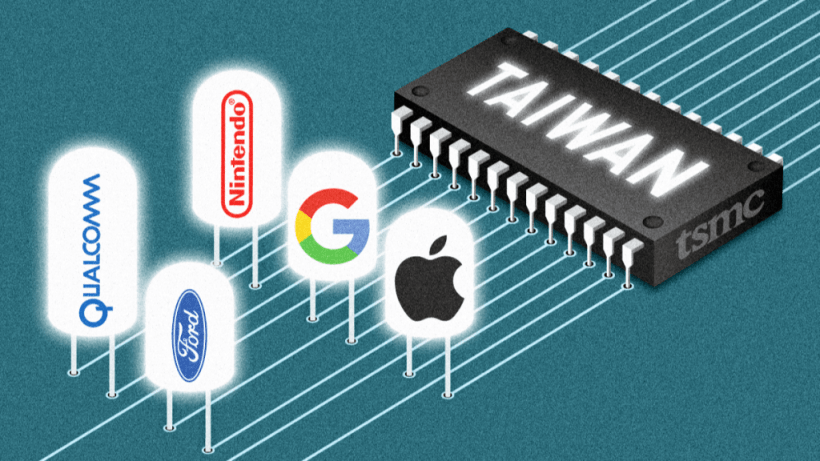
TSMC is a chip factory in Taiwan that, according to Trend Force, holds a 55% share of the global market in the first quarter of 2021. This undoubtedly makes it one of the most important companies in the world right now.
However, during the pandemic last year, Taiwan faced a severe drought that affected TSMC’s production.
It affected it to such an extent that this had worldwide repercussions, leading to considerable increases in the prices of cell phones, computers, and other electronic components that use microchips.
In addition, there is the whole issue involving car manufacturers, eager buyers of microchips due to the electronic systems in vehicles.
It is customary for car manufacturers not to keep large quantities of supplies in stock, so when the pandemic reduced car sales, manufacturers stopped ordering microchips from TSMC.
However, with the return of the economy in most of the world, driven by the end of lockdowns, manufacturers wanted chips again. As other markets had already absorbed the demand, there was a problem of chip shortages for all.
These issues (the problems with the drought in Taiwan and the increase in demand) occurred almost consecutively, which exacerbated the crisis.
This is because when we talk about recovering the market, it is not like it’s possible to produce a lot more chips simply by wanting to.
We mentioned earlier that chip fabs cannot produce a significantly greater amount than what they already are. This means that for stock normalization and prices to return to normal, a decrease in demand would be necessary, and that doesn’t seem likely to happen any time soon.
There’s also an additional problem for TSMC’s competitors.
The company has already entered pioneering aspects in the production of microchips that are extremely difficult and expensive to achieve. In its latest advancement, TSMC announced it offers its customers lithography using ultraviolet light, allowing the designed chips to have 1 and 2 nanometers of line width.
This company has also been responsible for creating an entire segment of companies interested in designing microchips but lacking the machinery to produce them.
By outsourcing this extremely difficult and costly part of the microchip production process, these companies have managed to find interesting market niches for themselves, although they have developed a complete dependency on fabs like TSMC. Nvidia is a good example of these companies.
It has become clear that the title of the largest semiconductor company in the world was not won by TSMC without reason.
Another important aspect about TSMC is that it has a very positive relationship with the government of Taiwan, which was fundamental for the company’s inception, but is currently going through a very complex situation.
The Geopolitical Effects Of The Semiconductor Crisis.
If you have been following international political and economic journalism, you know that there is a real trade war occurring between the United States and China.
This trade war started during the Trump administration and, even with a different philosophy in various aspects, has been maintained during the Biden administration.
The American government created barriers for Chinese industries, including a literal prohibition against chip-producing companies in the United States from doing business with Chinese companies. Additionally, the government also banned Huawei, a Chinese company specializing in 5G, from operating in the American market.
This has made the already poor relationship between the two countries even worse.
Moreover, the ongoing tussle between companies from these two countries over the supremacy of newer and smaller microchip technology can be compared to the space race or the nuclear race of the last century.
Now add the fact that Taiwan was a Chinese province, but managed to free itself through a revolution in the 1940s.
There are fears that China may move militarily towards Taiwan more definitively, and the quest for its supremacy in microchips would be an excellent bonus.
It’s important to remember that the barrier TSMC has created regarding its competitors creates what we call a natural monopoly, which is basically the absolute difficulty of competing with a certain company because the investments needed to reach where that company is now are simply too high for a company to do it without government encouragement.
On another note, both American blockades and the possibility of China attracting engineers and other professionals related to microchips from Taiwan and other places in the world with incredible salaries mean that China should not be completely underestimated in its new market initiative.
China, at this very moment, is the largest exporter of electronics in the world, but this entire incredible industry is completely defenseless against the chip crisis.
To resolve this issue, the Chinese Communist Party has created a government program to stimulate the establishment of more Chinese chip factories.
The Chinese plan for this situation involves the promise that China will become entirely independent of foreign chips by 2025, which would make the country practically unstoppable in this market.
This plan involves acquiring both technology and human capital, and of course, securing good suppliers of raw materials.
Are Semiconductors The New Oil?
This is the bet of many experts in geopolitics and economics. The decline of the oil market, due to ecological issues and the advancement of clean energy and electric cars, makes semiconductors the new major currency of exchange.
The construction of new foundries and the stimulation of this whole market will likely become the target of public policies aimed at promoting industrialization, like what happened in other markets decades ago.
This is because, as we have seen, from now on, a country’s chip production capacity could end up becoming a paradigm of its economic (and even political and military) power.
Is There A Chance The Semiconductor Crisis Could Escalate Into A Conflict?
This is a relatively difficult question to answer. At this very moment, the world economies are trying to recover from the monumental losses that the pandemic has caused. It does not seem likely that an escalation of violence could occur between the United States and China, which could easily escalate into a new World War.
At the same time, it does not seem hard to conclude that China has every reason in the world to regain control over Taiwan, despite the island thinking differently.
It’s important to note that the problems between China and Taiwan go much deeper than just chips. Since 2013, when current Chinese leader Xi Jinping took office, there have been almost daily threats to Taiwan’s airspace from Chinese military aircraft.
From a military standpoint, the United States is an ally of Taiwan, as both share economic views, and they have common points against China.
As you can see, the semiconductor crisis is much more interesting and complex than initially imagined, involving political and economic issues that are much older than the technologies currently used as weapons and currency of exchange.
We hope you enjoyed this content. Did you feel that any data or something was missing? Comment below!










Seja o primeiro a reagir!