





 Portuguese
  English
  Spanish
 5 min of reading
  0 comments


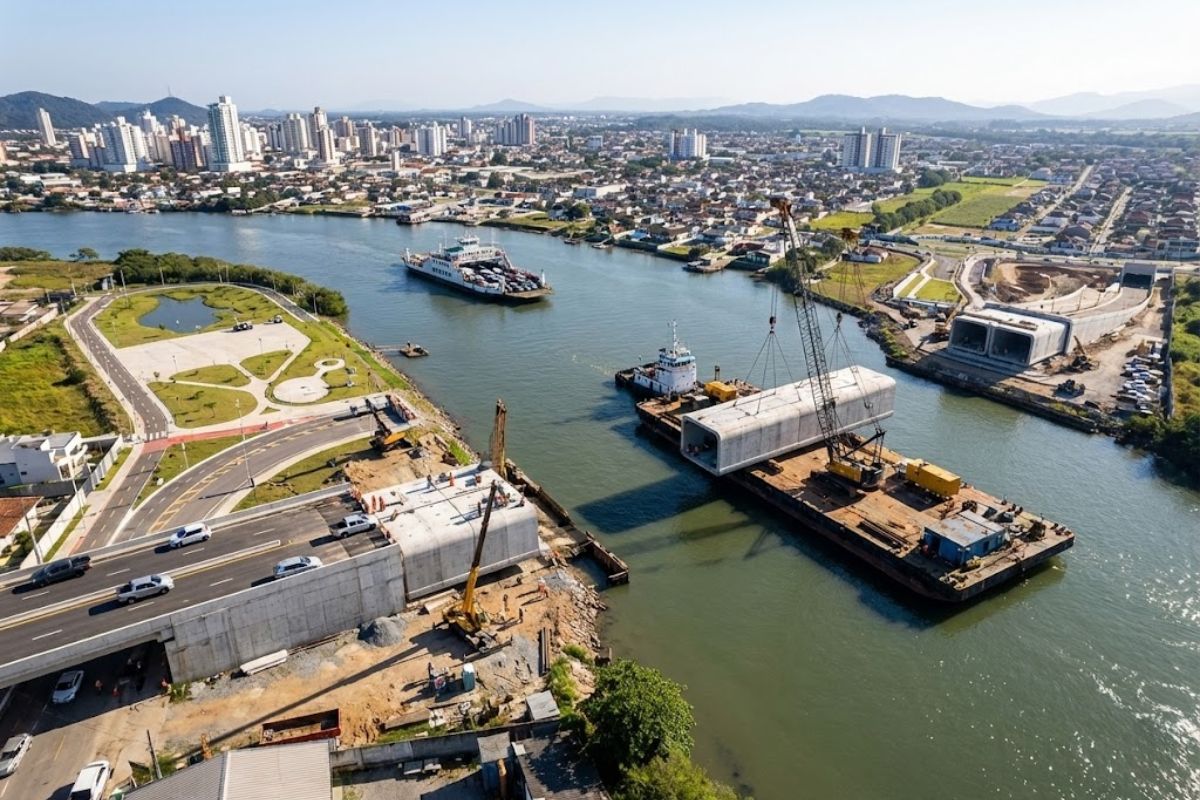
Approved on December 17, 2025, the external loan of US$ 90 million for PROMOBIS funds studies of the immersed tunnel Itajaí Navegantes, reinforces BRT and regional bike paths, threatens to retire the traditional ferry and prepares new daily metropolitan mobility between port cities in Santa Catarina with direct impact on those who cross.
On December 17, 2025, the Federal Senate authorized an external loan of up to US$ 90 million with an international development agency for the Integrated Sustainable Mobility Project of the Itajaí River Mouth Region, PROMOBIS. At the center of the package is the immersed tunnel between Itajaí and Navegantes, seen as a strategic piece to reorganize the crossing currently dominated by the ferry.
The operation, with a long-term repayment period and backed by the federal government, has been divided among Itajaí, Navegantes, and Balneário Camboriú, making up the US$ 90 million ceiling authorized in the plenary. In practice, the money allows for bringing to life studies, projects, and modeling of the immersed tunnel and the regional mobility system, although it does not yet represent the immediate start of works under the Itajaí Açu riverbed.
What the Senate Approved to Make the Immersed Tunnel Viable

The approved resolution projects in the Senate free the three municipalities of the Itajaí mouth to contract external credit within PROMOBIS.
-
A megaproject worth R$ 89 billion is advancing in Iraq and promises to change the game in global trade by creating a new corridor between Asia and Europe, reducing traditional routes and repositioning the country as a logistics powerhouse.
-
Goodbye bedside table: floating shelves become a trend in 2026 by freeing up space in the bedroom, improving circulation, bringing visual lightness, and integrating technology without taking up floor space.

-
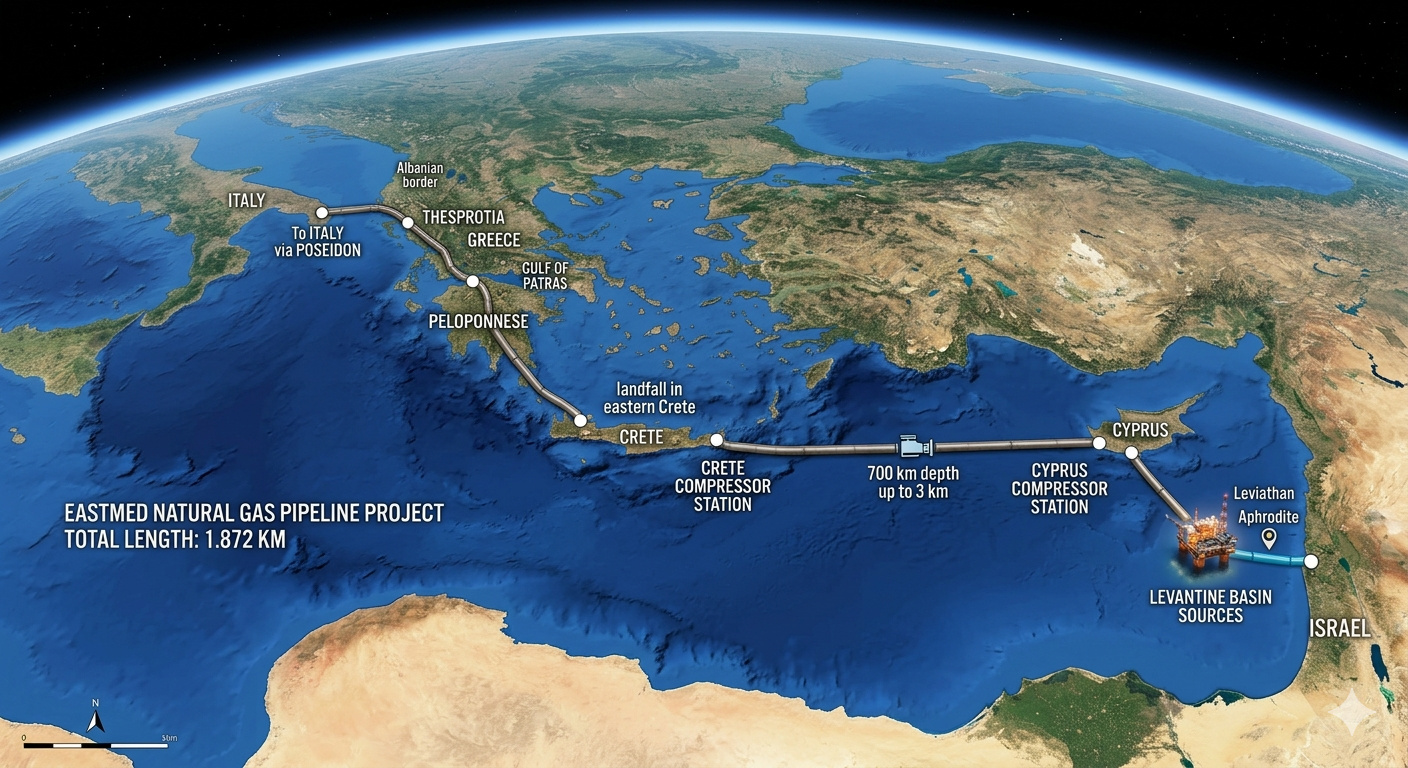
Israel, Greece, and Cyprus signed an agreement in 2020 to transport gas from the Mediterranean to Europe via a 1,872 km pipeline, but Turkey claimed sovereignty over part of the maritime route, and the project never materialized.
-
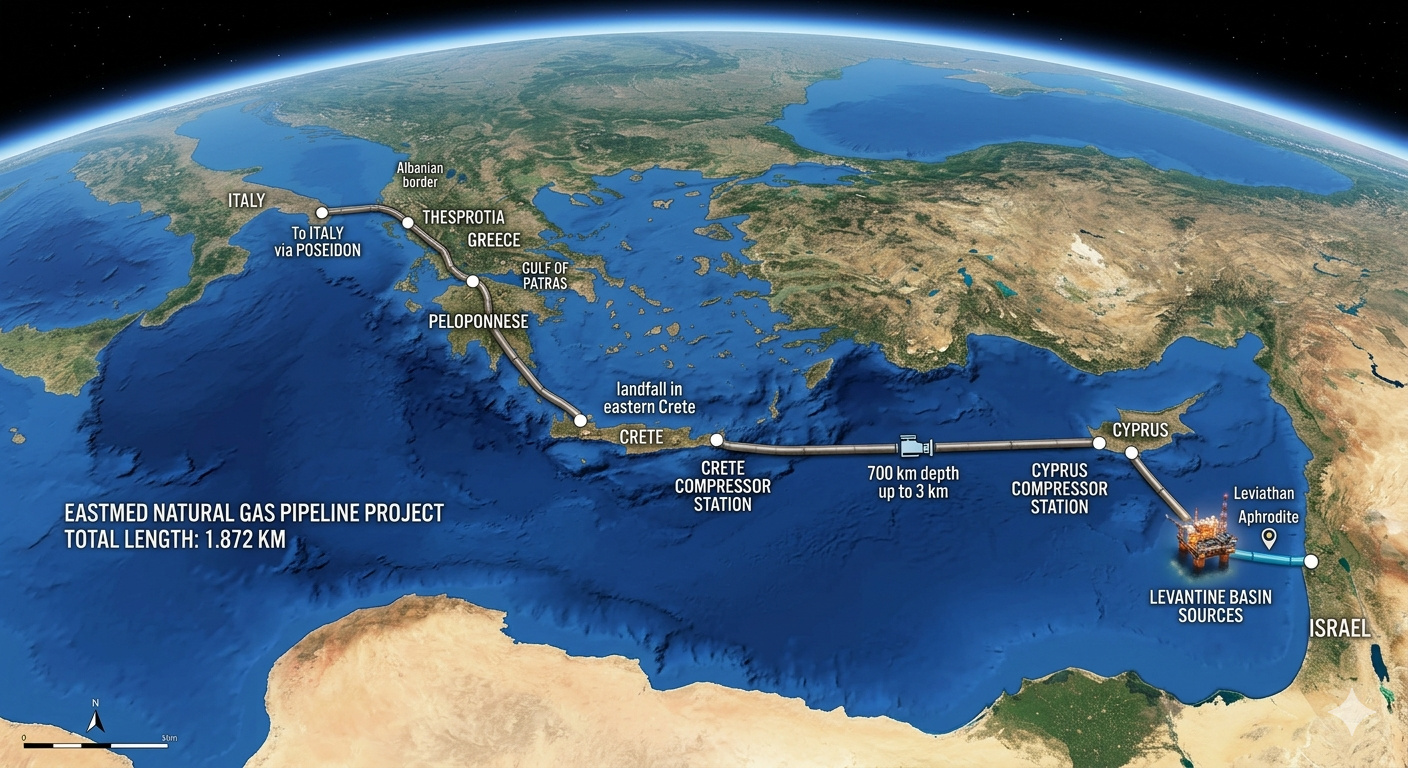
Israel, Greece, and Cyprus signed an agreement in 2020 to transport gas from the Mediterranean to Europe via a 1,872 km pipeline, but Turkey claimed sovereignty over part of the maritime route, and the project never materialized.

The authorizations conclude the legislative stage and open the way for the mayors to sign the contract, define countermeasures, and start executing the program.
In the program documents, the immersed tunnel is linked to the axis of institutional strengthening and technical assistance, with funds allocated for route studies, basic projects, geotechnical analyses, risk matrix, and economic-financial modeling for a future public-private partnership.
The physical implementation of the immersed tunnel is left for a subsequent stage, dependent on a new package of resources and the structuring of the concession to the private sector.
How the Immersed Tunnel Can Change the Itajaí Navegantes Crossing
Currently, the connection between Itajaí and Navegantes heavily relies on the ferry, which is subject to queues, overcrowding, and interruptions on days of strong winds or unfavorable tides.
The proposal for the immersed tunnel is to create a fixed connection underneath the Itajaí Açu Riverbed, allowing continuous crossing at any time and in any weather condition for those living, working, or studying on either side of the mouth.
Preliminary studies describe the immersed tunnel as a structure with internal “cells” reserved for different modes of transportation, with space for vehicles, public transport, and potentially, passages for pedestrians and cyclists.
The underground solution is advocated as an alternative to a large bridge, which would face restrictions due to the heavy shipping traffic in the access channel to the ports and the proximity of the Navegantes airport.
PROMOBIS, Integrated Mobility and Regional Function of the Immersed Tunnel
The loan also finances bus corridors, BRT systems, feeder lines, qualified sidewalks, and an extensive network of bike paths that should interconnect municipalities in the Itajaí mouth.
In this design, the immersed tunnel is not an isolated project, but the most sensitive link of a metropolitan corridor that aims to integrate Balneário Camboriú, Camboriú, Itajaí, and Navegantes.
The idea is that the immersed tunnel will eventually receive structural lines of higher capacity public transport, reducing exclusive dependence on cars for crossing the river.
Urban terminals, integration stations, support parking lots, and cycling connections serve as complementary pieces of a system that aims to reduce travel times and better organize flows between port cities with strong economic activity.
Ferry, Tiring Routine, and Doubts About Toll
For those who rely on the ferry daily, the immersed tunnel is seen as a promise of an end to a tiring crossing marked by queues during peak hours, overcrowded vehicles, and uncertainty on days of bad weather.
The expectation is to shorten the commute, provide predictability to those crossing the river every day, and facilitate access to jobs, services, and education on both sides.
At the same time, the possible partial or total replacement of the ferry opens debates about tolls, charges, and usage priorities.
The modeling of the future PPP of the immersed tunnel will have to define who pays, how much they pay, and which vehicles will have preferential access, including whether public transport and bicycles will have different treatment than private cars.
The final design may determine whether the crossing will be more inclusive or merely become a fast corridor for those who can pay more.
Steps Until the Works of the Immersed Tunnel Come to Fruition
Even with the approved credit, the immersed tunnel still depends on a series of mandatory steps.
The municipalities need to sign the financing contract, meet effectiveness conditions, hire studies, complete engineering projects, obtain environmental licenses, and structure the bidding for the PPP that will assume the construction, operation, and maintenance of the crossing.
Timelines discussed at the regional level indicate that the start of the immersed tunnel works is likely to occur only at the turn of this decade, with completion expected a few years later, always conditioned on investor responses and licensing processes.
In other words, the loan of US$ 90 million accelerates studies and governance, but does not guarantee on its own the date when drivers, bus passengers, cyclists, and pedestrians will be able to abandon the ferry and cross the river underwater.
In your opinion, should the immersed tunnel between Itajaí and Navegantes prioritize lanes for public transport and bike paths, even if this limits lanes for cars, or is the population willing to accept tolls for a faster and more predictable crossing every day?






Seja o primeiro a reagir!