





 Portuguese
  English
  Spanish
 6 min of reading
  0 comments


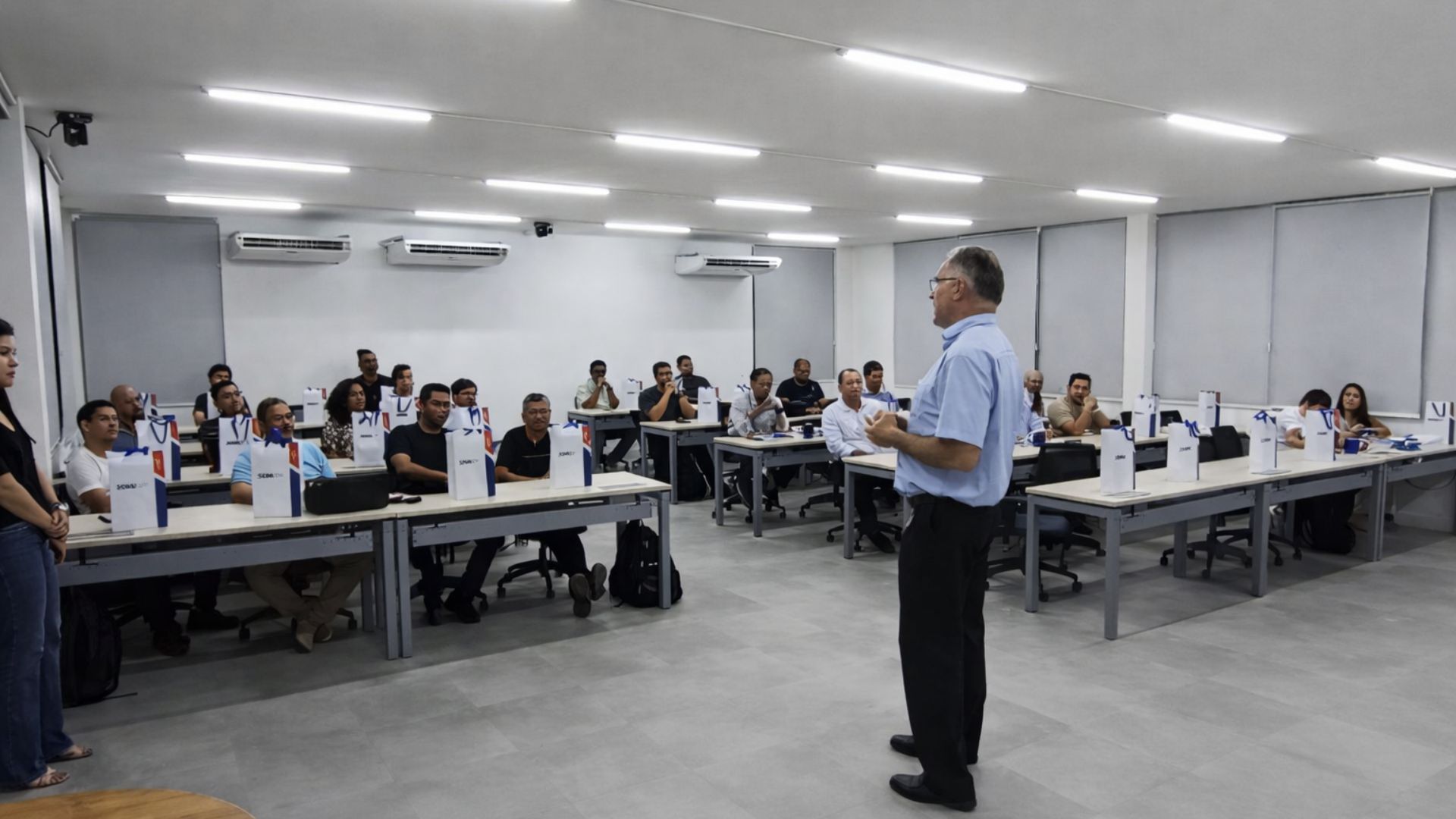
Unique Initiative by Senai-RN Qualifies Professionals to Work in Offshore Wind Energy, Expanding Opportunities in Renewable Energy and Meeting the Strategic Demand of the Sector in Brazil
The Senai-RN started, this Friday (23), the classes of the first postgraduate course in Brazil dedicated exclusively to offshore wind energy, marking a strategic advancement for professional training in the renewable energy sector. This initiative is led by the Renewable Energies and Industrial Technologies College (FAETI) and arises at a decisive moment for the country, which is advancing in the regulation and licensing of offshore wind projects.
With the expectation of dozens of offshore projects being developed in the coming years, the qualification of specialized labor has become one of the main bottlenecks in the sector. The Postgraduate Program of Senai-RN is born precisely to fill this gap and prepare professionals to work in one of the most promising segments of the energy transition.
Senai-RN Postgraduate Program Strengthens Training in Renewable Energy
The first class consists of 43 students, bringing together engineers, technicians, and managers from companies linked to the offshore wind energy chain, reinforcing the multidisciplinary and applied nature of the course.
-
Renewable energy advances over protected areas in Brazil, and a survey by the Energy Transition Observatory reveals silent impacts that challenge environmental conservation and pressure sensitive traditional territories.

-
Rio Grande do Sul accelerates energy transition: State invests in renewable technologies and consolidates decarbonization strategies and pathways to attract billions in new industrial investments.

-
With 160,000 m² of collectors, an area larger than 20 football fields, Silkeborg, in Denmark, hosts a solar thermal plant that heats 19,500 homes and could become the largest solar heating plant in the world.

-
A study reveals the expansion of renewable energy procurement in Brazil and shows how companies are taking advantage of opportunities to reduce expenses, ensure energy efficiency, and strengthen strategic environmental commitments.


The lack of qualified professionals is pointed out by experts as one of the greatest global challenges for the advancement of renewable energy in the offshore environment. Unlike land generation, projects at sea require specific knowledge in engineering, logistics, regulation, operational safety, and electrical integration.
In this context, Senai-RN takes the lead by launching an unprecedented Postgraduate Program in the country, aligned with the real needs of the market and international trends in the sector.
Without prepared professionals, Brazil runs the risk of delaying strategic projects or becoming excessively dependent on foreign labor. FAETI’s initiative anticipates this scenario and positions Rio Grande do Norte as a reference in qualification for offshore wind energy.
Offshore Wind Energy Boosts Interest Among Experienced Professionals
The diversity of the students’ profiles demonstrates the relevance of the training. Among the participants is Wellington Guanabara, executive director of Intersal, the company responsible for the Salineiro Terminal in Areia Branca, the Porto-Ilha.
The site also hosts the first offshore wind energy project in Brazil to receive an environmental license, as well as serving as a base for studies by Senai-RN focused on renewable energy.
According to Guanabara, since the company will host an innovative project, the pursuit of the postgraduate degree aimed to deepen knowledge about offshore wind energy.
Another student is Emilson de Souza, a Metallurgy technician with a specialization in wind energy from Senai-RN, who has been working for 12 years in the operation and maintenance of onshore wind farms.
He emphasized that the sector has strong projections in the country and that the postgraduate program helps to enhance professional training and open new job opportunities.
First Module Presents Global Overview of Offshore Wind Energy
The first meeting of the Postgraduate Program continued on Saturday (24) and featured leading experts in the wind sector.
The classes were led by Matheus Noronha, head of Offshore Wind Energy at the Brazilian Wind Energy Association (ABEEólica), and Roberta Cox, director of Policies for Brazil at the Global Wind Energy Council (GWEC).
During the initial module, students had access to a global overview of offshore wind energy, analyzing trends, regulatory challenges, development models, and perspectives for Brazil. The integration with national and international entities strengthens the course.

Senai-RN Acts as a Catalyst for the Offshore Wind Energy Chain
According to Matheus Noronha, the initiative by Senai-RN is essential for the consolidation of the sector in the country. He stated that significant challenges are already identified in the value chain, especially in preparing professionals for the future of technology, and that Senai-RN is kicking off the training of those who will lead this industry.
Roberta Cox reinforced the pioneering character of the institution and the impact of professional training on the sector’s growth. She highlighted that the formation of people is essential and that the advancement of offshore wind energy should generate many jobs in Brazil.
The regional director of Senai-RN, Rodrigo Mello, welcomed the students and emphasized the strategic importance of the Postgraduate Program for the professional development of the participants.
FAETI is directly linked to the SENAI Institute for Innovation in Renewable Energies (ISI-ER), considered the main center in Latin America focused on applied research in renewable energy. This integration ensures technical education, which is updated and connected to the industry.
Postgraduate Content Covers the Entire Offshore Wind Energy Chain
The curriculum of the Postgraduate Program in offshore wind energy is structured into 15 modules and offers comprehensive training, covering everything from conceptual aspects to practical applications.
Among the topics addressed are:
- Global Overview of Offshore Wind Energy
- Energy Meteorology
- Integration of Offshore Generation into the Electrical Grid
- Technical and Economic Aspects
- Legislation and Regulation of the Sector
- Offshore Foundations
- Mechanical and Electrical Components Projects
The teaching staff consists of masters, doctors, and specialists linked to institutions such as GWEC, ABEEólica, ISI-ER, and regulatory agencies.
Offshore Wind Energy Advances in Brazil with Dozens of Projects
Offshore wind energy is generated by turbines installed at sea or in large bodies of water and is already widely used in countries in Europe, Asia, and North America.
In Brazil, data from the Brazilian Institute of Environment and Renewable Natural Resources (Ibama) indicates 104 projects with ongoing environmental licensing processes, distributed across states such as Rio Grande do Norte, Ceará, Rio de Janeiro, Rio Grande do Sul, Maranhão, and Santa Catarina.
These ventures amount to 247,354 megawatts (MW) of installed capacity, reinforcing the need for qualified professionals for construction, operation, and maintenance of the plants.

Pioneering Project by Senai-RN Reinforces National Leadership
Senai-RN is also responsible for the development of a pilot plant for offshore wind energy in Rio Grande do Norte. The so-called Testing Site was the first complex in the country to receive preliminary licensing.
The project focuses on conducting technical studies and developing technologies that will serve as a basis for new investments in renewable energy in Brazil. This experimental environment directly contributes to the practical training of postgraduate students.
FAETI is the first college in Brazil dedicated exclusively to renewable energies and represents the expansion of Senai-RN into higher education. The institution operates in Natal, the capital of a state that leads wind generation in the country, and boasts advanced infrastructure, modern laboratories, and integration with reference centers such as CTGAS-ER and ISI-ER.
Professional Training Anticipates the Future of Energy in Brazil
The accreditation of the college was published by the Ministry of Education (MEC) in August 2023, following a positive evaluation by INEP, which highlighted institutional planning, social responsibility, and the socioeconomic impact of the educational project.
The creation of the first Postgraduate Program in offshore wind energy by Senai-RN represents a milestone for the Brazilian energy sector. The initiative anticipates a growing demand for specialized professionals and strengthens the country’s ability to turn energy potential into concrete projects.
By investing in qualification, infrastructure, and innovation, Senai-RN positions itself as a central agent in the transition to a cleaner, more sustainable, and competitive matrix, based on the expansion of renewable energy and the development of individuals prepared to lead this new economic cycle.








Seja o primeiro a reagir!