





 Portuguese
  English
  Spanish
  4 min of reading
  0 comments


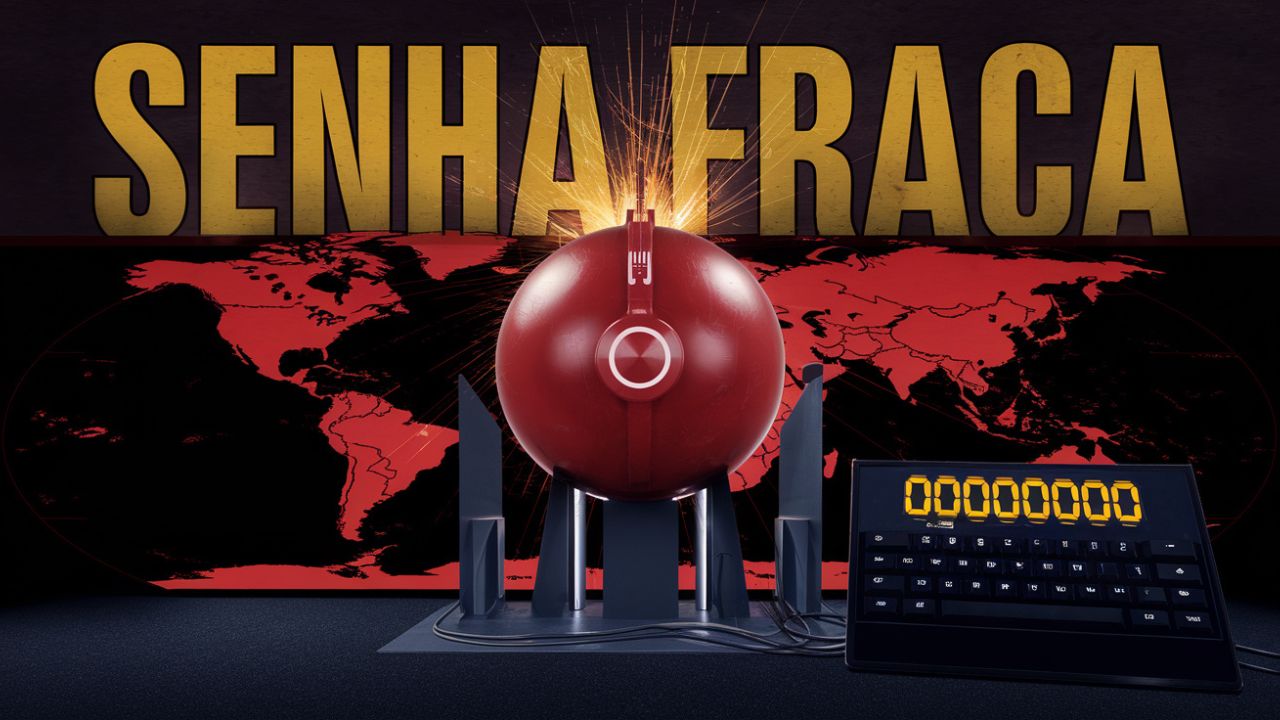
For Decades, The World’s Most Powerful Nuclear Arsenal Was Protected By The Password “00000000”, Exposing The US To Sabotage And Fatal Errors During The Cold War.
What would it be like to protect the most destructive arsenal of humanity? Well, the answer from the United States for much of the Cold War was surprisingly simple: 00000000. That’s right, eight zeros as a password to activate nuclear weapons capable of causing global devastation. It seems absurd, doesn’t it? But the story goes beyond the unbelievable.
For decades, what should have been an impeccable system to protect nuclear codes was, in fact, a collapse of negligence and misprioritization. While the world walked a tightrope of political tensions, the US, in its quest for efficiency, forgot to safeguard one of the most dangerous tools ever created.
Nuclear Security During The Cold War
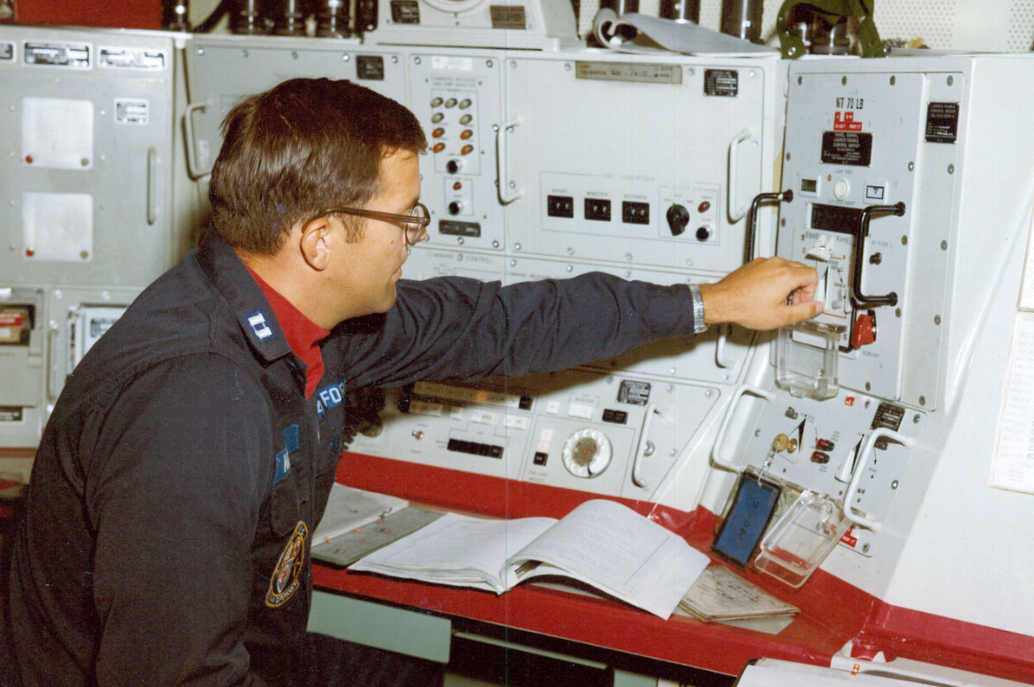
At the height of the Cold War, the United States and the Soviet Union were engaged in a frenzied arms race. Both sides were amassing colossal nuclear arsenals, ready to be used in the blink of an eye. The pressure was immense, and protecting the codes that controlled these missiles should have been top priority. But the reality was quite different.
-
Fukushima Marks A Turning Point In Japan’s Energy Policy: After The Disaster, The Country Shut Down Its 54 Nuclear Reactors And, 15 Years Later, Only A Small Portion Have Returned To Operation
-
How Japan Overcame The Nuclear Bomb And Now Houses Millions In Hiroshima, While Ukraine Lost Chernobyl?

-
Bill Gates Receives Historic Approval to Build Giant 345 MW Nuclear Plant in the U.S. and Promises to Generate Up to 500 MW of Energy with Innovative Technology

-
India Opens Nuclear Energy to Private Capital to Accelerate Projects and Attract Billions, While Brazil Remains Stalled at Angra 3 and Discusses Who Will Foot the Bill for Completion
The Strategic Air Command (SAC), responsible for the Minuteman intercontinental missiles, decided that security could wait. After all, the speed of response in case of a presidential order was more important. This choice opened a monumental gap for sabotage or accidental launches. What seemed like a science fiction script was, in fact, harsh reality.
Fisher’s Proposal: A Lesson In Humanity
In the 1980s, Roger Fisher, a Harvard professor with an innovative approach, proposed something audacious. He suggested that nuclear codes be implanted in the chest of a volunteer who would accompany the president. Thus, to launch a nuclear attack, the president would need to take the life of that person with his own hands.
Though morally impactful, the idea was quickly rejected by the Pentagon. Authorities believed this could compromise the president’s ability to act in crises. Still, Fisher’s proposal forces us to reflect: would it be harder to push the button if the weight of the decision was truly felt?
The Simplest Password In The World: “00000000”
Revelations from Bruce Blair, a former launch officer and nuclear expert, brought to light one of the most embarrassing secrets in American military history. After an order from President Kennedy, the SAC decided to standardize security codes as 00000000. The justification? To facilitate immediate launches in case of need.
The Air Force attempted to deny these accusations, but technical documents corroborated Blair’s story. The result? A mix of public outrage and a global alert about the fragility of the nuclear security system.
Protocol Changes: More Security, Less Improvisation
In 1977, facing growing criticism and risks, the US implemented a more robust system. Now, to initiate a launch, it was necessary to contact higher authorities and validate the codes. This change was a turning point, significantly reducing the risk of human error or sabotage.
But there was still a challenge: balancing security with the need for a rapid response. After all, in times of war, every second counts, but negligence cannot be an option.
The SIOP And The Apocalyptic Vision Of The Cold War
The Single Integrated Operational Plan (SIOP) was created to coordinate a massive nuclear counterattack. In a scenario of activation, over 4,000 targets would be destroyed in 30 hours, resulting in hundreds of millions of immediate deaths. The plan was so devastating that just imagining its execution is frightening.
Fortunately, the SIOP was never activated. But its existence reinforces how close we were to a true nuclear apocalypse during the years of greatest global tension.
Reflections On The Legacy Of Nuclear Security
This story leaves us with valuable lessons. The first is that neglecting critical systems can have catastrophic consequences. The second is that even in times of crisis, moral and well-thought-out decisions should prevail over immediacy.
Today, nuclear security protocols are much more advanced, but the question remains: have we learned from the mistakes of the past? The password 00000000 is a reminder that when it comes to nuclear weapons, the margin for error simply does not exist.









-

Uma pessoa reagiu a isso.