





 English
  Francês
  Alemão
  Italiano
  Japonês
  Norueguês
  Portuguese
  Spanish
 4 min of reading
  1 comment




The Equatorial Margin Holds the Key to Brazil’s Energy Future, with a Reserve of 5.6 Billion Barrels of Oil. However, Environmental Challenges May Hinder This Crucial Advancement.
The energy future of Brazil may be on the verge of a radical transformation, with the recent discovery of a huge oil reserve in the Equatorial Margin.
This area, which until recently was unknown to many, holds a potential that could double the country’s oil production.
Expectations among experts and Petrobras are high, but will it be enough to ensure Brazil’s energy independence?
-
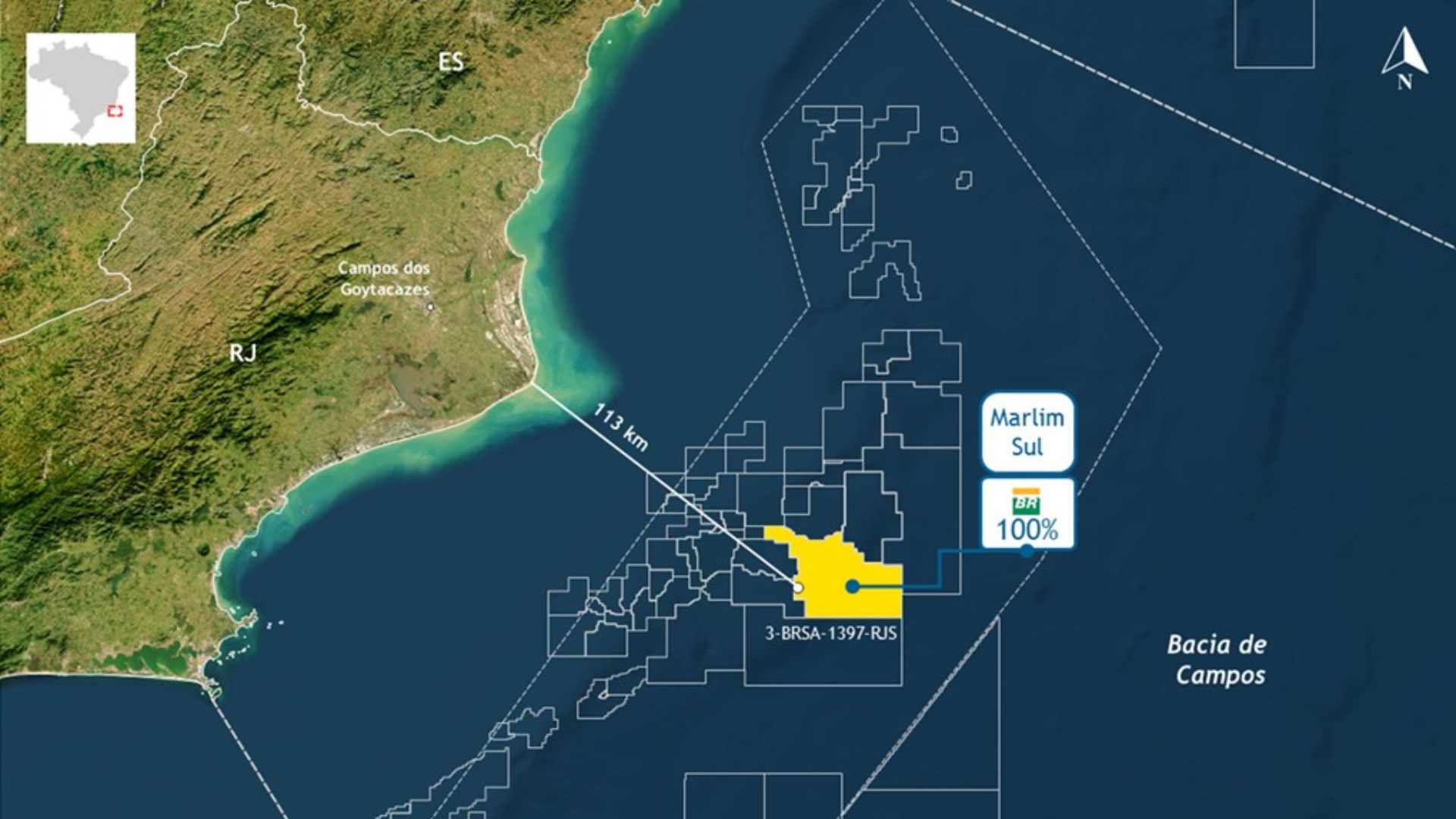
Petrobras finds high-quality oil in the pre-salt at 113 km from RJ and reignites expectations about strategic reserves in the Campos Basin.

-
Ocyan opens registrations for startups focused on innovation in the oil and gas sector and will select projects for Innovation Day with the support of Nexio.

-
Petrobras announces new oil discovery in the pre-salt of the Campos Basin and reinforces Brazil’s prominence with high-quality reserves that can increase production and energy revenues.
-
Alert in the fuel market: Analysts and a former director of ANP warn that oil prices may worsen in the coming months due to global instability.
Discussions about the pre-salt, the future of national reserves, and the energy transition are not new, but this recent discovery sheds new light on the sector’s next steps.
Equatorial Margin Reserves: A Potential of 5.6 Billion Barrels
According to geophysicist Sérgio Sacani, the exploration potential of the Equatorial Margin may reach 5.6 billion barrels of oil, which would signify a true revolution in the sector.
He explained in an interview with the Irmãos Dias Podcast that this new frontier of Brazilian oil has the capacity to secure future production and avoid an energy crisis that could occur starting in 2027, when pre-salt reserves begin to decline.
“The pre-salt will enter depression in 2027. If we do not discover and produce more, we will face a significant energy deficit,” Sacani warned.
This statement reflects a growing concern about Brazil’s ability to maintain high production levels in the coming years, as global oil consumption remains high.

Petrobras’s Race for the Equatorial Margin
Petrobras, the main oil operator in Brazil, is already heavily investing in the exploration of the Equatorial Margin.
Between 2024 and 2028, the company will allocate US$ 3.1 billion for this new exploration frontier, hoping to find new oil wells that can sustain national production in the long term.
According to Petrobras, this new reserve is essential for Brazil’s energy security and could also significantly contribute to the transition to a green economy, as part of the resource will be allocated to sustainability programs.
However, exploration will not be simple. There are many challenges to overcome, such as the geological complexity of the region and the proximity to the mouth of the Amazon River, which brings serious environmental implications.
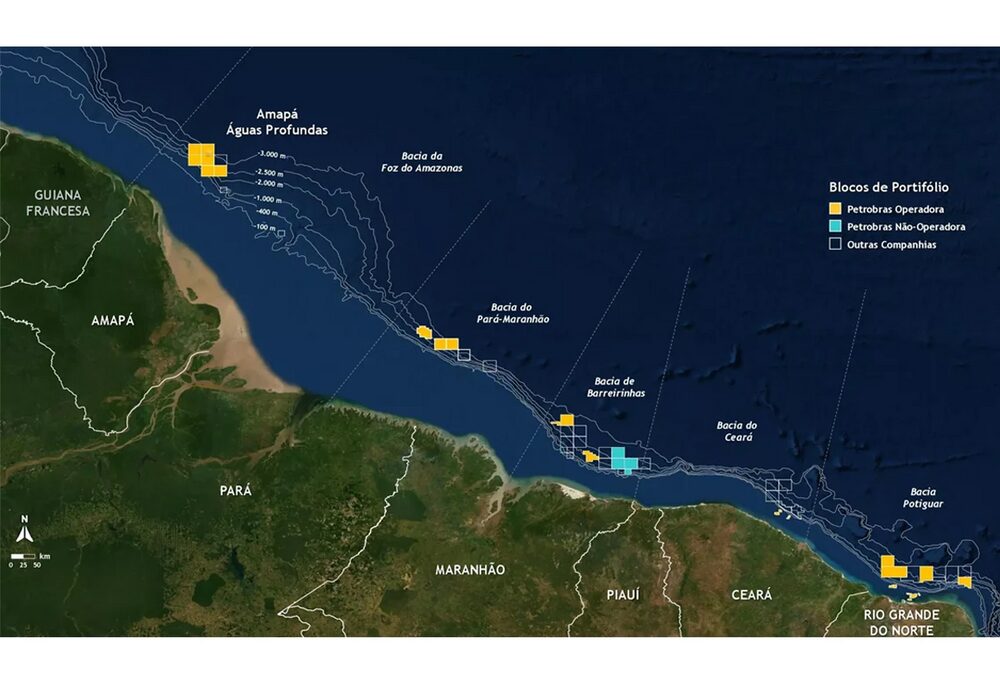
Ibama has already green-lighted drilling in some blocks in the Potiguar basin, but there are still pending issues regarding the FZA-M-59 block, located in the Amazonas River Delta Basin.
Economic and Environmental Impact: A Delicate Balance
According to the latest data, the FZA-M-59 block is still undergoing environmental evaluation and awaits licenses that will allow exploration.
This block could represent a 37% increase in Brazil’s reserves, which are currently estimated at 14.8 billion barrels. If this estimate is confirmed, the economic impact will be enormous, not just for the region, but for the entire country.
Sérgio Sacani compared the impact that similar oil reserves had in other countries. He cited the example of French Guiana and Suriname, whose GDPs grew by 62% and 40%, respectively, due to the discovery of oil.
“The impact on the local economy can be gigantic,” said Sacani, emphasizing that the state of Amapá, where the Equatorial Margin is located, could benefit immensely from this new era of exploration.
On the other hand, the environmental impact cannot be ignored. Environmentalists and NGOs have raised alarms about the risks of exploration in the Amazon River Delta region, an area of great biodiversity.
Ibama and other regulatory bodies are under pressure to ensure that drilling occurs sustainably.
There are criticisms regarding the speed at which environmental approvals are being granted, with fears that economic interests are taking precedence over environmental preservation.
The Future of Brazil: Between Oil and Sustainability
Besides the economic impact, this discovery offers a new perspective on Brazil’s energy transition.
The Equatorial Margin emerges as a crucial opportunity to ensure oil supply while simultaneously financing clean energy initiatives.
Petrobras has indicated that part of the resources from this new reserve will be allocated to programs aimed at accelerating the transition to a green economy.
However, Brazil finds itself at a crossroads. The country could become even more dependent on fossil fuel extraction or, conversely, use this newly discovered wealth to diversify its energy matrix.
The Brazilian government, together with Petrobras, needs to decide how far this new frontier will be explored and what the long-term impacts will be.
Today, the international scenario also influences decisions. Global oil prices are volatile, with the war in Ukraine and sanctions against major producers impacting global supply.
Brazil has the chance to take a prominent place in this market, but environmental pressures, especially in areas like the Amazon River Delta, may hinder progress.
Is the Opportunity in Brazil’s Hands?
With the discovery of the Equatorial Margin, Brazil may have found the key to securing its energy independence for decades.
But the challenge now is to reconcile oil exploration with environmental responsibility and the transition to a sustainable economy.
Petrobras has already shown that it is ready to advance, but is the country prepared to face all the obstacles that will arise along the way?
Do you believe that this new discovery can really guarantee Brazil’s energy security in the coming decades, or do you think the country will miss this opportunity? Leave your opinion in the comments!







Entendi como corretíssima a colocação da atual presidenta da Petrobras Magda Chambriard que a avaliação da prospecção nas costas do Amapá está atrasada dez anos, e em continuar insistindo na prospecção na região Equatorial por contribuindo para o desenvolvimento econômico do país.
Temos um gravíssimo entendimento errôneo de interpretação de dados, muitas vezes utilizado por alguns por desconhecimento, outros maliciosamente por serem analfabetos funcionais, uma vez que o termo “Foz do Amazonas”, conforme está claramente indicado em quaisquer mapas geológicos simplesmente está omitida de forma sorrateira todas as múltiplas áreas extratoras existentes após a divisa da costa da Guiana Francesa, denomina uma vasta bacia sedimentar que se estende pela plataforma continental entre os estados do Amapá e Pará. Caberia ao setor de comunicações da Petrobras e as referidas profissionais, esclarecerem que da forma como está sendo divulgado o ponto de sondagem e perfuração NÃO se situa conforme equivocadamente anunciado na “Foz do Rio Amazonas”, mas sim a mais de 560 km dela, a ~175 km da costa do Amapá no hemisfério Norte e em torno de menos de 50 km de áreas já produtoras existentes na divisa da costa da Guiana Francesa.
Vale lembrar que o presidente Macron da França tem usado de toda sua influência de forma veemente para postergar e bloquear a entrada do Mercosul na União Europeia, tem se utilizado dos mais absurdos e infundados argumentos ambientalistas, e não seria surpresa que estivesse financiando estes ambientalistas de araque!