





 Português
  Inglês
  Espanhol
  5 min de leitura
  9 comentários


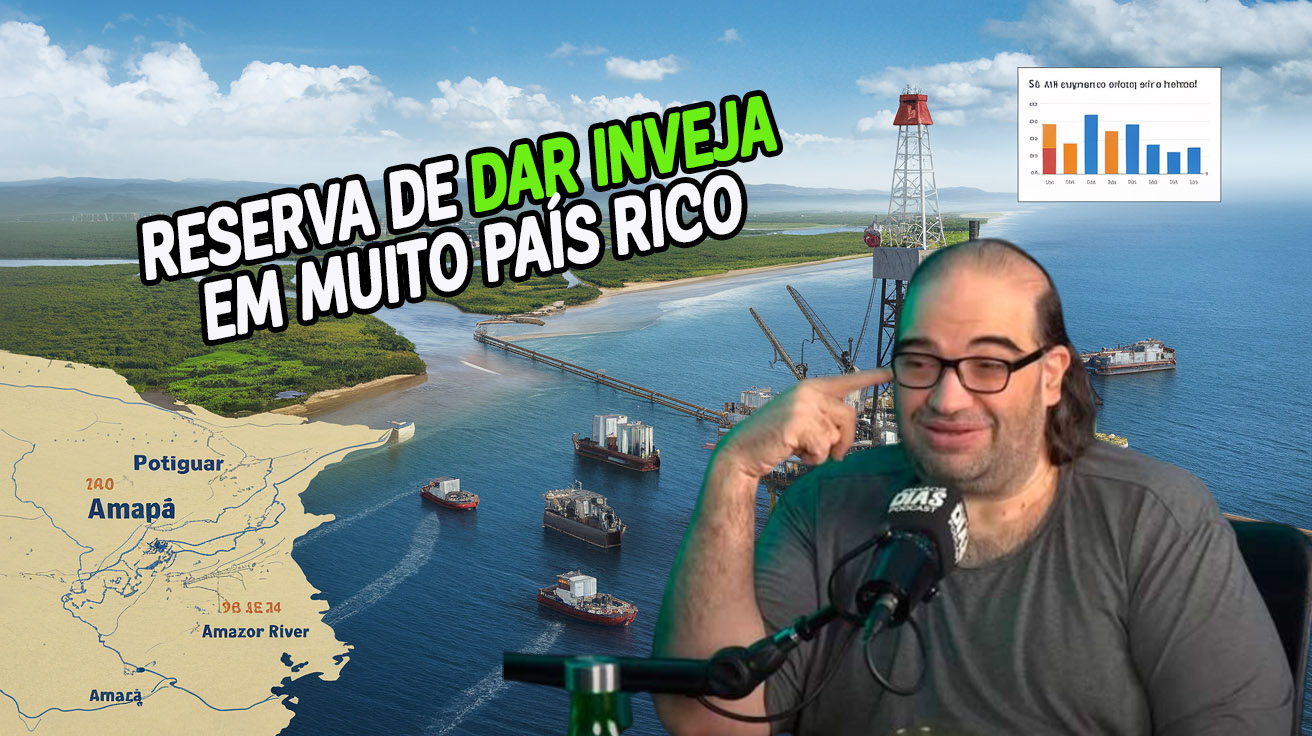


A Discovery in the Equatorial Margin, With Potential of Up to 5.6 Billion Barrels of Oil, Promises to Revolutionize Brazil’s Energy Sector. Sérgio Sacani Highlights the Economic and Strategic Impacts as Petrobras Invests in Sustainability and Energy Transition. Is the Country Ready to Harness This Wealth and Face Environmental Challenges?
In the vast ocean that washes the Brazilian coastline, a discovery that promises to transform the country’s energy future is generating expectations and excitement.
An oil reserve in the Equatorial Margin, with potential of up to 5.6 billion barrels, emerges as a watershed for the economy and national energy security.
According to renowned geologist and YouTuber Sérgio Sacani, this reserve, located along the Equatorial Margin, has the potential to be double that of the pre-salt — a historic milestone in Brazilian oil production.
-
Offshore industrial demand in Macaé skyrockets with the recovery of oil and gas and could grow by up to 396% by 2026 in the Campos Basin.
-
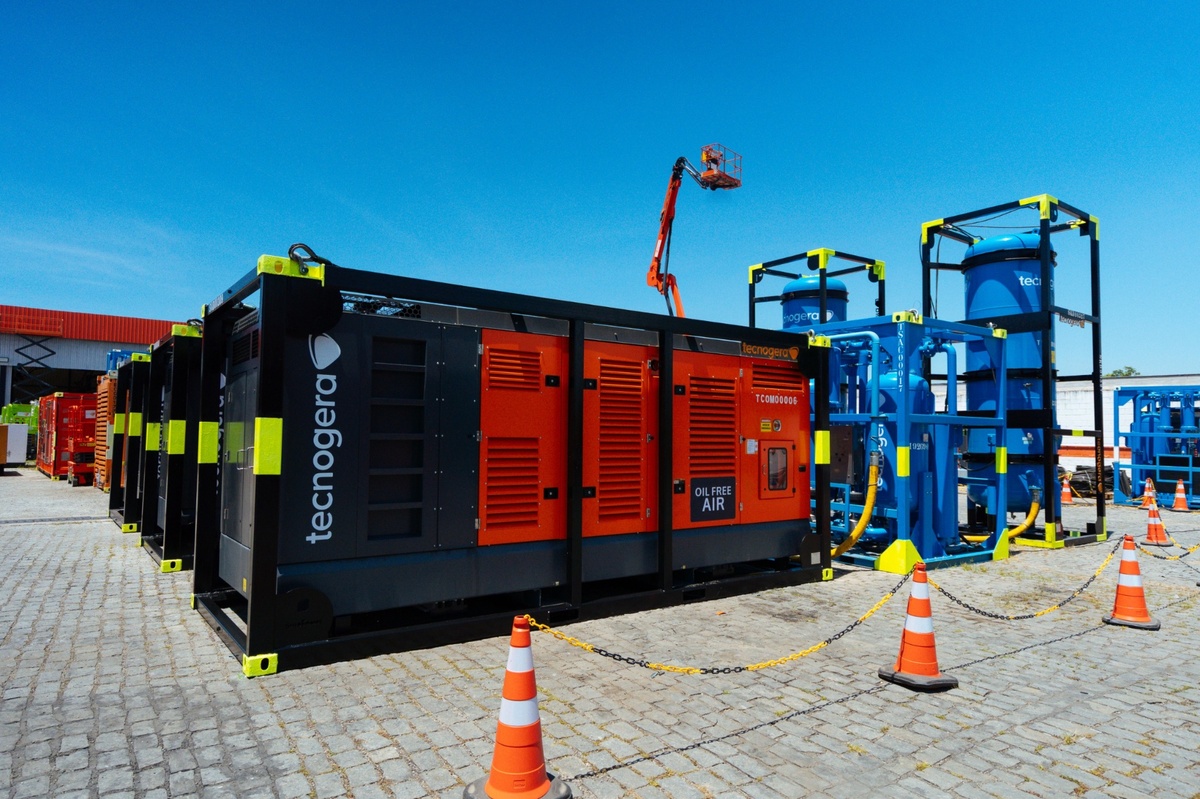
Brazilian city gains industrial hub for 85 companies that is equivalent to 55 football fields.

-
Peugeot and Citroën factory in Argentina cuts production by half and opens a layoff program for more than 2,000 employees after Brazil drastically reduced purchases of Argentine vehicles.

-
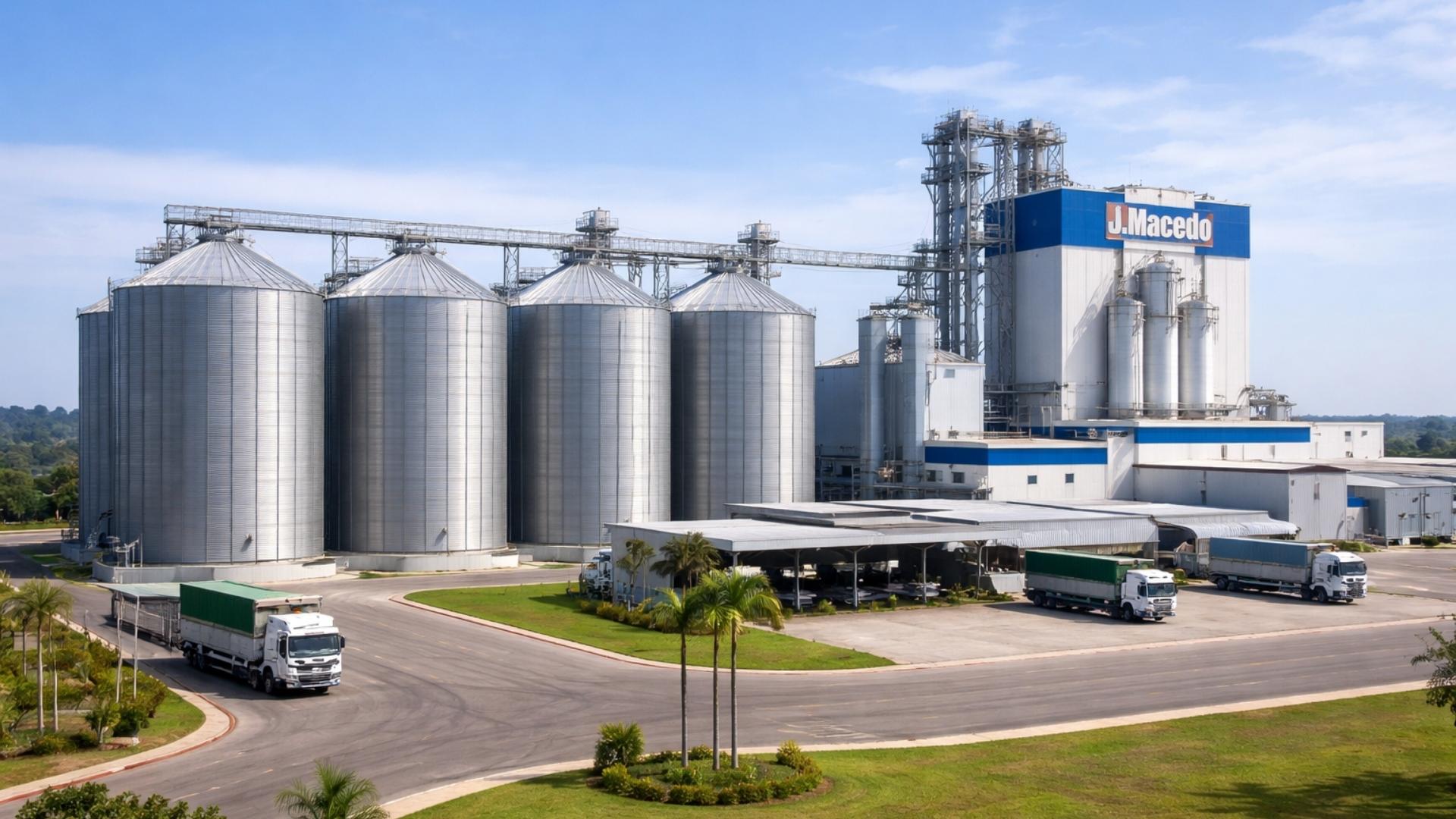
A Brazilian city gains a factory worth R$ 300 million with the capacity to process 200 thousand tons of wheat per year, a mill of 660 tons/day, silos for 42 thousand tons, and an industrial area of 276 thousand m².

In an interview with the Irmãos Dias Podcast, Sacani explained that this discovery could not only ensure the supply of the domestic market but also bring significant impacts to the regional economy.
“Every oil field has a production curve, a peak, and then starts to decline. The pre-salt is expected to enter depression by 2027. If we don’t find anything and don’t start producing, we will have to import oil, and the price could skyrocket,” said Sacani.
The Equatorial Margin and Its Strategic Importance
The Equatorial Margin, located between the states of Rio Grande do Norte and Amapá, is considered Brazil’s new exploratory frontier.
Petrobras is investing heavily in the region, with a business plan of US$ 3.1 billion by 2028.
These resources will be used for research and drilling that, if successful, could add up to 37% to the national oil reserves, currently estimated at 14.8 billion barrels.
Internal studies indicate that only the FZA-M-59 block, in the Amazonas River Basin, may contain the announced volume of 5.6 billion barrels.
Furthermore, data from January 2025 reveal that Petrobras has increased its investment in cutting-edge technology to reduce environmental risks of drilling in the region, including the use of advanced sensors to monitor sensitive ecosystems.
However, exploration depends on environmental licenses, as the area is considered sensitive due to its proximity to the Amazon River mouth.
In 2024, Ibama authorized drilling in blocks of the Potiguar Basin, but the release of FZA-M-59 still faces resistance.
The state-owned company also announced in January 2025 the creation of a task force to expedite obtaining the necessary licenses, focusing on more transparent dialogue with local communities and environmental organizations.
The Equatorial Margin, located between the states of Rio Grande do Norte and Amapá, is considered Brazil’s new exploratory frontier.
Petrobras is investing heavily in the region, with a business plan of US$ 3.1 billion by 2028.
These resources will be used for research and drilling that, if successful, could add up to 37% to the national oil reserves, currently estimated at 14.8 billion barrels.
Internal studies indicate that only the FZA-M-59 block, in the Amazonas River Basin, may contain the announced volume of 5.6 billion barrels.
However, exploration depends on environmental licenses, as the area is considered sensitive due to its proximity to the Amazon River mouth.
In 2024, Ibama authorized drilling in blocks of the Potiguar Basin, but the release of FZA-M-59 still faces resistance.


Sérgio Sacani Gave a Complete Lesson on Oil Production in Brazil – IRMÃOS PODCAST
Economic and Environmental Impacts
Sérgio Sacani also highlighted the economic impact that the Equatorial Margin could bring to Brazil.
He compared the results obtained by neighboring countries, such as Guyana and Suriname, which saw their GDPs grow exponentially after similar discoveries.
“Guyana’s GDP increased 62% in 2024 due to oil, and Suriname’s grew over 40%. We have a great opportunity in front of the state of Amapá, but it’s a challenge as it is close to the mouth of the Amazon River,” he pointed out.
On the other hand, exploration in the region faces criticism from environmentalists, who warn of the environmental impacts at the mouth of the Amazon River, one of the richest and most sensitive ecosystems in the world.
Concerns include potential oil spills and interference in crucial marine habitats for endangered species.
To address these issues, Petrobras announced measures such as the construction of two Wildlife Rehabilitation and Oil Dispersal Centers (CRD), which will be operational in 2025, and the use of advanced technology for real-time environmental monitoring.
Additionally, the state-owned company intensified dialogue with non-governmental organizations and local communities to minimize socio-environmental impacts.
The proximity to sensitive marine ecosystems and the biodiversity at the mouth of the Amazon River requires stringent mitigation measures.
As part of these requirements, Petrobras announced in December 2024 the construction of two Wildlife Rehabilitation and Oil Dispersal Centers (CRD), which are expected to be inaugurated in 2025 in the states of Pará and Amapá.
Energy Transition and Future of Brazil
The new reserve represents not only an economic opportunity but also a pillar in the transition to a greener economy.
Petrobras has already announced plans to invest part of the revenues obtained from this exploration into carbon capture projects and the development of technologies for renewable energies, such as offshore wind and solar.
In 2025, the state-owned company inaugurated a pilot program for repurposing decommissioned platforms, transforming them into bases for installing wind turbines, a pioneering initiative in Latin America.
Although oil remains one of the primary sources of energy, exploration could also fund the development of renewable sources.
Petrobras plans to invest part of its profits from the Equatorial Margin into carbon capture and storage projects, as well as wind and solar energies.
These initiatives seek to align the company’s objectives with global commitments to reduce emissions.
Equatorial Margin Has the Potential to Revolutionize the Brazilian Energy Sector
The discovery in the Equatorial Margin has the potential to revolutionize the Brazilian energy sector, but it requires planning and responsibility.
The balance between economic development and sustainability will be crucial for Brazil to harness this wealth without compromising its environment.
Sérgio Sacani summarizes this vision by saying: “This discovery is a unique opportunity for us to lead energy production responsibly, ensuring a more prosperous future for generations to come.”
And you, do you believe Brazil is ready to tackle this challenge and make the most of the new reserve? Leave your opinion in the comments!








A Petrobras vai conseguir, com certeza, explorar petróleo na margem equatorial. Se o **** **** tivesse sido reeleito, hoje a Petrobras não existiria mais e o que é mais assustador é temos petroleiros, até hoje defendendo o **** **** e sua quadrilha. Realmente o que é assustador é a desinteligenci a natural de petroleiros, ” metendo o ****” no governo lula. Parabéns presidente Lula e sua equipe por defender,investir e manter a Petrobras do Brasil e dos brasileiros. SEM ANISTIA PRO **** **** E SUA QUADRILHA.
ULtimamente só se falam sobre essas grandes descobertas de petroleo ouro gás , É promesas é mais promesas …de um futuro promissor ! ,mas nimguém vê melhorias em PO… NEM UMA EM
A Petrobras informou ao mercado vai recorrer do indeferimento do Ibama do processo de licenciamento ambiental do Bloco FZA-M-59, localizado em águas profundas no Amapá, na Amazônia.
A empresa brasileira de petróleo e gás vai pedir a reconsideração da decisão em âmbito administrativo. “A Petrobras entende que atendeu rigorosamente todos os requisitos do processo de licenciamento, e todos os recursos mobilizados no Amapá e no Pará para a realização da Avaliação Pré-Operacional (simulado para testar os planos de resposta à emergência) foram feitos estritamente em atendimento a decisões e aprovações do Ibama”, diz a nota da entidade. O Ibama negou licença para a estatal perfurar na foz do rio Amazonas, sobretudo porque alegou a empresa não apresentou garantias para preservar a fauna local.
A empresa destacou, no comunicado, que o desenvolvimento deste bloco é um compromisso assumido pela Petrobras perante a ANP, “que incorrerá em multa contratual caso não seja realizado”. Tratando-se de um projeto é importante para o desenvolvimento da Margem Equatorial brasileira, reconhecendo a importância de novas fronteiras para garantir a segurança energética do país e os recursos necessários para a uma mudança justa e sustentável.