





 English
  Francês
  Alemão
  Italiano
  Japonês
  Norueguês
  Portuguese
  Spanish
  5 min of reading
  0 comments


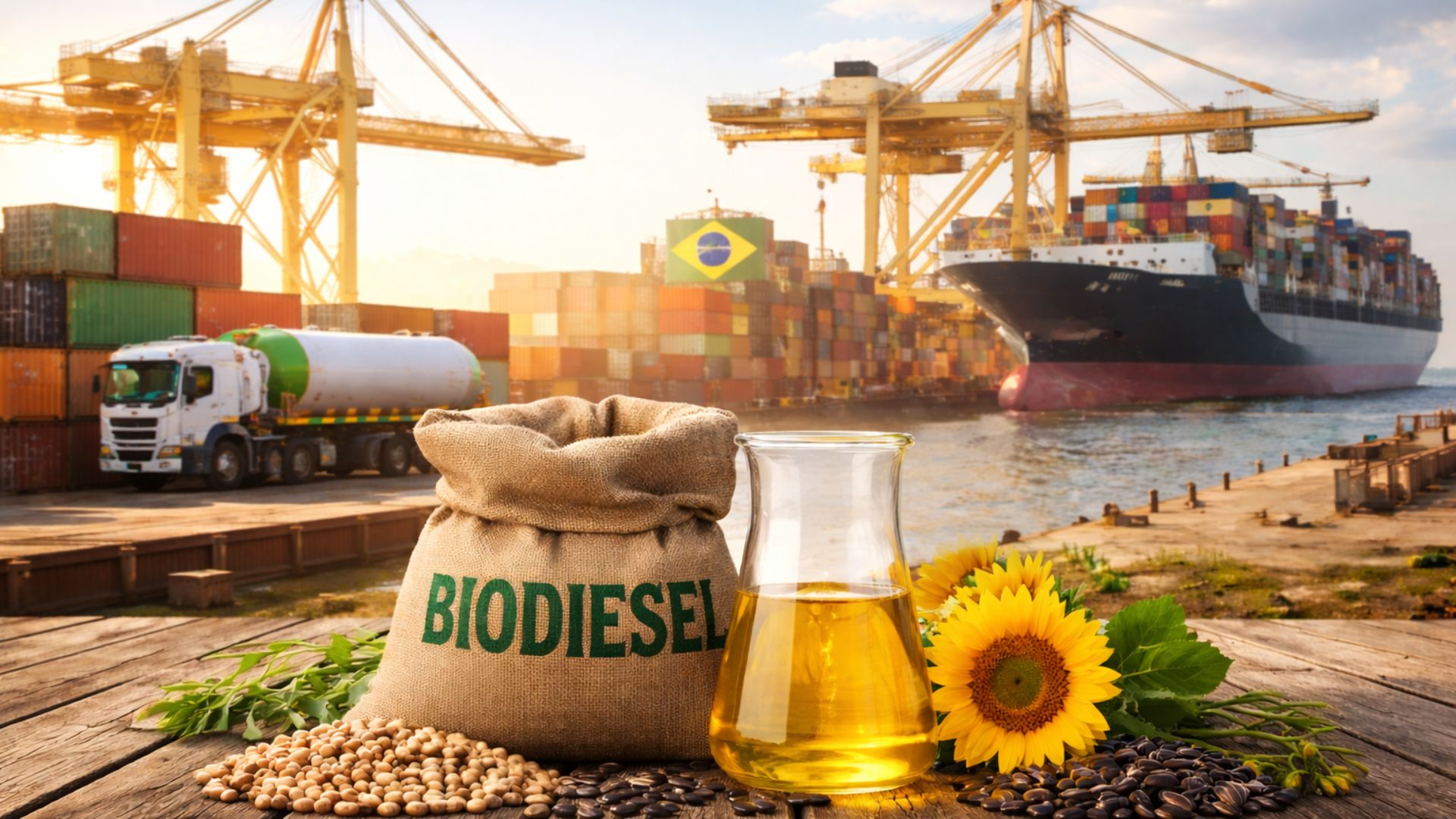
Entities in the Biodiesel Sector Warn That Market Opening May Affect National Production, Reduce Investments, and Compromise Energy Security in a Context of Debate on Biodiesel, Biofuels, and Imports in Brazil.
In 2025, with the conclusion of Public Consultation No. 203/2025 from the Ministry of Mines and Energy (MME), the debate on the possible liberalization of imports in Brazil of up to 20% of biodiesel consumed domestically gained relevance in the energy sector.
According to an article published by CNN Brazil and other media outlets on Tuesday (21), the proposal prompted an immediate reaction from the Parliamentary Front for Biodiesel (FPBio), which began to warn of structural risks to national production, investments, industry competitiveness, and the country’s energy security.
Biodiesel and Imports in Brazil at the Center of Regulatory Debate
Brazil does not face a risk of biodiesel supply shortages, according to data and statements from FPBio itself. Nevertheless, the market opening occurs at a sensitive time, marked by the increase in the blending mandate, recent price volatility, and the consolidation of a public policy built over more than two decades. The topic divides the federal government and is to be analyzed by the National Energy Policy Council (CNPE).
-
Brazil accelerates decarbonization in the South: International forum in Foz do Iguaçu gathers leaders to discuss the advancement of biomethane in the energy matrix and the potential of “caipira pre-salt.”
-
As diesel prices soar due to conflicts in the Middle East, a Brazilian city decides to test a little-known biofuel that promises to completely replace fossil fuel without adaptation and could change the future of energy in the country.
-
Innovation with biofuel engines transforms agribusiness by replacing diesel without the need for major adaptations, ensuring energy efficiency and helping to reduce dependence on oil.
-
Used Cooking Oil Transforms Into Kerosene: How 1 Million Tons of Used Fat Are at the Center of an Aviation Fuel Market That Could Attract Over $1 Trillion in Investments, Already Fuels Planes with Up to 80% Lower Emissions, and Triggered a Global Competition for This Waste


Public Consultation No. 203/2025 discusses changes to the rules that currently limit the imports in Brazil of biodiesel, evaluating the possibility of allowing up to 20% of the national demand to be supplied by foreign products. Proponents of the measure argue that the opening would expand competition and increase the market’s contestability, potentially impacting diesel B prices.
However, FPBio argues that the measure ignores the reality of the national Biodiesel industry, which already has enough production capacity to fully meet domestic market demand. The sector operates with an estimated idle installed capacity of around 50%, which, according to the entity, eliminates any structural risk of supply shortages.
Furthermore, the debate occurs alongside the strengthening of the national biofuels program, which raised the blending mandate to 15% in 2025, naturally increasing demand for domestic products.
Biodiesel, Fuel Law of the Future, and Regulatory Predictability
One of the main points raised by FPBio is the incompatibility of the proposal with the Fuel Law of the Future (Law No. 14,993/2024). The legislation establishes clear guidelines to encourage national Biodiesel production and other biofuels, focusing on regulatory predictability, legal security, and attracting long-term investments.
Regulatory predictability is one of the pillars of capital-intensive industries, such as biodiesel. Abrupt changes in market rules tend to increase the perceived risk among investors, affecting decisions related to capacity expansion, technological modernization, and innovation.
According to FPBio, broad liberalization of imports in Brazil may undermine this regulatory environment, disorganizing a sector that relies on long-term planning and regulatory stability to maintain its competitiveness.
Economic Impacts of Imported Biodiesel on National Production
Brazil is among the largest global producers of Biodiesel, with a diversified and consolidated production chain. National production primarily uses soybean oil, beef tallow, and other regional raw materials, integrating thousands of rural producers into the biofuels market.
Indiscriminate opening to imports may pressure the margins of national plants, reduce incentives for new investments, and compromise expansion and industrial modernization projects. In a scenario of competition with imported products, the national industry may face regulatory, environmental, and tax asymmetries.
Moreover, a reduction of local industrial activity tends to generate indirect effects on employment, income in rural areas, and regional revenue, amplifying the economic impacts beyond the energy sector.
Energy Security and Strategic Risks of Imports in Brazil
FPBio emphasizes that the debate cannot be limited to short-term pricing logic. Energy security is a strategic element, especially in an international scenario marked by geopolitical instabilities, regional conflicts, and volatility in global energy markets.
By increasing external dependence through imports in Brazil, the country may become more vulnerable to supply shocks, exchange rate fluctuations, and logistical restrictions. Maintaining strong domestic production is a way to reduce risks and ensure energy resilience, especially in an already consolidated segment.
In this context, Biodiesel plays a relevant role in diversifying the energy matrix, reducing dependence on imported fossil fuels, and strengthening national sovereignty.
Positioning of Fuel Entities on Biofuels
Last Friday, the 16th, representative entities from the fuel sector released a joint statement advocating the end of restrictions on imports in Brazil of biodiesel. The document was signed by institutions such as IBP, Abicom, Brasilcom, Fecombustíveis, SindTRR, and Semov.
According to the entities, there would be no technical or economic justification for limiting access to additional supply sources, arguing that market opening would contribute to greater competitive discipline in the formation of diesel B prices. The positioning evidences the divergence between different sectors of the energy chain and reinforces the complexity of the decision to be made by the public authorities.
Division in the Government Regarding Biodiesel and Energy Security
The issue also exposes divergences within the federal government. While sectors of the Ministry of Mines and Energy advocate for maintaining protective mechanisms for national Biodiesel production, the Ministry of Finance has expressed support for market opening, from the perspective of competition and economic efficiency.
It is expected that the discussion will progress within the National Energy Policy Council, the body responsible for strategic decisions that directly impact energy policy and the country’s energy security.
The decision will have structural and long-term effects, influencing investments, supply, consumer prices, and the role of biofuels in the Brazilian energy matrix.
Biodiesel, Biofuels, and Social and Environmental Impacts
The Brazilian Biodiesel program is recognized for integrating economic, social, and environmental objectives. The expansion of biofuels contributes to the reduction of greenhouse gas emissions, job creation in rural areas, and strengthening of regional production chains.
Any significant changes to the sector’s rules need to consider these systemic impacts, avoiding decisions that prioritize immediate gains at the expense of structural benefits consolidated over decades.


What Is at Stake for the Future of Biodiesel in Brazil?
The alert from FPBio regarding the liberalization of imports in Brazil of biodiesel highlights that the debate goes beyond competition issues. What is at stake is the balance between market, industrial policy, energy security, and sustainable development.
Brazil has productive capacity, a diverse agricultural base, and a regulatory framework that has allowed the consolidation of one of the largest Biodiesel programs in the world. Preserving these assets is essential to ensure stability, predictability, and long-lasting economic and social benefits.
The decision to be made at CNPE will define the role of Biodiesel and biofuels in the future of the national energy matrix and the consolidation of the country’s energy security.








Seja o primeiro a reagir!