





 Português
  Inglês
  Espanhol
  4 min de leitura
  0 comentários


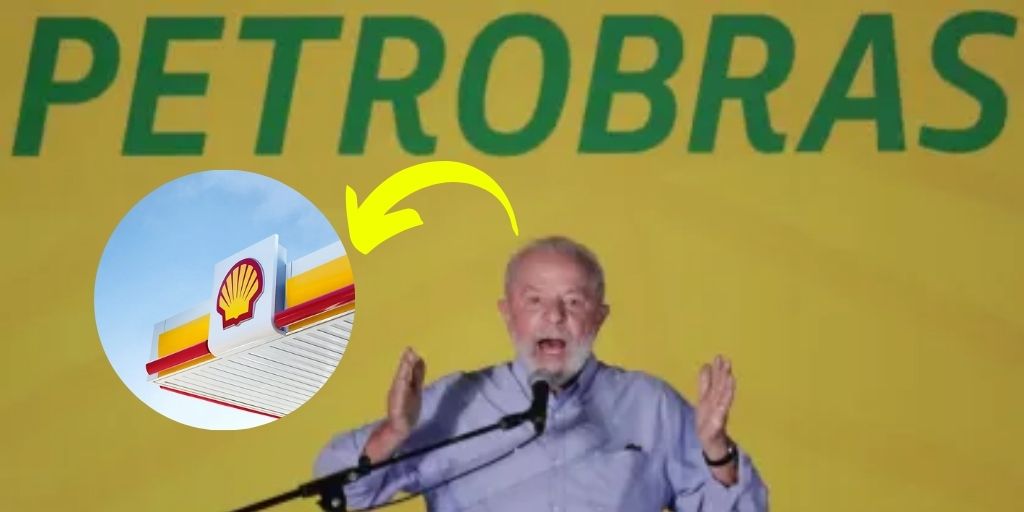
Lula Defends Meeting With Shell and Denies Contradictions in His Environmental Policy. The Future of Pre-Salt and the Role of Petrobras Are at Stake.
An uncertain future hangs over Petrobras and the exploration of the new Brazilian pre-salt. Is Shell, the oil giant, about to take the state-owned company’s place in Brazil’s most promising discovery?
With growing expectations about the economic impact of this new reservoir, President Luiz Inácio Lula da Silva’s response has caused a stir.
According to the Folha de S. Paulo newspaper, in a meeting, the Brazilian president directly discussed with Shell’s top executives in New York, raising doubts about Petrobras’s role and the future of the energy sector in the country.
-
Offshore industrial demand in Macaé skyrockets with the recovery of oil and gas and could grow by up to 396% by 2026 in the Campos Basin.
-
Offshore industrial demand in Macaé surges with the recovery of oil and gas and could grow by up to 396% by 2026 in the Campos Basin.
-
Brazilian giant expands borders in the Southeast: Petrobras confirms new oil discovery in ultra-deep waters in the pre-salt of the Campos Basin.

-
Alert in the global energy market: Severe tropical cyclone hits the coast and disrupts gas production at major plants in Australia, threatening global supply.


Lula’s meeting with Shell’s executives, which took place during his trip to the UN General Assembly, was not included on the official schedule of the president’s commitments, but was revealed later.
As the aforementioned newspaper reported, this strategic meeting brought to light an essential debate about Brazil’s energy policy and the intentions of the international company in exploring the equatorial margin, one of Brazil’s last unexplored oil frontiers.
What Did Lula Say About Shell’s Presence in Brazil?
Lula, during a press conference in New York, downplayed the criticisms regarding the meeting and denied any contradictions with his environmental speech.
He recalled Shell’s long history in Brazil, emphasizing that the company has been present in the country for over a hundred years. According to the president, the company operates “within the requirements of Brazil’s energy policy.”
The visit of Wael Sawan, Shell’s global president, and Cristiano Pinto, Shell Brazil’s president, to the Brazilian embassy in New York raised questions about the company’s intention to firmly position itself in the country’s new oil landscape.
As reported by BBC Brazil, Pinto had already publicly commented on the company’s interest in exploring the equatorial margin, which encompasses areas between Rio Grande do Norte and Amapá, a region of enormous untapped potential.
Petrobras or Shell: Who Will Dominate the New Pre-Salt?
According to Lula, there is no room for direct competition between Shell and Petrobras at this moment. He highlighted that Shell is Petrobras’s partner in 60% of the licensed wells in Brazil.
Moreover, the exploration of the equatorial margin, which is the focus of Shell’s interest, depends directly on government authorization. “She [Shell] will only go to the equatorial margin when the Brazilian government authorizes Petrobras to conduct research there,” Lula said.
As CPG has reported, Ibama is still reviewing Petrobras’s request to conduct research in the Foz do Amazonas Basin, and the expectation is that this decision could pave the way for joint exploration of the area. However, only after this approval will Shell be able to proceed with its operations in the region.
The Future of Fossil Fuels and Petrobras
The president also emphasized that, although the world is transitioning to alternative energy sources, fossil fuels will remain essential until there is global self-sufficiency in clean energy sources.
“It is necessary that when we talk about this, we point out how planet Earth will survive without fossil energy,” Lula stated.
Looking to the future, the president envisions a radical transformation of Petrobras, which should evolve from an oil-focused company to a broader energy company.
“When the oil runs out, Petrobras needs to be prepared to produce other forms of energy that Brazil and the world require,” he concluded.
What Is at Stake for Brazil?
Exploring the equatorial margin could represent a new economic leap for Brazil, positioning the country among the world leaders in the energy sector.
However, the decisions involving Petrobras, Shell, and the Brazilian government will define the pace of this change.
The political and environmental implications of these decisions are also enormous. Lula’s government has been pressured to find a balance between environmental protection and economically driven development through oil.
This issue will continue to spark intense debates in the coming months, especially as Brazil seeks to meet its environmental targets while exploring its vast oil reserves.
Do you believe Brazil should prioritize Petrobras as the leader in the exploration of the new pre-salt, or is partnering with international companies like Shell the best way to secure the country’s energy future?









Seja o primeiro a reagir!