





 Portuguese
  English
  Spanish
  5 min of reading
  0 comments


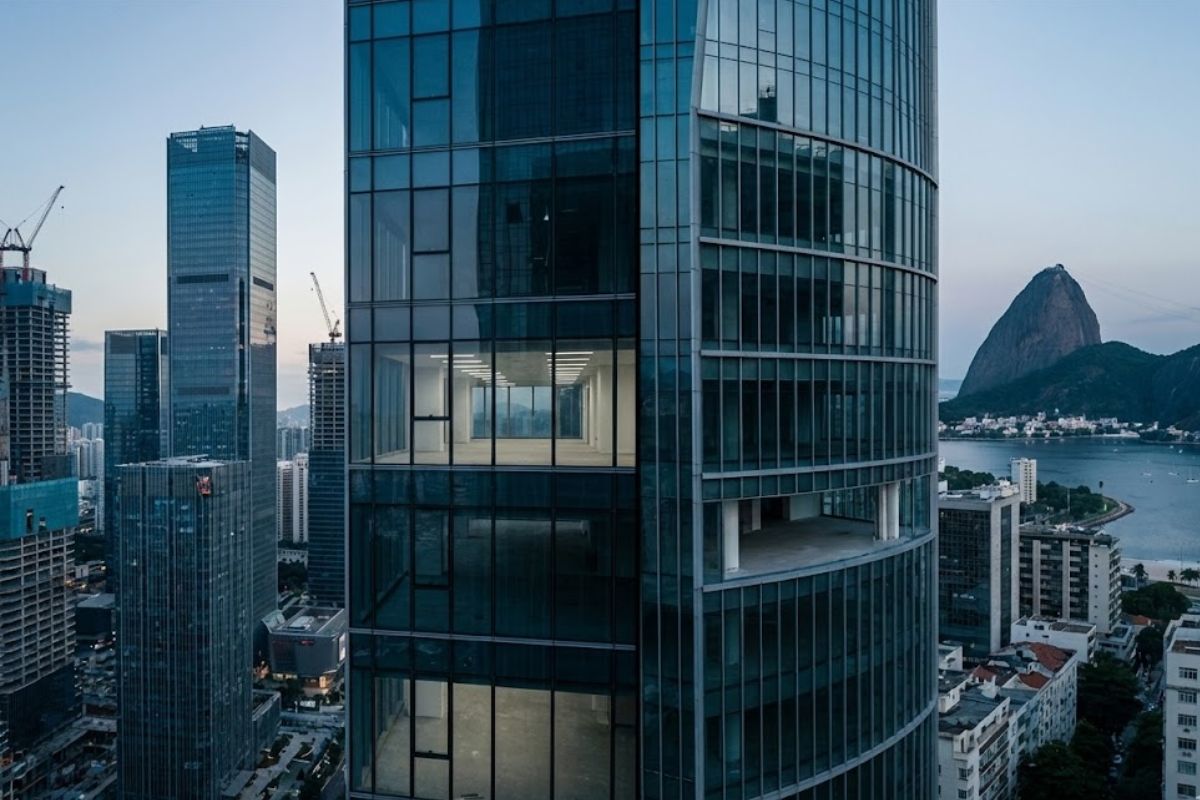
In The Heart Of China’s Silicon Valley, Shenzhen Coexists With Up To 31.6% Of Empty Class A Offices Following The Real Estate Boom, Offers Up To Five Years Of Zero Rent To Companies And Still Competes For Investments With Guangzhou, Suzhou, And Hangzhou, While Rio Suffers From 26.54% Vacancy And Revisits Crisis Traumas.
Shenzhen, known as the Silicon Valley of China, is experiencing in 2025 the most delicate phase of the real estate cycle that transformed it into the country’s technological showcase. Reports for the 3rd Quarter of 2025 show that up to 31.6% of Class A office spaces are vacant in the city, after years of accelerated construction and a significant expansion of office spaces well beyond current demand.
While the Chinese Silicon Valley tries to fill skyscrapers with aggressive incentives, such as zero rent for up to five years in industrial parks since the 1st half of 2025, Rio de Janeiro appears in the same measurements as the 2nd city with the highest vacancy among major global markets, with 26.54% of offices without tenants, still bearing the effects of the crisis that began in 2015.
From Fishing Village To Silicon Valley Of China
Forty years ago, Shenzhen was just a fishing village in Guangdong province, neighboring Hong Kong, with about 60,000 inhabitants in the 1980s.
-
Unemployment rises again to 5.8% at the beginning of 2026, raising alarms about the end of temporary positions and its impact on the Brazilian job market.

-
Document organization can cut invisible costs in small businesses, a simple step that prevents waste, rework, and losses in daily operations.

-
Chinese giant worth nearly R$ 4 billion that manufactures cables for electric cars, solar energy, and robotics wants to open a factory in SC.

-
Many employers do not know, but the law guarantees domestic workers a 25% increase in salary during trips, 50% for overtime, 20% for night shifts, and 17 additional benefits that can lead to labor lawsuits if not paid.


In 1980, the Communist Party of China decided to transform the area into a special economic zone, ensuring more budget autonomy, opening to foreign investment on a large scale, and relaxing internal migration, which had traditionally been controlled in the country.
The experiment worked. In just a few decades, the city became a metropolis with more than 17 million inhabitants and a GDP 10,000 times greater than 40 years ago.
In this environment, companies like Huawei, Tencent, and BYD established headquarters in Shenzhen, which came to be called the Silicon Valley of China, also attracting a chain of other technology companies and advanced services.
Office Boom And Vacancy Above Healthy Level
The economic transformation led to a race among construction companies for modern offices, especially in central areas and business hubs.
According to a survey by commercial real estate services manager Cushman & Wakefield, Shenzhen had 5.5 million square meters of Class A offices in 2019. By 2025, the supply reaches 8.8 million square meters, a jump of 60.7% in just seven years.
The problem is that demand did not keep pace with supply. Cushman & Wakefield estimates that in the 3rd Quarter of 2025, 29% of Class A offices were vacant in Shenzhen.
Meanwhile, consulting firm Savills points to an even more critical scenario, estimating a 31.6% vacancy rate in the same period.
For the commercial real estate market, a vacancy rate considered healthy is around 20%, well below the levels currently recorded in the so-called Chinese Silicon Valley.
In practice, this means entire floors are empty in new buildings, pressure on rental prices, and landlords competing on discounts and benefits to attract or retain tenants.
The combination of accelerated stock growth with a moment of greater selectivity from companies helps explain the current excess of empty offices.
Zero Rent For Five Years And War Between Chinese Cities
To tackle the excess of vacant units, Shenzhen launched, in the 1st half of 2025, a plan allowing zero rent in some industrial parks for up to five years for companies willing to settle in the city.
The idea is to transform the Silicon Valley of China into an even more attractive hub, reducing the initial cost for new projects and expanding the base of corporate tenants.
However, this strategy is not exclusive to Shenzhen. Other major Chinese cities, such as Guangzhou, Suzhou, and Hangzhou, have adopted similar policies of incentives and discounts, creating a kind of regional benefits war.
Instead of competing only with centers in the United States or Europe, the Chinese Silicon Valley competes for technology, capital, and talent with its own neighbors.
This scenario makes the recovery of occupancy slower. Even with zero rent and high-quality buildings, companies may opt for competing cities in search of a more favorable combination of cost, logistics, skilled labor, or quality of life, prolonging the phase of high vacancy in Shenzhen’s buildings.
Rio de Janeiro Has 26.54% Of Empty Offices And Is Vice-Leader In Vacancy
On the other side of the world, Rio de Janeiro appears on the same map as Cushman & Wakefield as the 2nd city with the highest vacancy among some of the main corporate markets analyzed, with 26.54% of empty offices, only behind Shenzhen.
In the case of Rio, however, the storyline is different from the Chinese Silicon Valley. The deputy director of leasing at Abadi, Marco Freitas, explains that the commercial real estate market in Rio has been under stress since 2015, when the economic crisis led many companies to close or downsize their offices.
Between the end of 2017 and 2018, the vacancy rate reached around 45%, almost half of the office stock without occupancy.
Even with some improvement since then, the current level of 26.54% is still very high and places the city among the worst performers in the world in terms of corporate space occupancy.
High Interest Rates, Remote Work, Violence, And Inflation Delay The Recovery In Rio
According to Freitas, a series of factors helps keep Rio stalled. Among them are high interest rates, which make long-term investments more expensive and discourage new contracts and office expansions; the effects of the covid-19 pandemic, which solidified remote work and reduced the need for large physical spaces; and urban violence, which weighs on companies’ decisions about where to concentrate teams and operations.
The expert describes a true “exodus of companies” leaving Rio over the last decade, a process the city is still trying to recover from.
Today, inflationary pressure combined with high interest rates continues to affect corporate investment plans, delaying a more robust recovery of occupancy, even in well-located areas.
While the Chinese Silicon Valley tries to entice new companies with years of zero rent and state-of-the-art offices, Rio struggles to reverse the image of a risky market and regain the confidence of investors and occupants, still marked by the 2015 crisis and years of vacancy near 45%.
From China’s Silicon Valley To Rio: Two Crises, One Same Challenge
Despite different trajectories, Shenzhen and Rio de Janeiro reflect the same challenge: how to rebalance markets that have grown too much or suffered deep shocks.
On one side, China’s Silicon Valley is trapped by an excess supply created by the real estate boom and the bet on continuous growth; on the other, Rio faces decades of economic crisis, insecurity, and changes in the work model.
In both cases, those deciding whether to invest in new corporate offices are scrutinizing cost, security, growth prospects, and public policies.
And while mirror towers remain empty, both in Shenzhen and in the Rio capital, the question remains whether current incentives will be enough to inaugurate a new cycle of more stable occupancy.
In your opinion, which city is closer to finding a sustainable solution to vacancy, China’s Silicon Valley or Rio de Janeiro, and why?










-

-

3 pessoas reagiram a isso.