





 English
  Francês
  Alemão
  Italiano
  Japonês
  Norueguês
  Portuguese
  Spanish
  4 min of reading
  0 comments


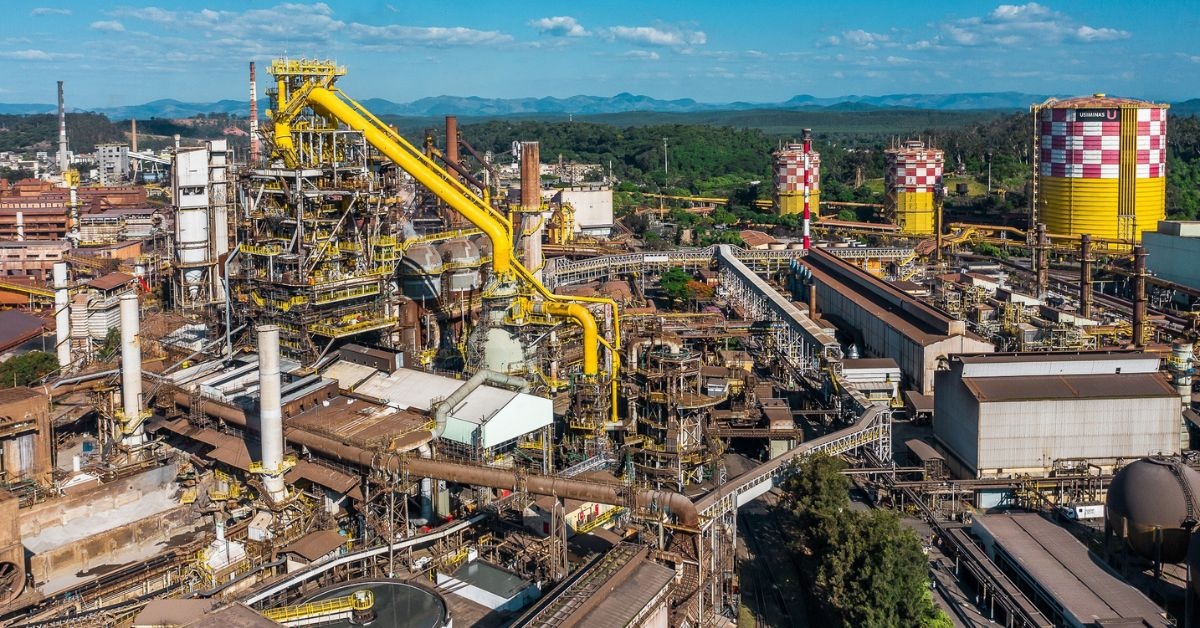
Results of the Third Quarter of 2025 Show Increase in Volumes, Cost Control, and Gradual Recovery of Margins, Even with Pressure from Imports and Uncertainty Regarding Trade Defense Measures
A relevant recovery marked Brazilian steelmaking in the third quarter of 2025, even in a scenario surrounded by increasing imports, pressured international prices, and uncertainties regarding trade defense policies. Between July and September 2025, the financial results of the country’s main steel producers indicated consistent increase in volumes, reduction in operational costs, and gradual improvement of margins when compared to the beginning of the year.
This performance occurred primarily because domestic demand remained strong throughout the period. Segments such as civil construction, infrastructure, and part of agribusiness sustained steel consumption, allowing companies to expand production and better utilize their installed capacity, even in the face of an adverse external environment.
Operational Growth Sustains Margins in the Quarter
The reports released between October and November 2025 showed that, despite the pressure on prices, steelmakers managed to protect their margins. This was mainly possible through efficiency gains, logistical adjustments, and strict control of industrial expenses. Thus, throughout the third quarter, margins were at a level higher than that recorded in the first half of 2025.
-
Recent Studies on Ancient Metallurgy Reveal That Various Tools Made Over Three Thousand Years Ago Used Iron from Rare Material That Fell from the Sky Long Before Humanity Mastered Iron Production

-
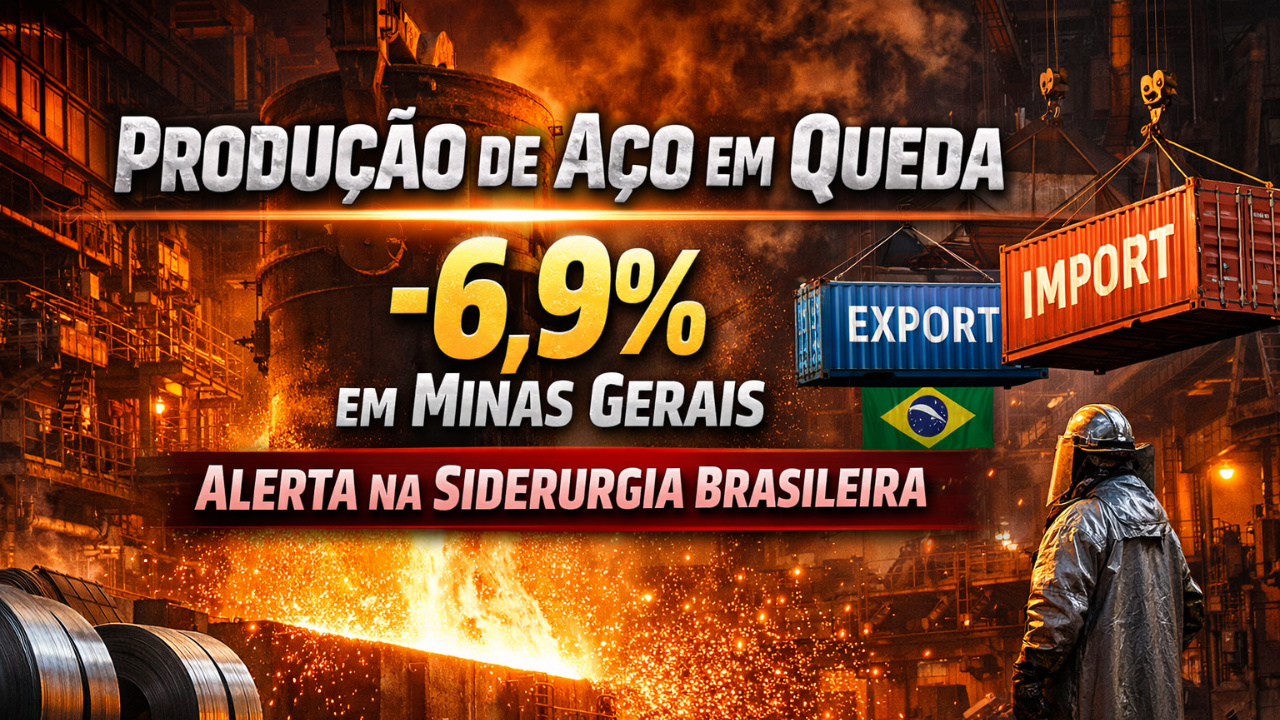
Steel Production Falls 6.9% in Minas Gerais, Raising Alert in Brazilian Steel Industry
-
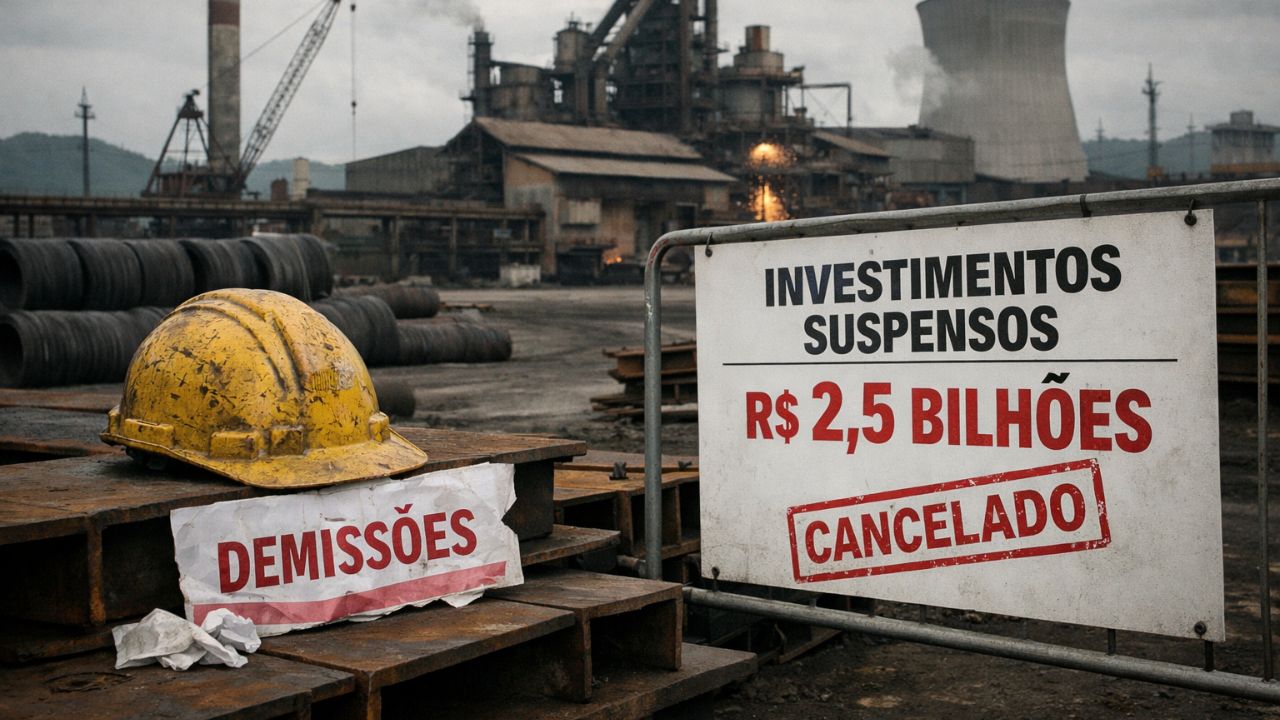
Brazil’s Steel Industry Records Cut of 5,100 Jobs and Suspension of R$ 2.5 Billion in Investments
-
Predatory Steel Imports Accelerate Brazilian Deindustrialization
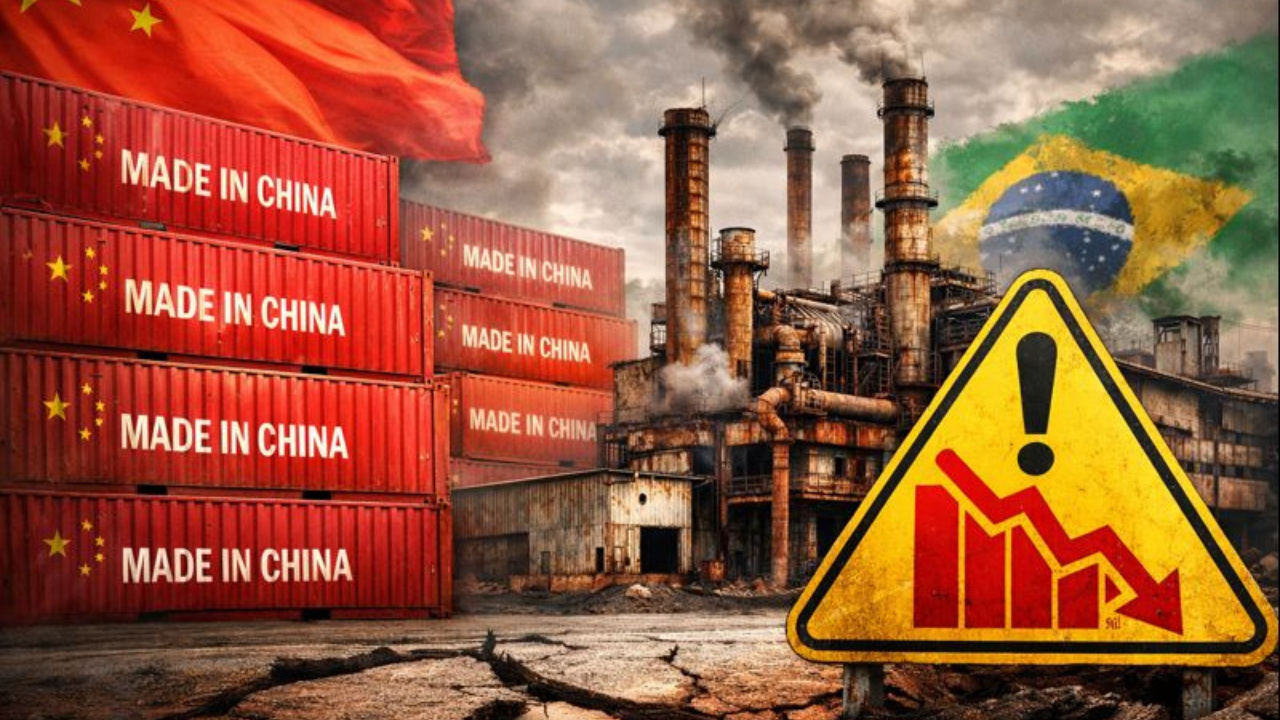

Moreover, as indicated by the quarterly reports, the combination of higher volumes and lower costs partially offset the impact of imported steel sold at lower prices in the domestic market. Nevertheless, companies highlighted that this improvement occurred within well-defined limits and does not represent a complete structural recovery.
Imports Pressure Competitiveness of Domestic Steel
Despite the operational advancement, imported steel continued to be the main pressure factor on the sector. Since the beginning of 2025, the increasing influx of foreign products has reduced the competitiveness of domestic steel, hindering the full capture of heated domestic demand.
This trend became even more evident in the third quarter of 2025, when companies began to point out more emphatically the deterioration of the sector’s recovery potential. Even with a favorable domestic market, external competition limits prices, margins, and long-term investments.
Sector Increases Pressure for Trade Defense
In light of this scenario, throughout the third quarter of 2025, the pressure for trade defense measures gained strength. Companies began to unanimously advocate for harsher actions, such as anti-dumping, safeguards, and revision of import quotas.
According to positions presented in the reports and corporate communications, the topic advanced in discussions with the federal government after the results of the period highlighted the mismatch between heated domestic demand and the ability of national companies to sustainably capture this movement.
Clear Limits for Steelmaking Recovery
Although the numbers from the third quarter of 2025 indicate progress, the companies themselves acknowledge that the improvement has clear limits. Without changes in the regulatory and commercial environment, the advance of imports continues to erode the competitiveness of the domestic product and restricts the full recovery of the sector.
Thus, the quarter made it clear that Brazilian steelmaking demonstrates resilience, but faces significant structural obstacles. The continuity of the recovery will depend, according to companies, on a balance between trade defense policies, regulatory stability, and maintenance of domestic demand.
Perspectives for the Coming Quarters
The performance observed between July and September 2025 reinforces that the sector has the capacity to react, even in adverse scenarios. However, the pace and sustainability of this recovery remain conditioned to government decisions and the evolution of imports.
“In the base sector, which includes steelmaking, mining, metallurgy, and infrastructure, every business decision is exposed to tax, regulatory, and contractual risks that can compromise margins and billion-dollar investments. That’s why, in this context, the legal aspect needs to be strategic. It is not enough to act reactively in the face of fines or disputes: it is necessary to anticipate risks, structure contracts, and align fiscal governance with business growth.”
In light of this, the third quarter of 2025 not only showed growth and efficiency but also highlighted a central challenge for the future of Brazilian steelmaking: how to transform strong domestic demand into structural recovery without losing ground to imported steel?
Author: Marco Antonio Ruzene, Doctor and Master in Law, specialist in tax law and partner at
Ruzene Law Firm









Seja o primeiro a reagir!